{{ 'fb_in_app_browser_popup.desc' | translate }} {{ 'fb_in_app_browser_popup.copy_link' | translate }}
{{ 'in_app_browser_popup.desc' | translate }}
{{ childProduct.title_translations | translateModel }}
{{ getChildVariationShorthand(childProduct.child_variation) }}
{{ getSelectedItemDetail(selectedChildProduct, item).childProductName }} x {{ selectedChildProduct.quantity || 1 }}
{{ getSelectedItemDetail(selectedChildProduct, item).childVariationName }}
“We are like a tree, and clay is our culture and life”
Back to the original Oaxaca pottery
No product in this category
The pottery culture that has been passed down for thousands of years
SouSou Corner once introduced the Mexican wood carving mythical beasts "Alebrijes", the charming and lovely mythical animals from Oaxaca City, a famous cultural and artistic city in Mexico. This town in southern Mexico apart from carving metal and other jewelry crafts, also has a pottery culture and craftsmanship that has been handed down for more than two thousand years.
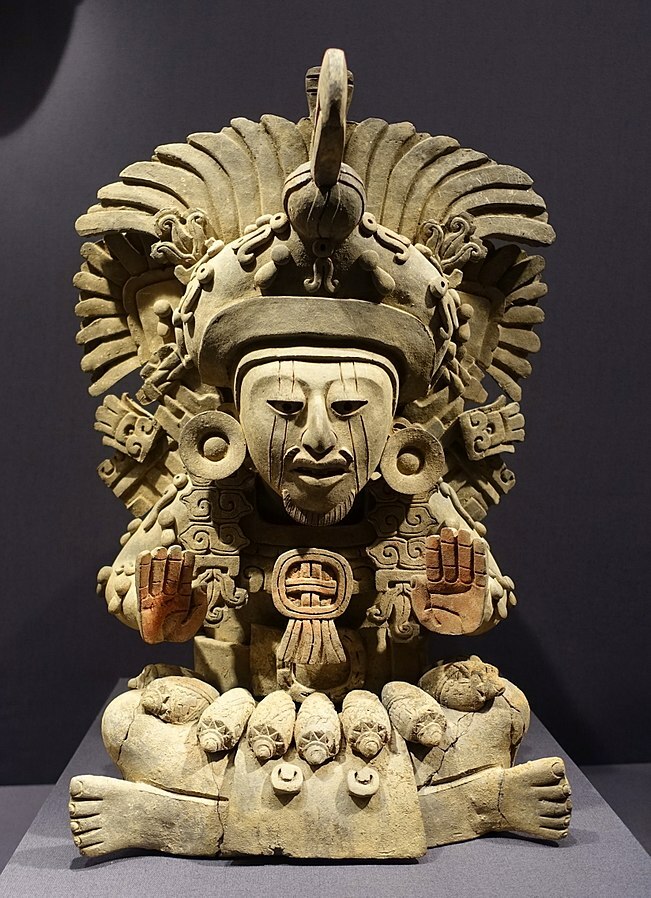
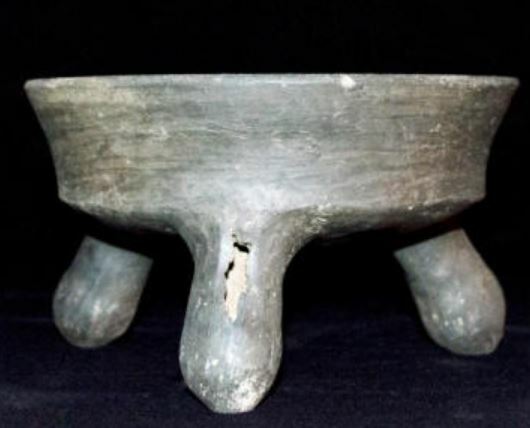
Pottery in Oaxaca can be traced back to the ancient Zapotec civilization in 600 BC, and it is mostly related to gods and beliefs. Unearthed burial urns, as well as incense utensils for sacrifices; most of these pottery have exquisite sculptures and hieroglyphs describing the gods in the ancient calendar or deceased ancestors. In addition to burials and sacrificial offerings, unadorned and unglazed pottery is also found in the form of cooking utensils for daily use.
Image / Statue of Zapotec and the God of Thunder from Oaxaca
Source / Wikimedia
Image / Unearthed in Oaxaca, everyday use tripod to support pottery bowl
Source / Arizona museum
Oaxaca pottery culture in full bloom
Surrounded by mountains, Oaxaca, which is relatively isolated, has received a late influence by modern industry and plastic technology, and has continued its original pottery-making culture to some extent. There are still more than 70 pottery villages, and the ancient pottery-making methods are preserved. For them, pottery is not just "memories", but a craft that is inseparable from life.
To make pottery, the prerequisite is suitable soil, and Oaxaca has abundant soil suitable for pottery.
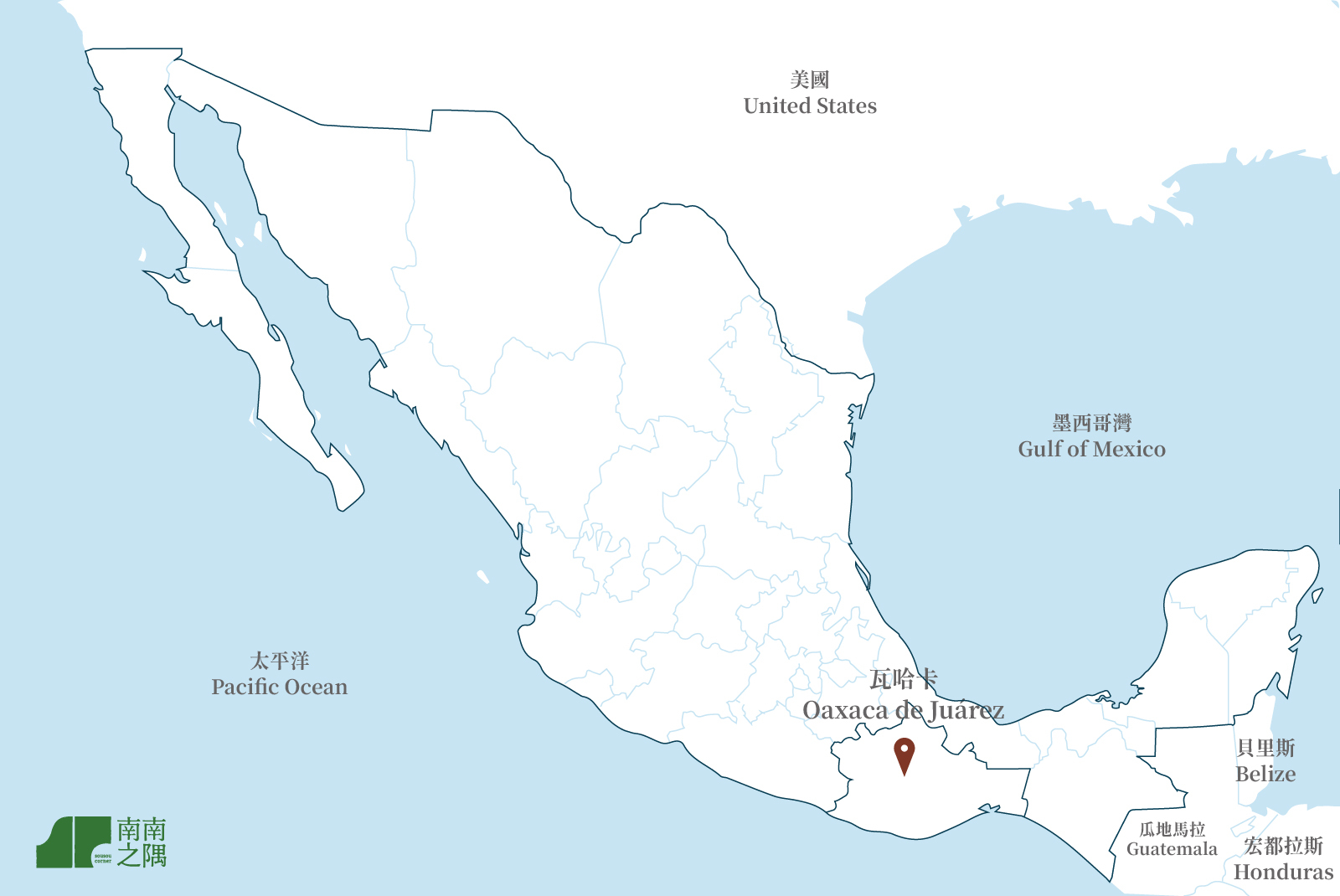
Oaxaca, originally a river valley, is a place where many rivers converge. With the alluvial of the rivers, it is rich in sedimentary rocks containing a variety of organic matter, lime and mineral crystals. In addition to sand and gravel, sedimentary rocks also contain "clay" with the smallest grains and smooth texture. In fact, it is the mud that can be seen everywhere around the riverbed and in the fields, and this is the main material for making pottery.
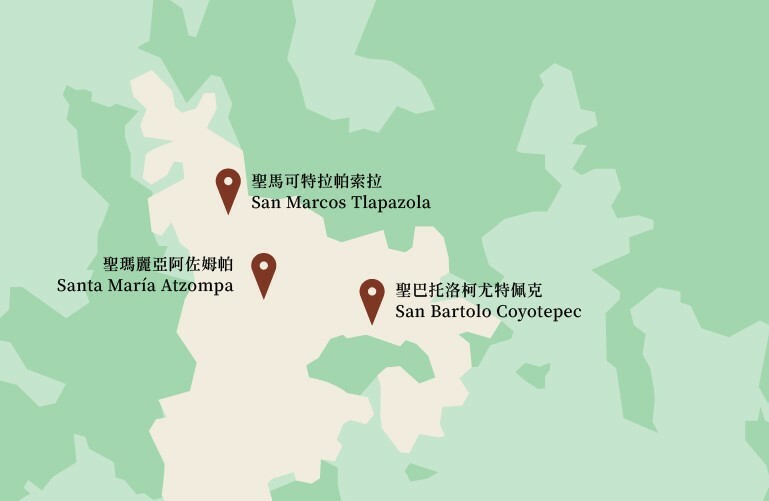
Image / Oaxaca province in southeastern Mexico
Source / SouSou Corner
It is difficult to carefully calculate the composition of these clays and minerals, and different mineral ratios also create pottery of distinct colors.
Image / Oaxaca has over seventy pottery villages; these are three of the more well-known ones
Source / SouSou Corner
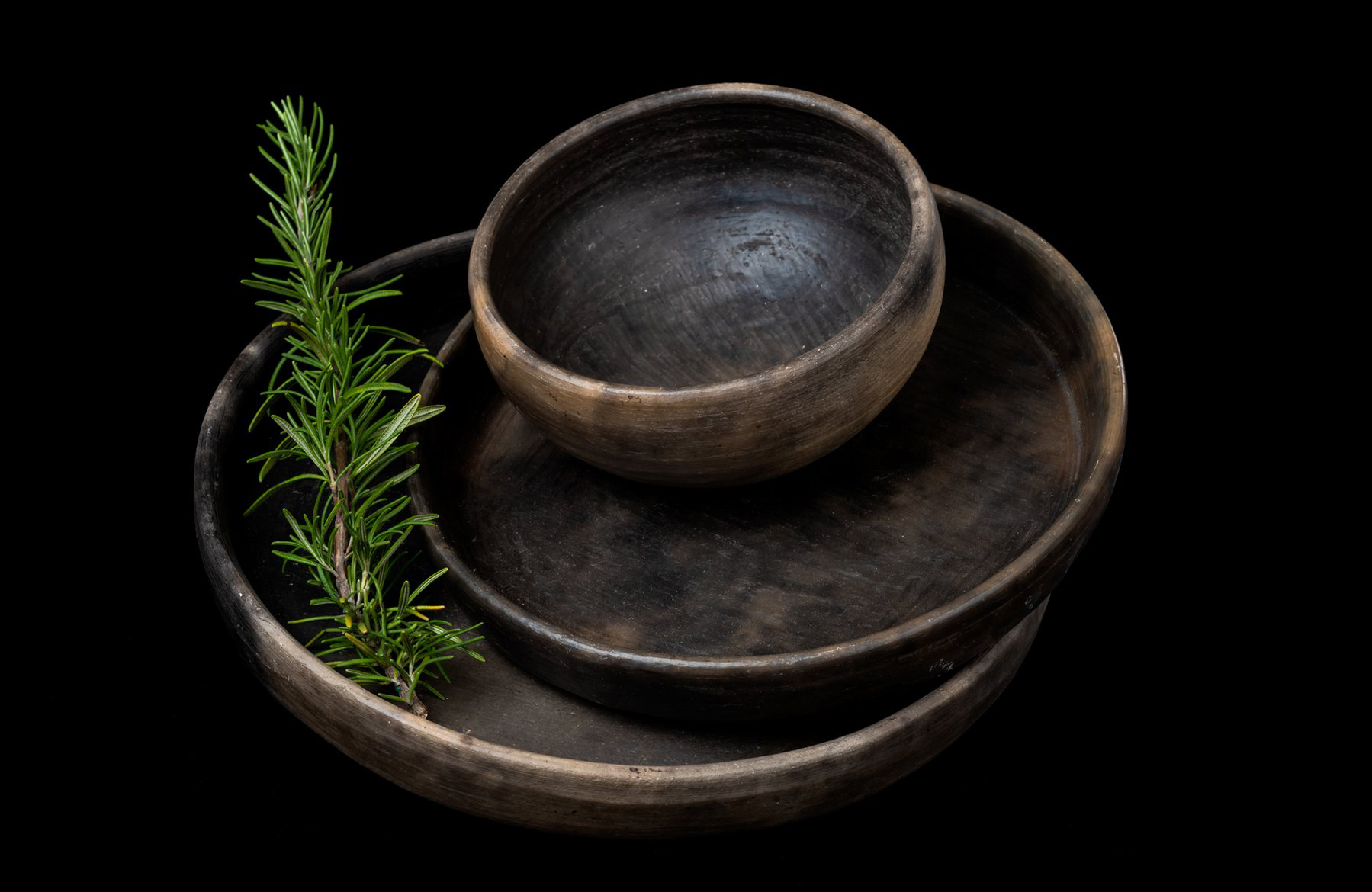
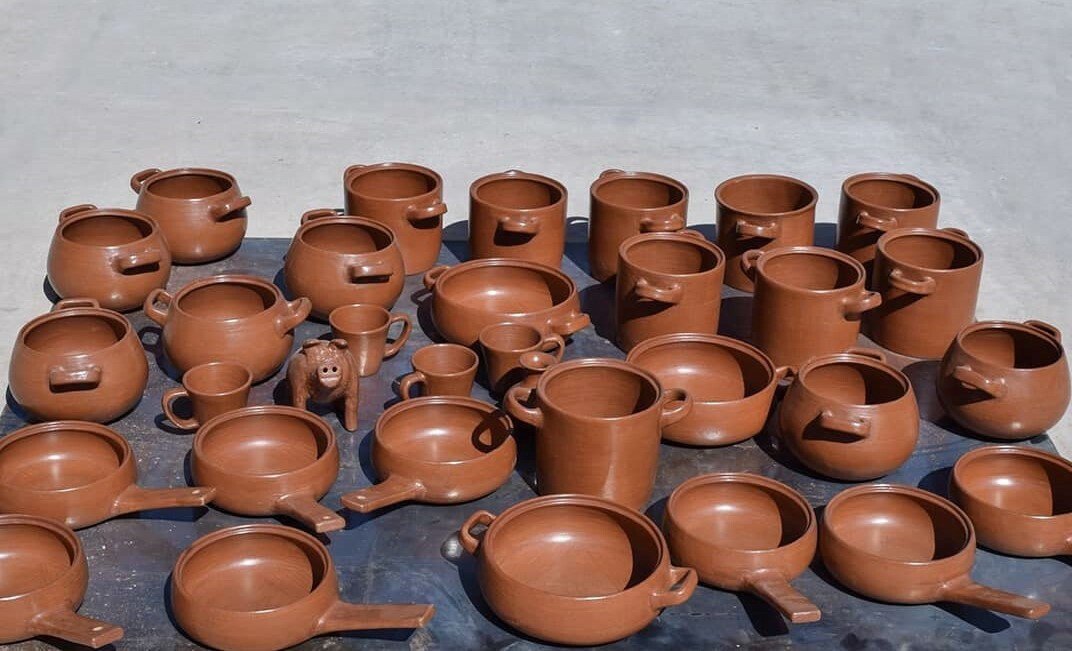
In the central village of San Marcos Tlapazola, hematite-containing soil is used to burn warm-colored "terracotta pottery", or it is burned over piles of twigs to carbonize it to black pottery, this is the most traditional way of making pottery.
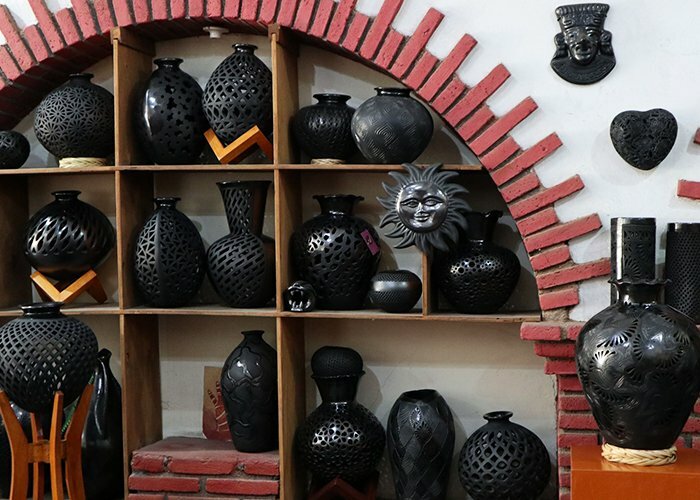
Another village, San Bartolo Coyotepec, accidentally created "special pottery" with the ancient production method. From the beginning, like other villages, pottery-making was mainly practical and the villagers would use gray clay pots to hold drinks such as wine and milk. But in the 1950s, a woman in the village, Doña Rosa Real, discovered a secret: If you take the quartz stone to polish the pot before baking and reduce the bake time from 13 to 14 hours to 8 to 9 hours, the jar will turn a shiny black! Then, the shiny black pottery became the most famous feature here.
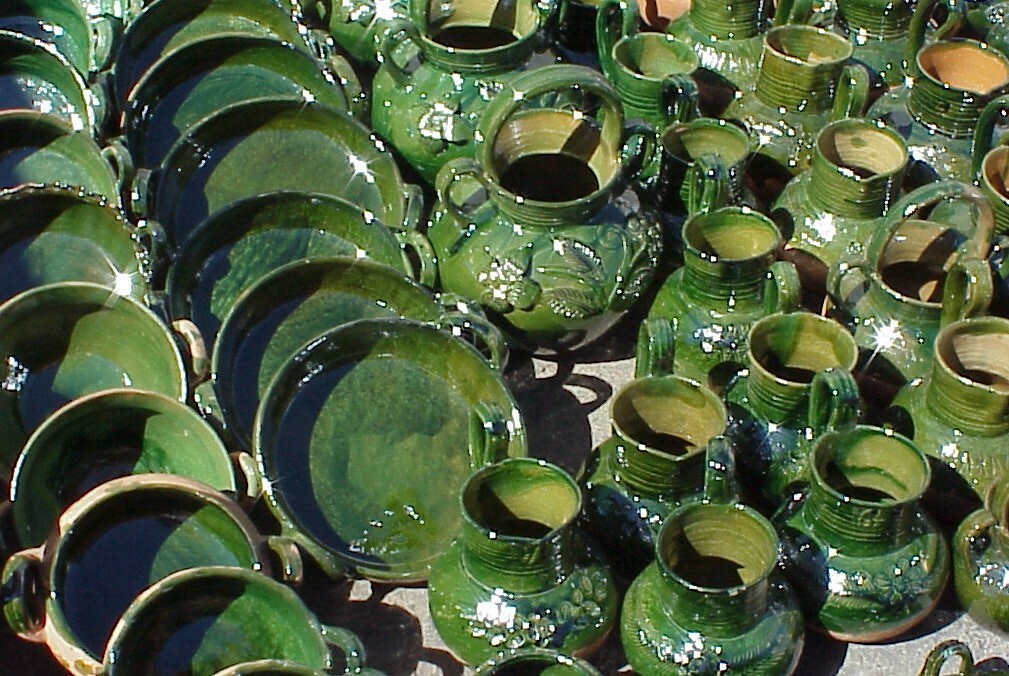
The third pottery village, Santa María Atzompa, was influenced by Spanish colonialism. In the 16th century, Spain brought the lead glaze technology which made the surface of pottery brighter and brighter by using low temperature, which changed the way of making pottery in Oaxaca. Santa Maria Azompa was originally a large-scale pottery production place and mostly made gray-black pottery. Due to the introduction of colorful glaze technology they began to make turquoise pottery, and added pasted flowers and bird decorations on the mouth of the pot and around it. Then, they exported them to western countries in large quantities.
Source / Mujeres del barro rojo
Source / Tekiti
Source / Jaguar
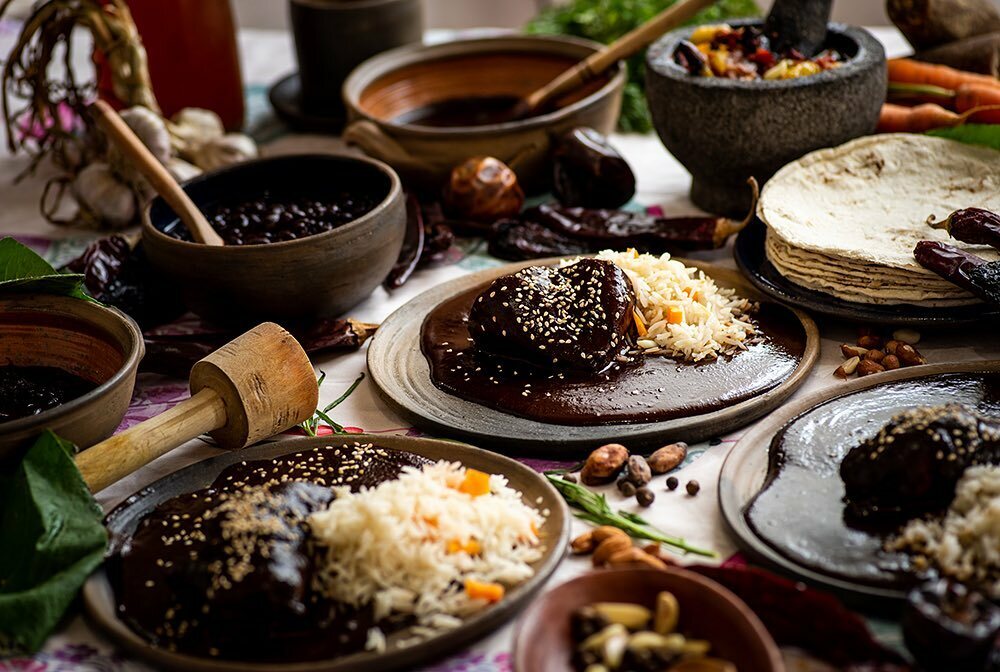
Where there is food, there is pottery
For more than 2,000 years, from Zapotec to the Incan civilization, these villages have used clay and created common daily life articles like pots, bowls, and plates for cooking, and baking pans for tortillas and stews. Pottery has become the most common object on the table and in cooking. In Oaxaca, cooking and pottery are inseparable. Not only are they used to hold food but the pottery produced can be directly used in fire for roasting and cooking.
Source / Cooperation workshop
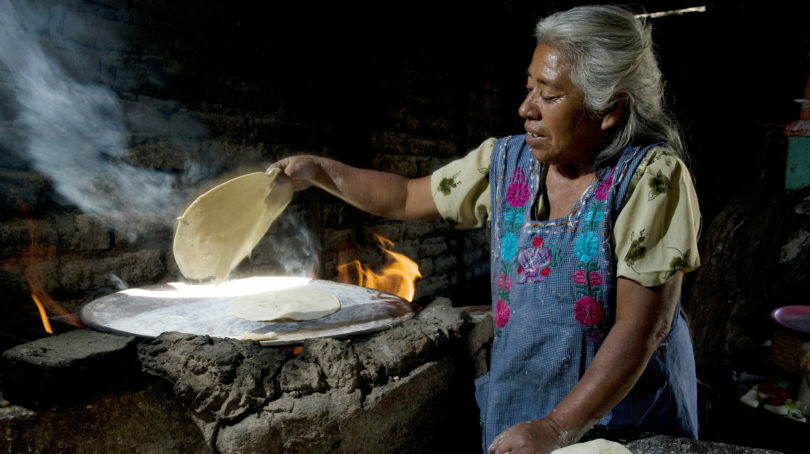
Image / Tortilla is the main food of Mexico, just like the rice for the Taiwanese, it is an indispensable food in life
Source / Jean-CLaude Teyssier
Even the main food of Mexico, Tortillas, are also closely related to pottery. For countless generations on the low ground of the kitchen, using fire from wood, stone and brick, there has been a large, round baking pan called Comales, which is a must-have cooking utensil in many people's homes. Comales are flat discs specially used to bake tortillas. They are traditionally common pottery in households and have become a constant taste and memory in the family.
In the 20th century modern industry emerged with the usage of materials such as glass, aluminum, tin and plastic to manufacture durable and convenient utensils and sell them on the market. Although Oaxaca is surrounded by mountains, due to its geographical location the indigenous culture is rich and prosperous, and it was later impacted by colonization and modern industry. But when plastic products arrived half a century later the craftsmanship of potters was still greatly challenged.
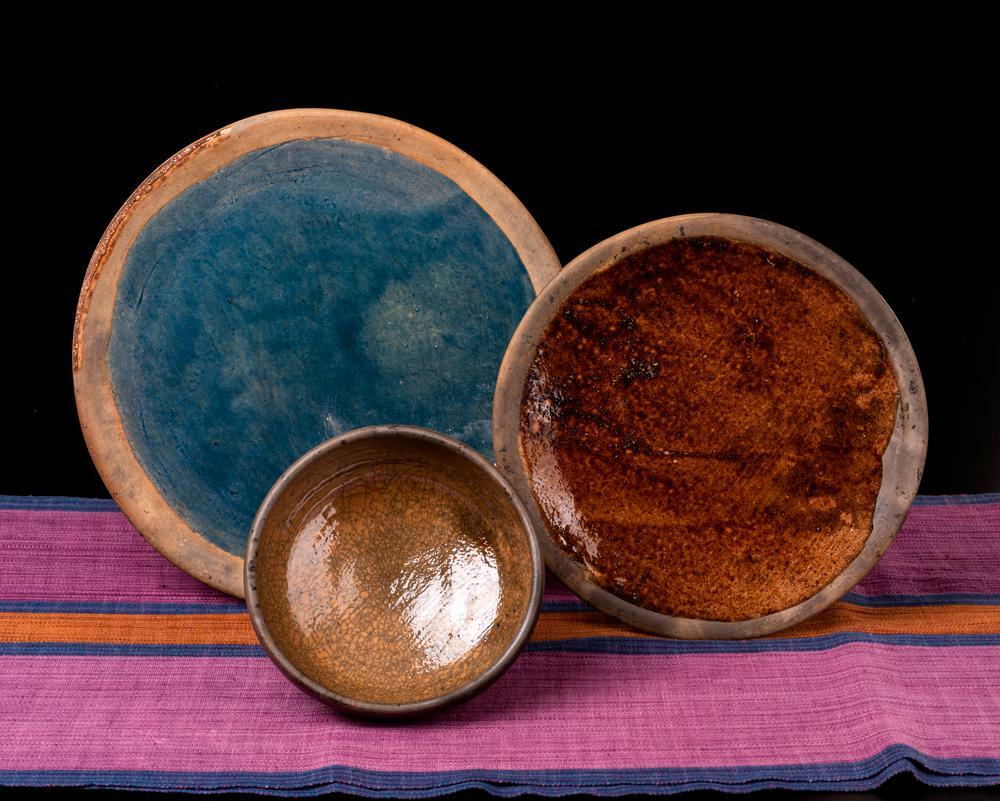
Seeing this, the Mexican government also began to promote various policies. Realizing the impact of lead glaze on the local pottery market, it promoted "lead-free pottery" and developed lead-free glaze. The green glaze industry in Santa Maria Azompa was slowly declining and they began to return to the original ancient method of pottery making, combined with the new lead-free color glaze technology and creating a different kind of pottery.
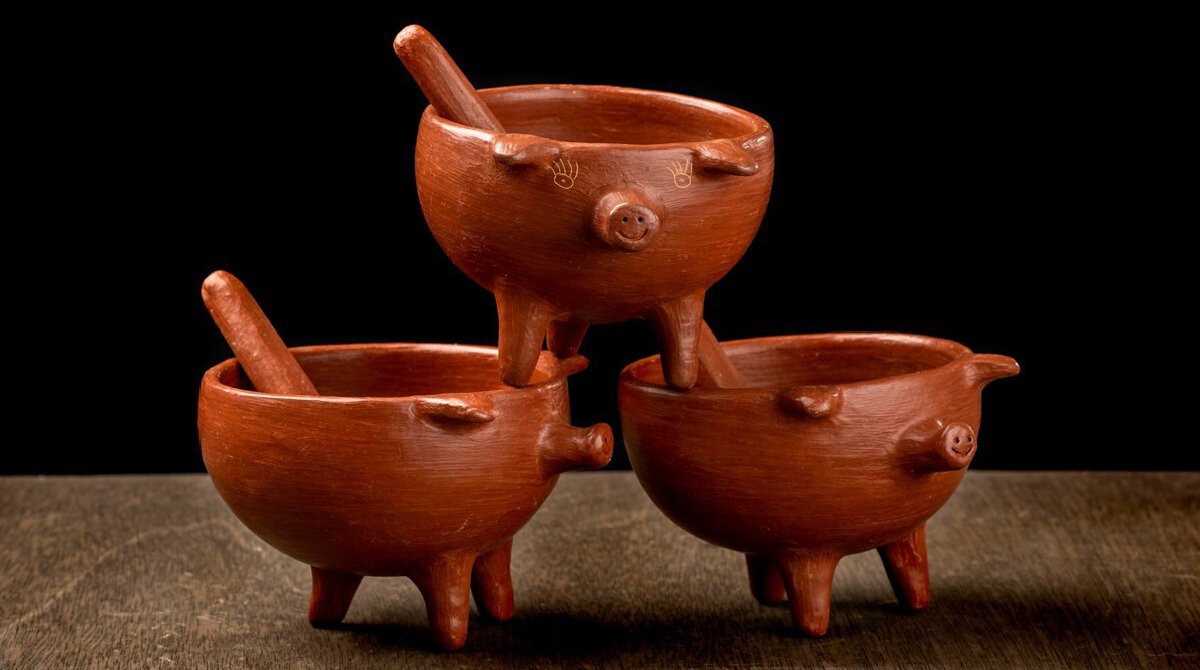
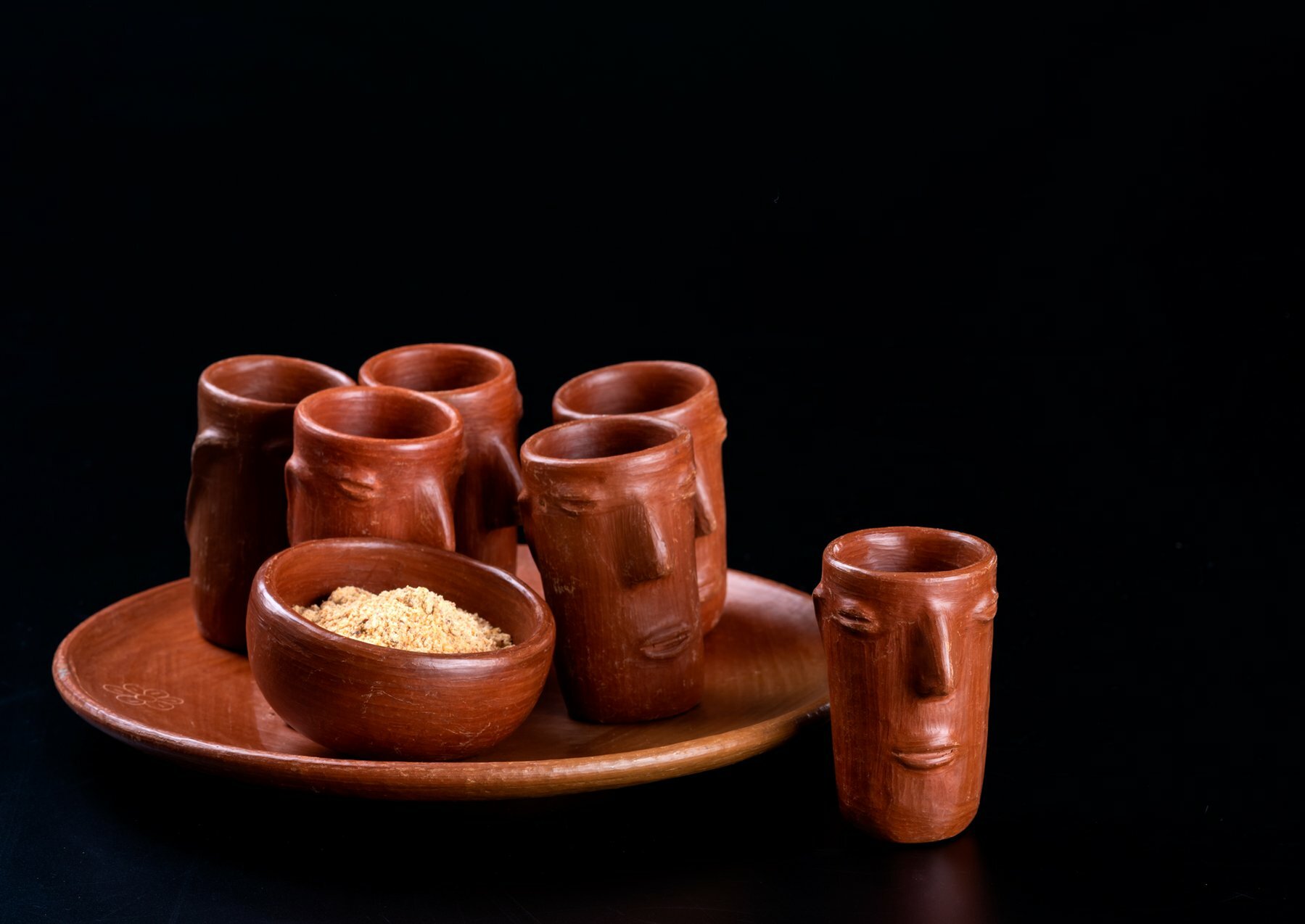
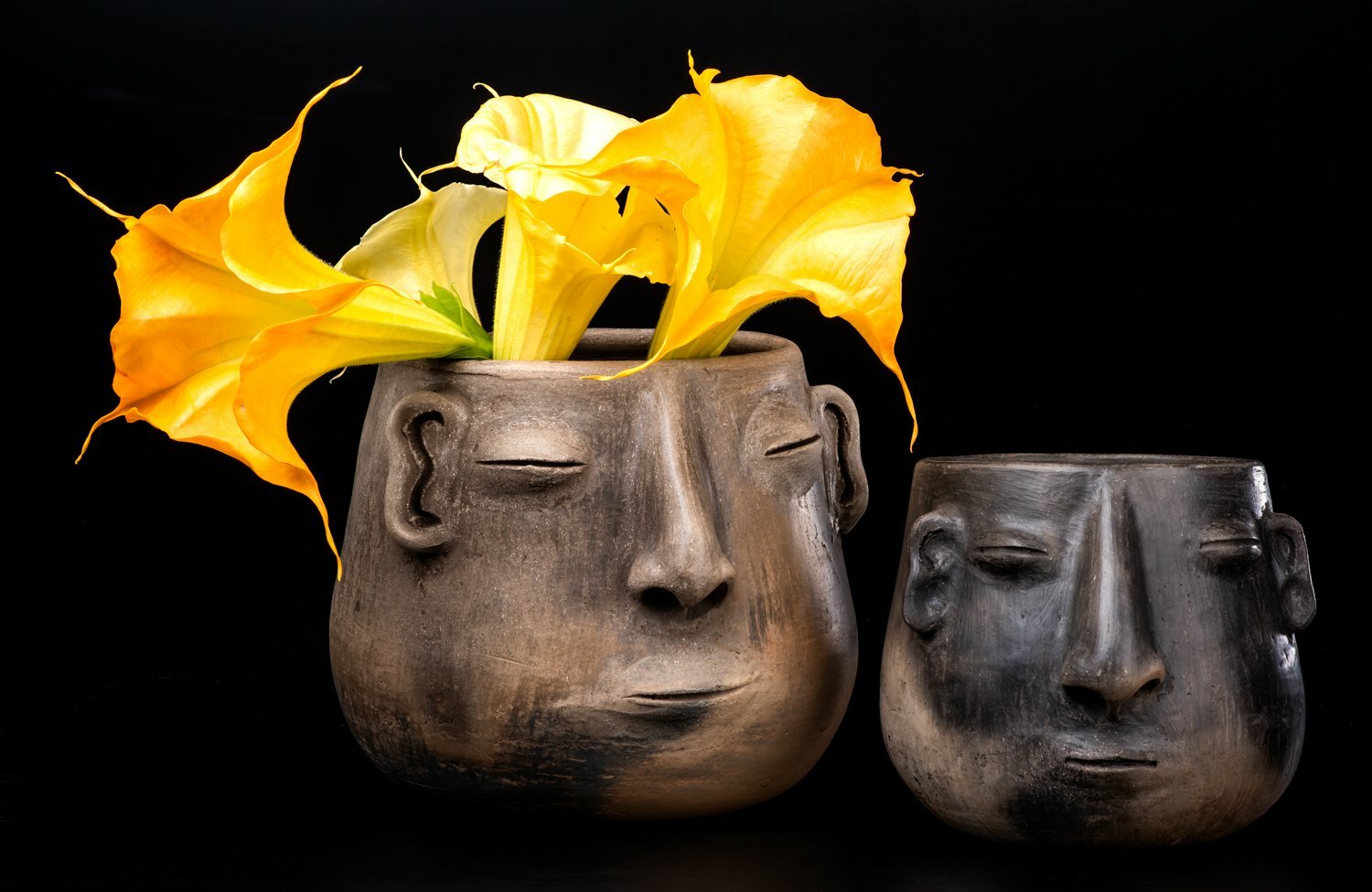
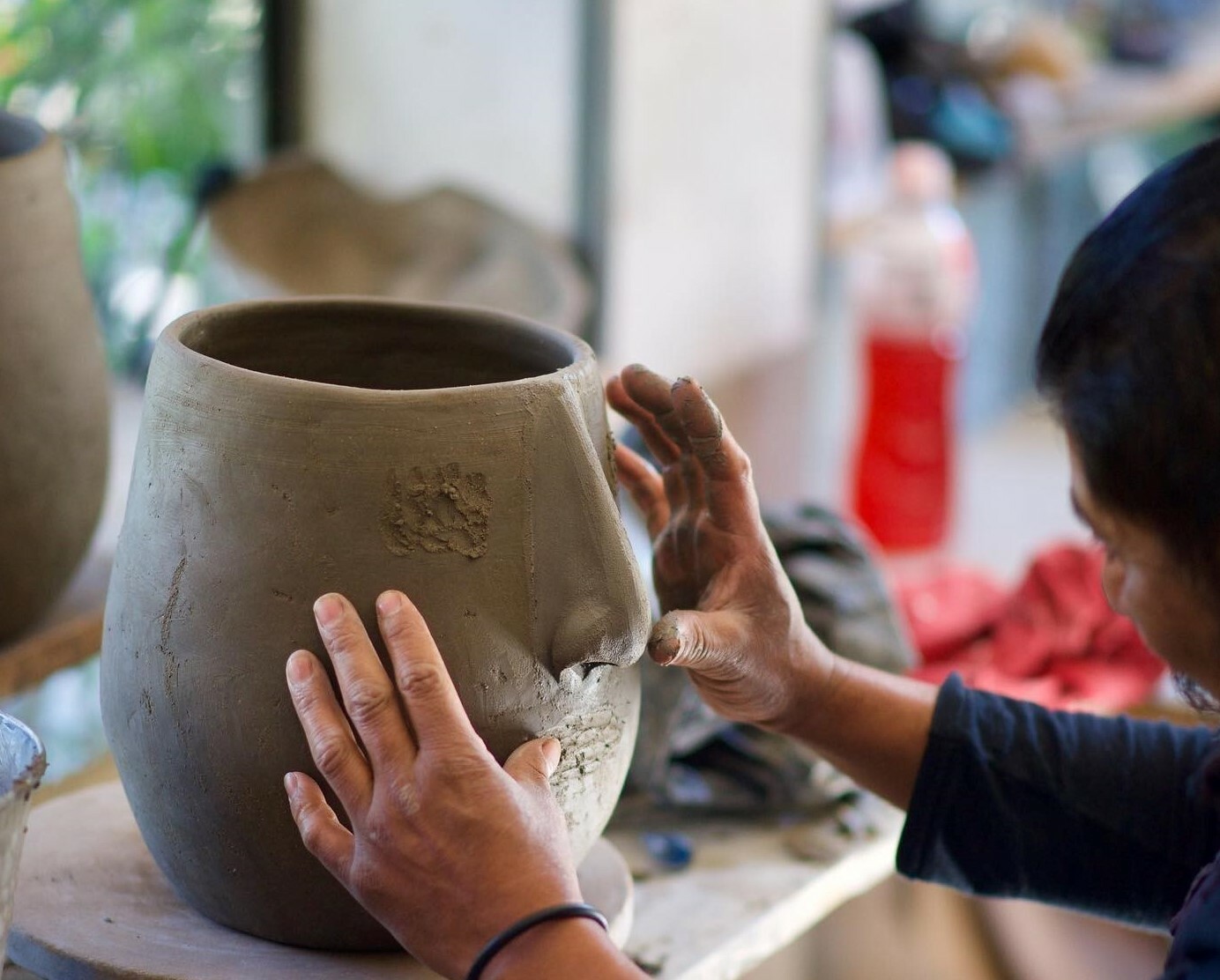
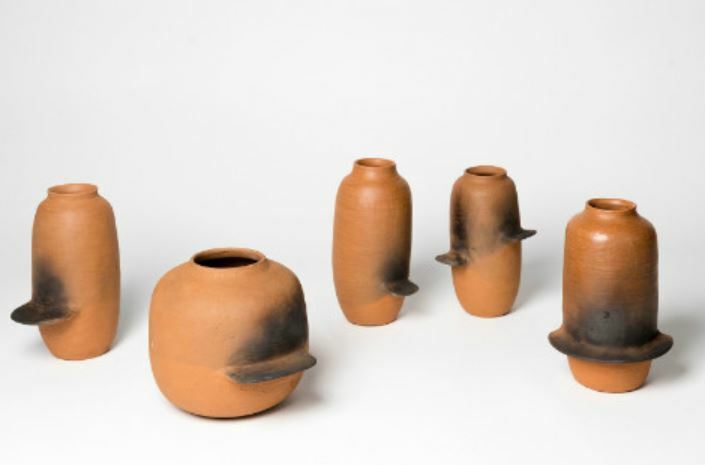
In order to promote it, local women went out of the village to find inspiration and even set up a "cooperative" to gather craftsmen, communicate with each other, and develop new designs such as piggy utensils and human face flower utensils; or use different smoking methods to make changes in the pottery. Although the need to make non-practical pottery at the beginning actually made these potters quite puzzled, later, it allowed for more innovation and external acceptance which also allowed the artists here to embrace the advancement of the times. And the pottery in Oaxaca grew with new more ideas.
Source / Cooperation workshop
Image / Innovative way of firing pottery, making pottery full of changes
Source / 1050°
Image / Returning to the ancient method and adding new color glaze technology
Source / Cooperation workshop
Terracotta Daughter: How to make Terracotta pottery
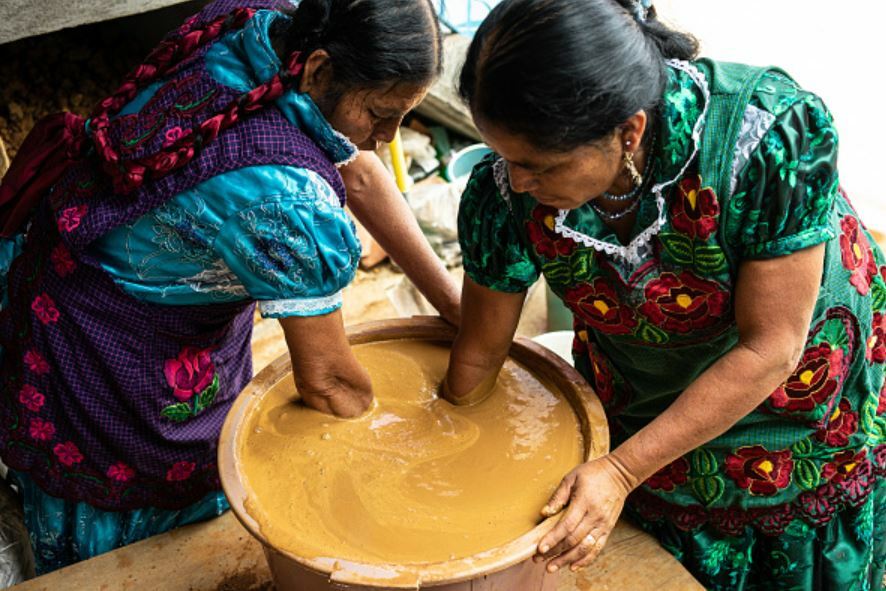
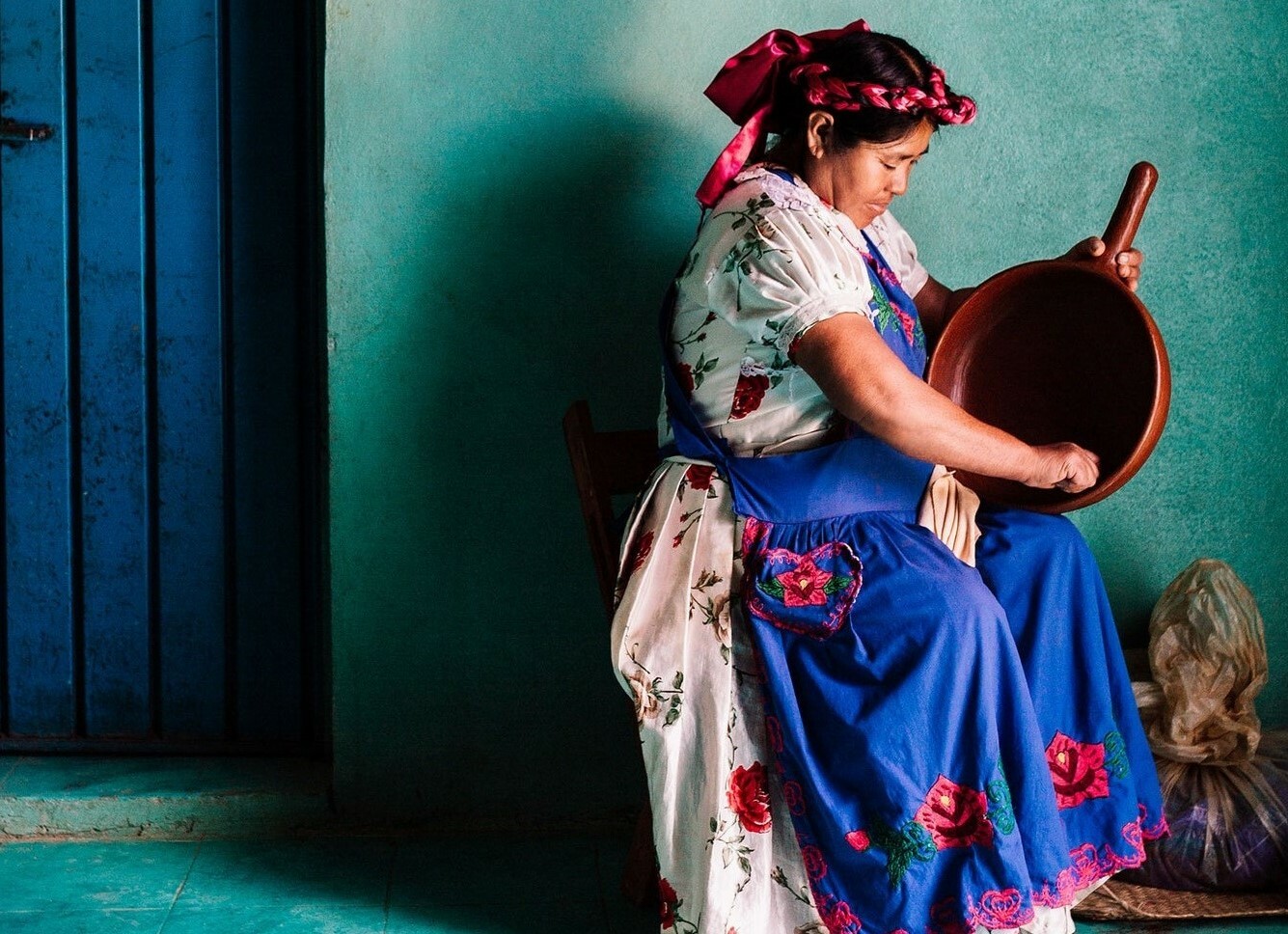
In these pottery villages, from collecting mud to cooking the clay are the work of village women. Dressed in brightly coloured puffs and embroidered lace aprons, the women collect the mud and turn it into clay that can be cooked. Kneeling low on the ground, bending over and rubbing the soil, skillfully molding it with their hands while the disc is rotated; sometimes beating quickly, sometimes gently shaping with their palms. With tools that can't be simpler, such as a small piece of leather and corncob, one pottery after another can be completed. They are the "Women of Red Clay", the most beautiful figures in pottery craftsmanship.
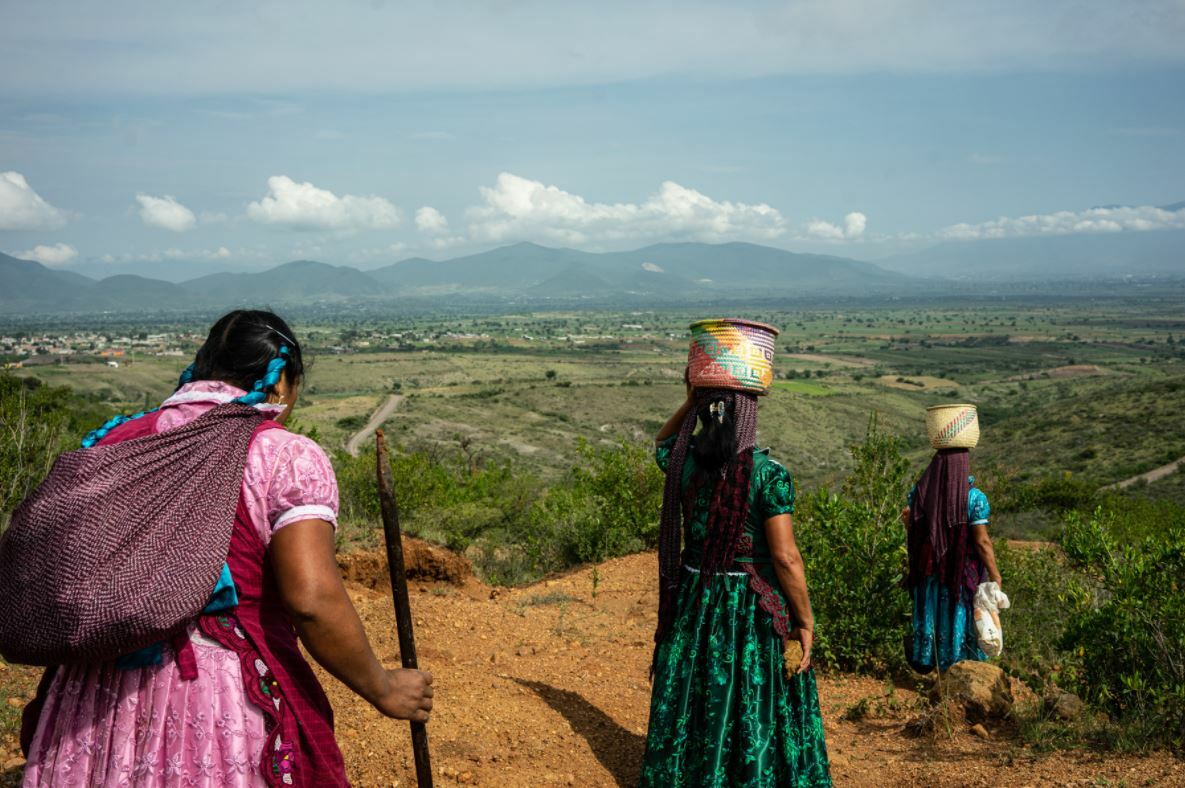
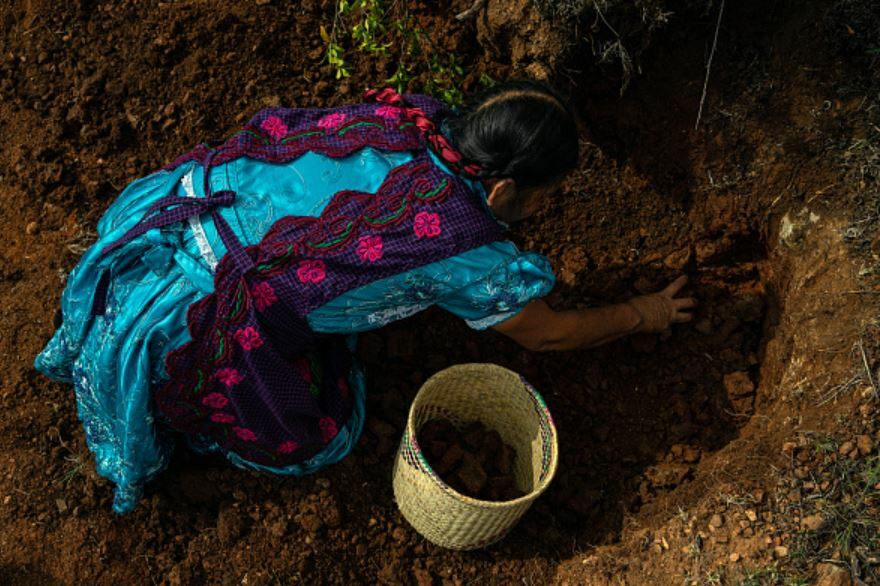
Step 1: Collect Red Mud
Image / Women carrying bags and baskets set off to find red mud
Source / Cesar Rodriguez
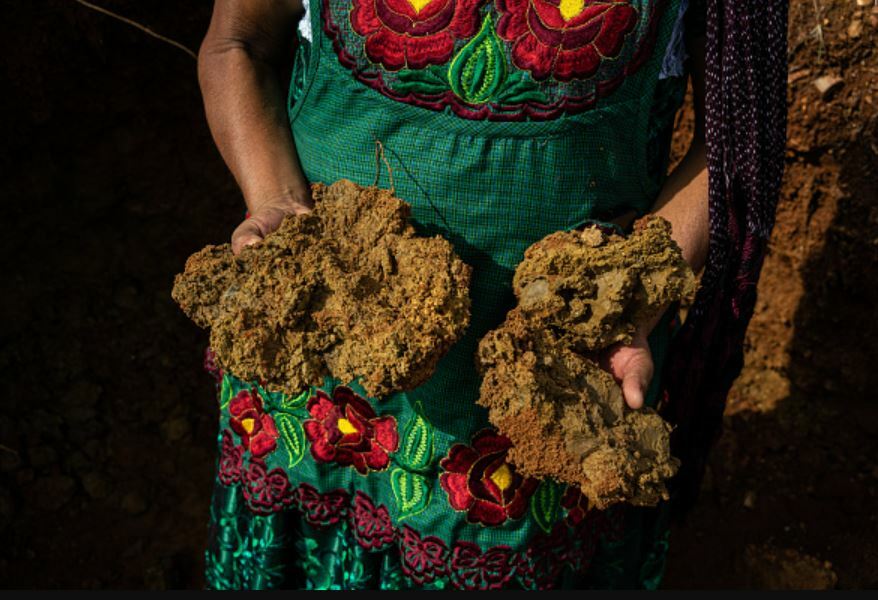
Image / Freshly collected mud
Source / Cesar Rodriguez
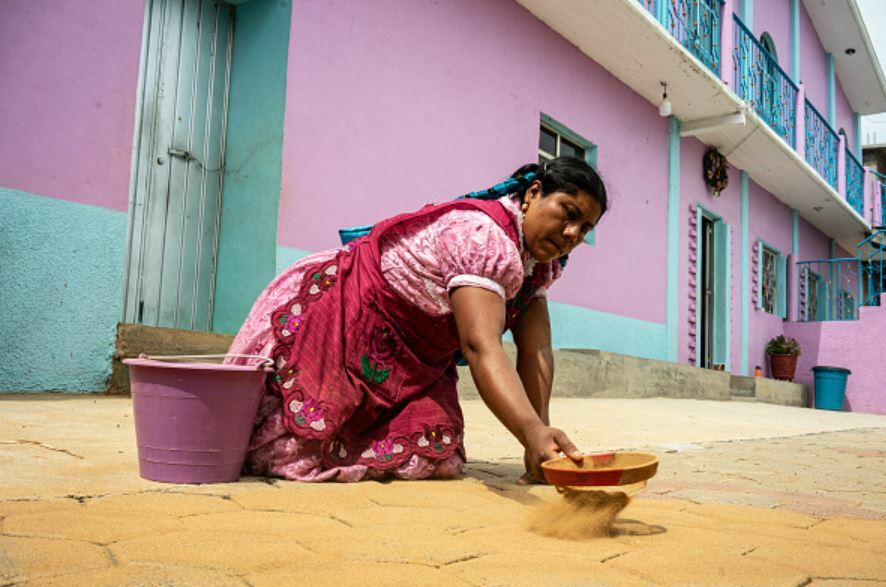
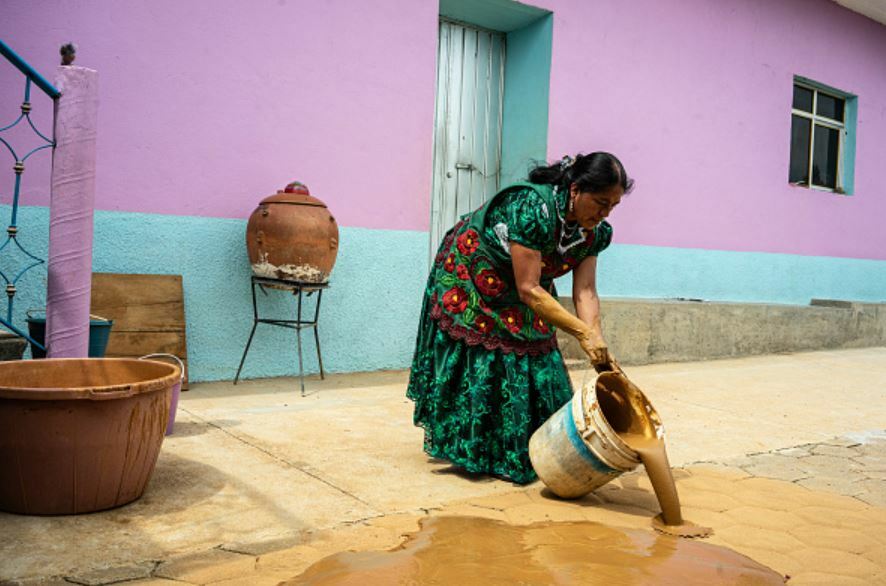
Step 2: Make the clay
Image / making clay
Source / Cesar Rodriguez
Image / First sprinkle a layer of fine sand on the ground
Source / Cesar Rodriguez
Image / Then spread the mud flat on the sand and expose it to the sun
Source / Cesar Rodriguez
Step 3: Freehand Sculpting
Once the clay is ready, it is possible to start making pottery. The clay is mixed with sand and water, and is constantly pushed and kneaded to adjust the viscosity and humidity.
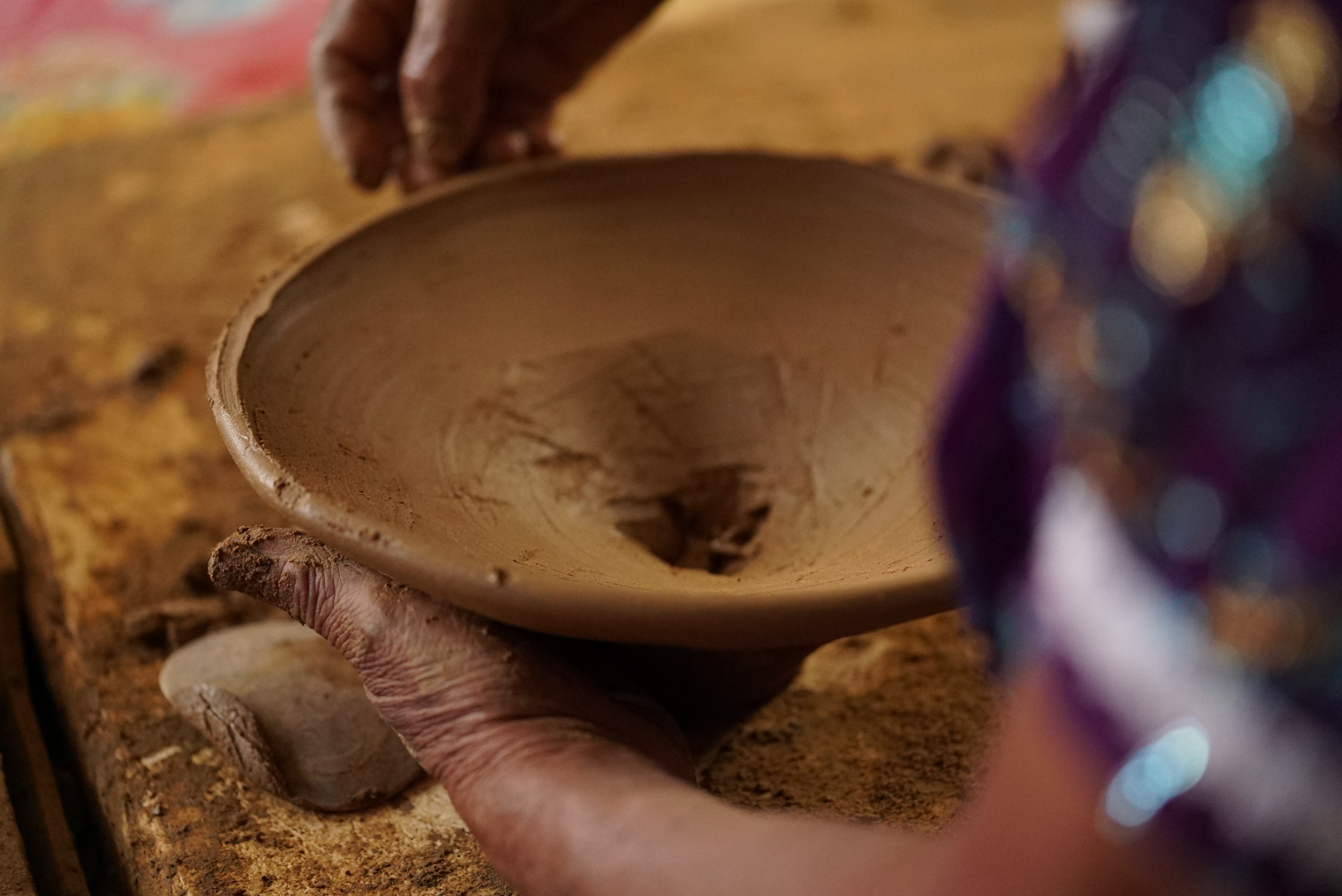
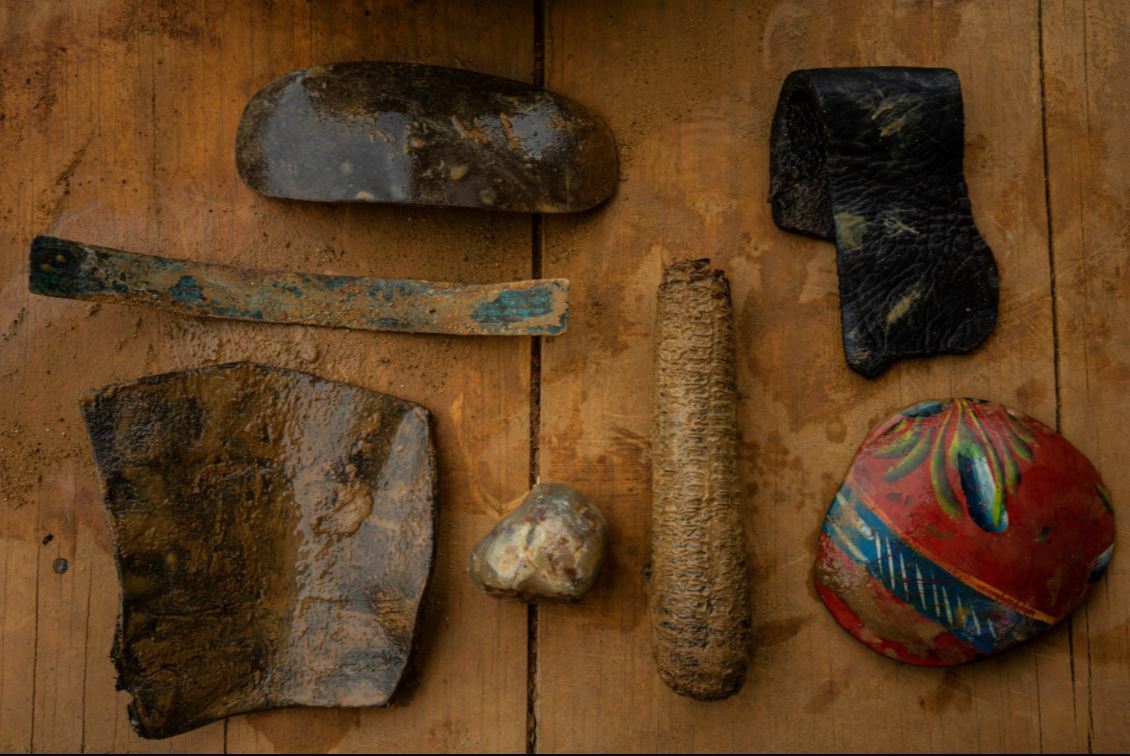
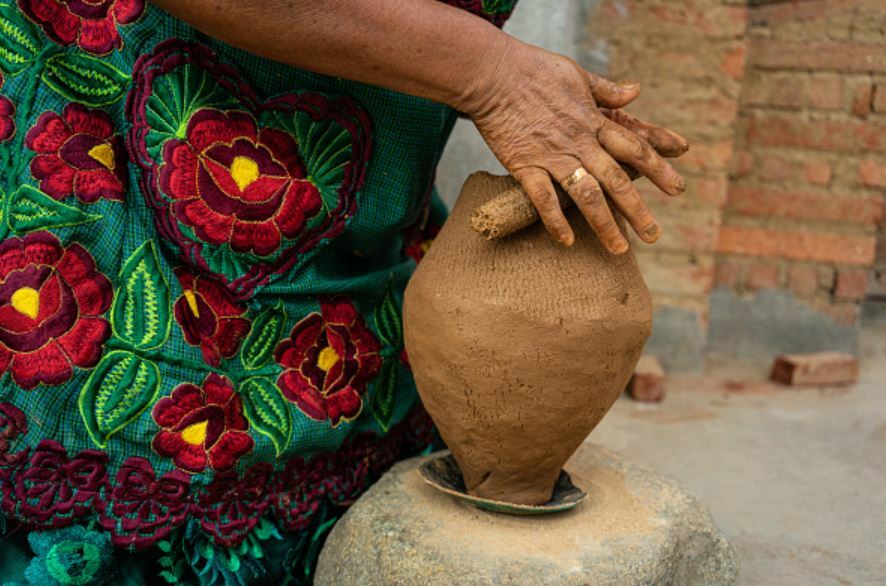
A difference from the general hand-pulling with the help of an electric turntable, the local potters still create the shapes with their bare hands or at most they would use tools like corn cobs, cut basketball skin, etc. The cut leather can be mixed with sand and placed under the clay so the pottery can be easily shaped by the force of the palm in a slow rotation, or it can be squeezed with water and slowly rotated to make the edges of the pottery smoother and neater.
Image / Assisted with fairly simple tools such as: stones, corncob, soft & hard leather, etc.
Source / Cesar Rodriguez
Image / The corncob acts like a rolling pin to stretch the clay
Place the pottery on top of the leather with fine sand for easy rotation
Source / Cesar Rodriguez
Step 4: Air Dry and Polish
The shaped pottery is left to air dry for one to two days until it hardens slightly and turns a darker color. Then, the women polish the pottery with pebbles picked up from the river.
Because the pebbles are smooth and have different shapes, they need to choose a suitable shape and quickly rub the inside and outside of the pottery to make the surface of the pottery smoother and brighter.
Image / Polished pottery with pebbles
Source / Philip Nix
Step 5: Baking
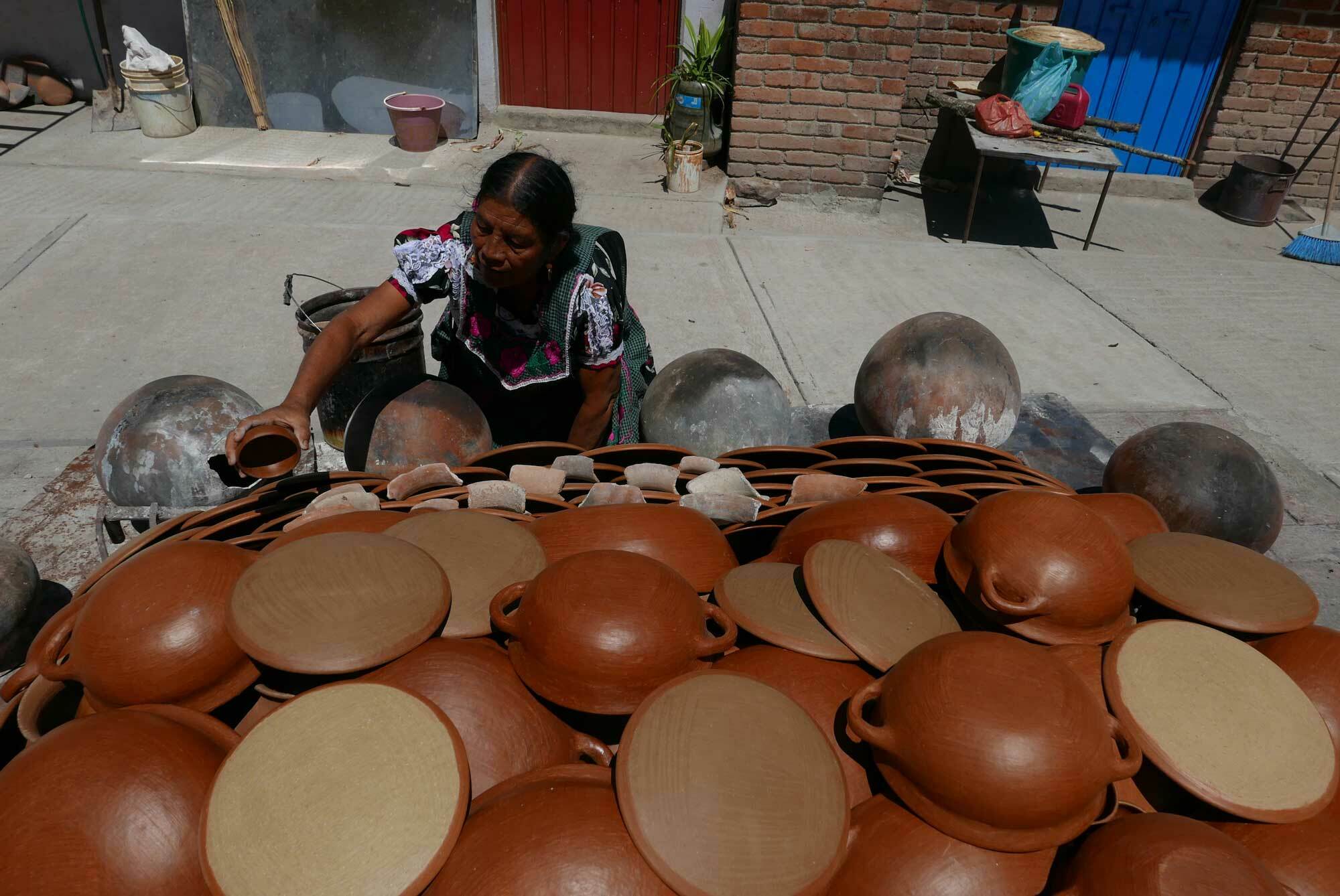
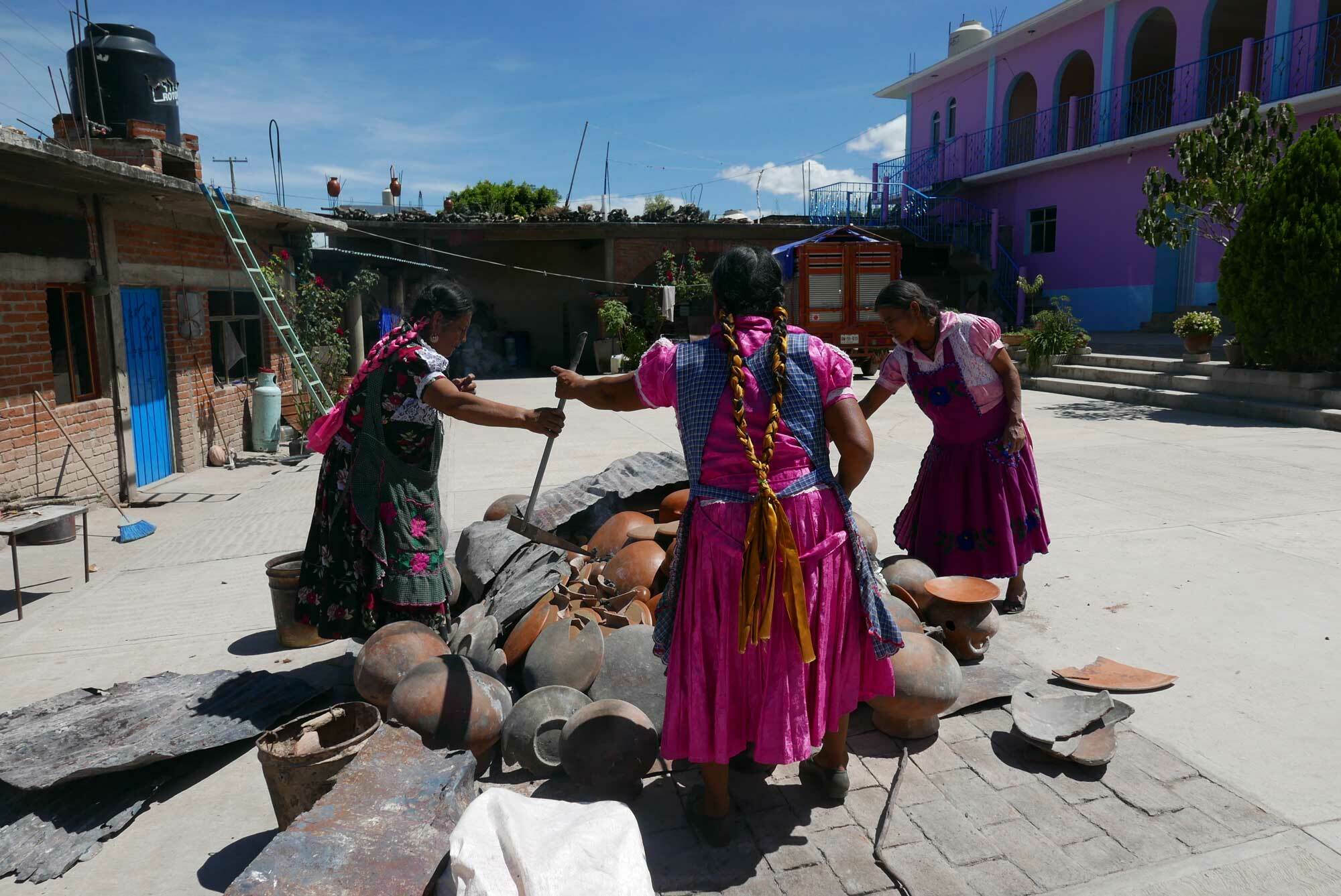
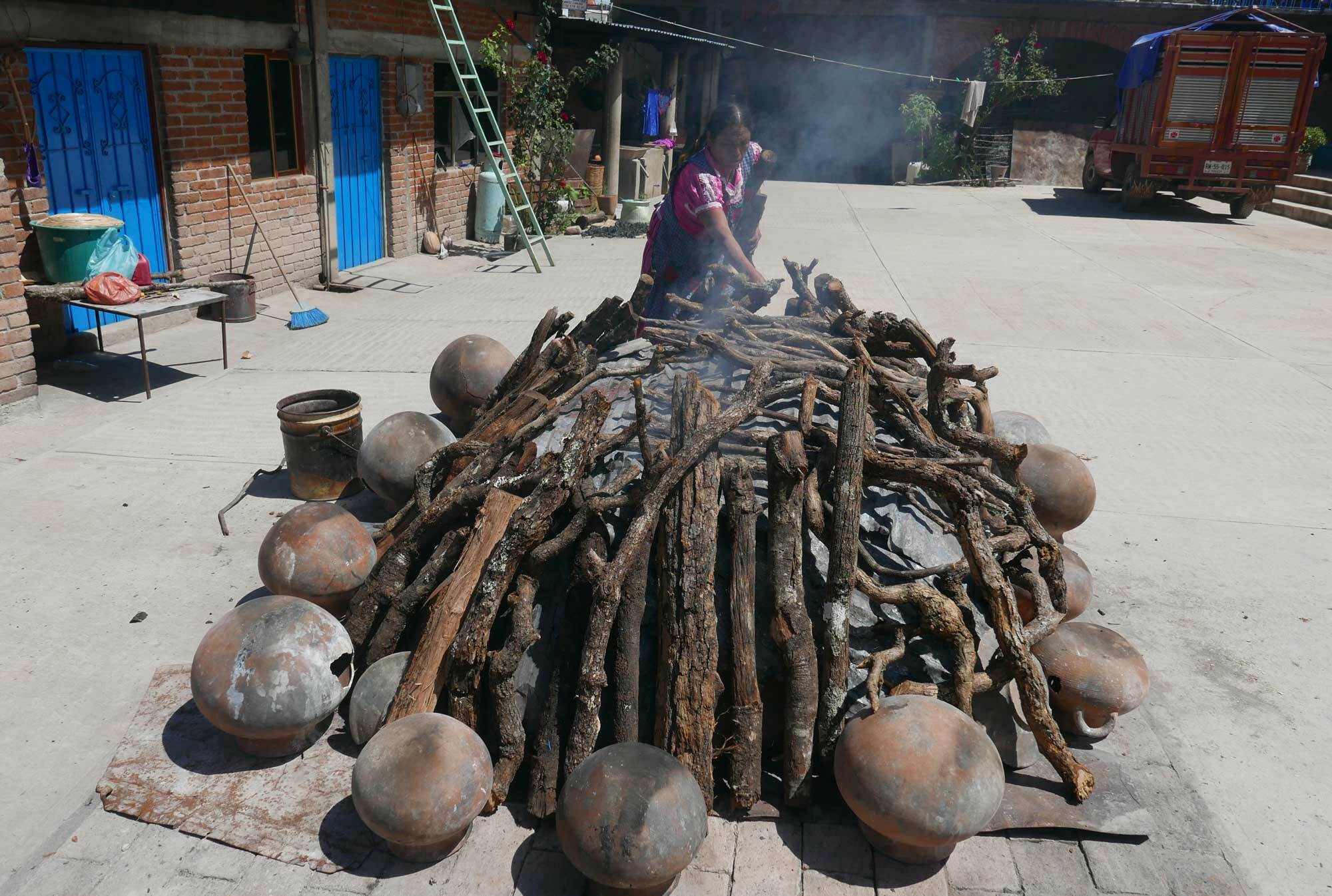
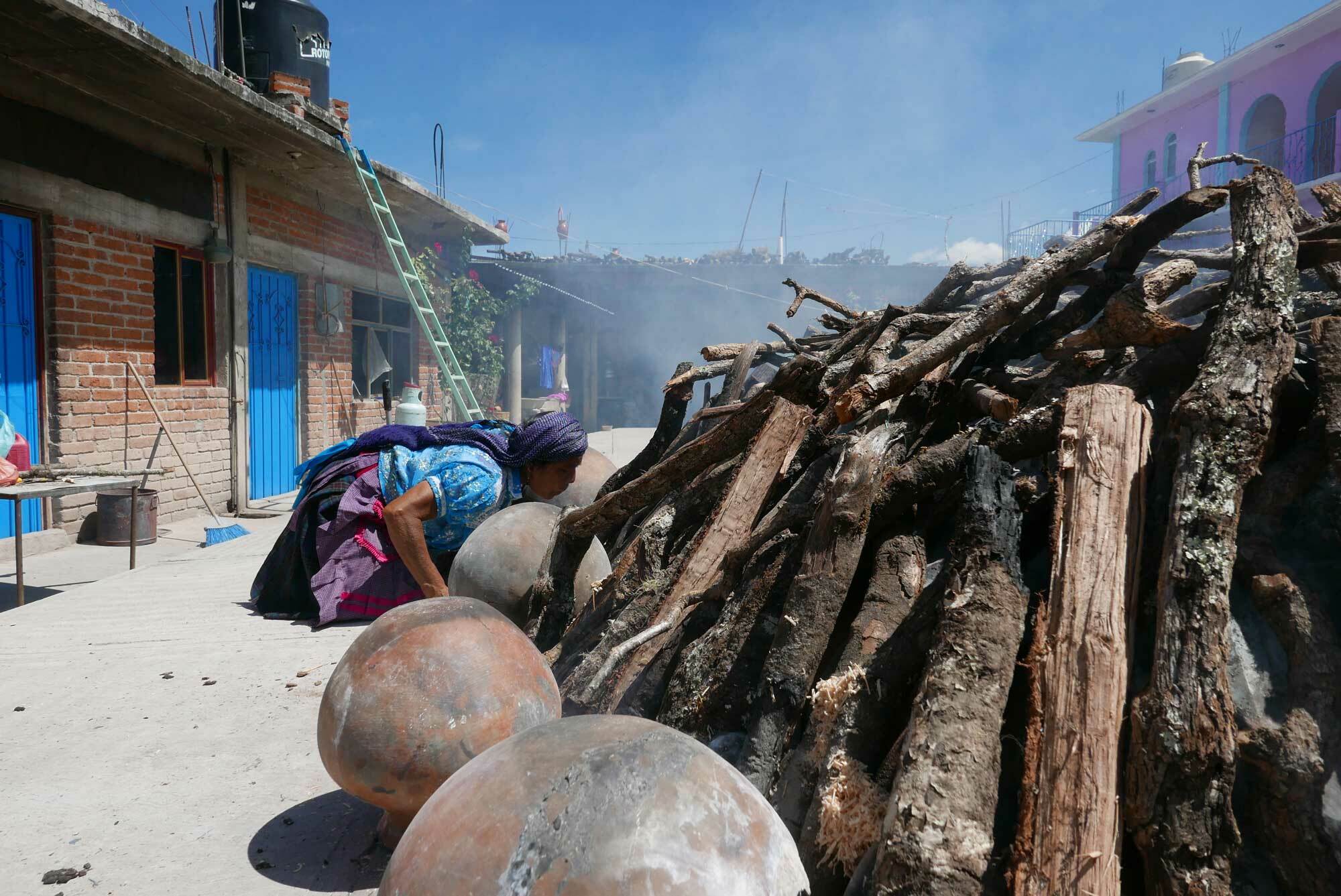
The women will stack the shaped pottery in an open space and when a mound of pottery has piled up they will prepare the fire for baking. They’ll fill and cover the pottery with natural materials such as wood, branches and leaves, animal dung, etc.
Image / Ancient firing pottery
Source / Nido
It is said that Oaxaca pottery is the most primitive kind of pottery. Plates and bowls are still baked in the simplest and most traditional way, obtained by the convention of the most fundamental elements such as wind, earth, water and fire. By holding a pottery bowl on the hand, you can still feel the power of the skill of the craftsman, the temperature of the wood burning and the traces of thousands of years of history.
Despite their incredible pottery craftsmanship, local villages still face poverty. Oaxaca is the largest settlement of the Zapotec aboriginal people and as a relatively slow-developing area the poor land and scarce resources make the aboriginal communities to still live in poverty. Most of the young men in the village have left their hometowns to go to work in the United States and the women who are left behind live on making, baking, and selling pottery in the market, making this the main source of income for the villagers.
No product in this category