{{ 'fb_in_app_browser_popup.desc' | translate }} {{ 'fb_in_app_browser_popup.copy_link' | translate }}
{{ 'in_app_browser_popup.desc' | translate }}
{{ childProduct.title_translations | translateModel }}
{{ getChildVariationShorthand(childProduct.child_variation) }}
{{ getSelectedItemDetail(selectedChildProduct, item).childProductName }} x {{ selectedChildProduct.quantity || 1 }}
{{ getSelectedItemDetail(selectedChildProduct, item).childVariationName }}
No product in this category
A Hundred Years of Solitude: The World's Only Family of Rogan Paintings
Rogan Art is a traditional printing art on clothing, that mixes dyes with castor oil and paints. Because there is only one family left in the world who is still trying to pass on this traditional art culture, only a few Taiwaneses have heard of this painting technique. They are the Bedi family (Kahtri) located in the village of Nirona in Gujarat, West India.
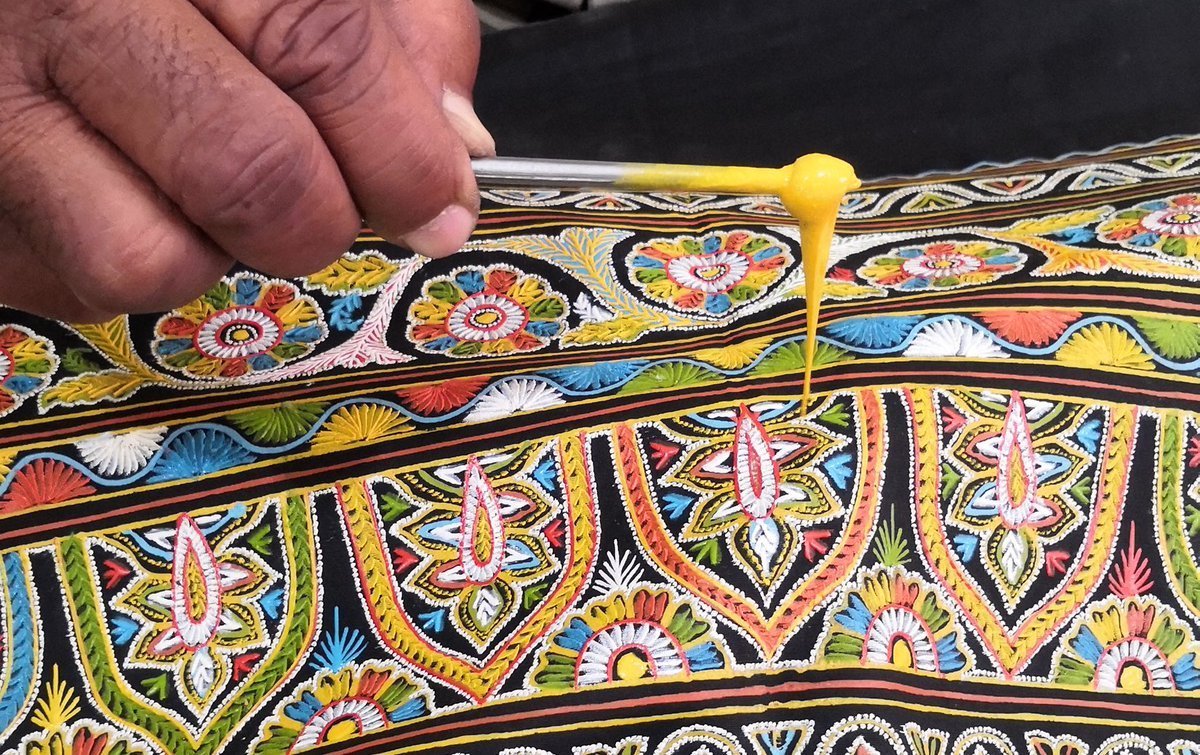
Painting with Castor Oil Mixed Dye (Twitter @Jayalko1)
Rogan painting was brought to India from Persia in the 18th century. The castor oil used comes from the castor beans that grow in large quantities in the local area. Someone in the family is responsible for boiling the castor seeds or castor oil for 12 hours, and cooling it slightly after that; repeating the heating and cooling process for the next four to five days. Because the hot oil can catch fire and expand if one is not careful, only a few members of the Bedi family are competent for this job; which is considered a very fine division of labor. The importance of castor oil to Rogan paintings is also fully revealed in the name, since in Persian “Rogan” means "oil".
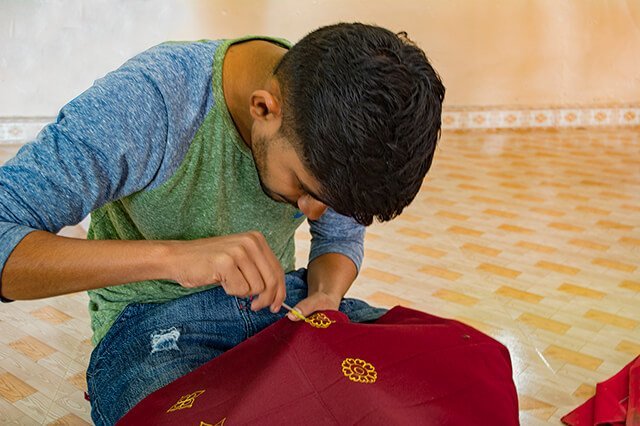
When the oil is finished, other members of the family use color to dye the transparent castor oil on a slate and pass it to the painter. The painter will use the temperature of the palm to slightly heat the agglomerated castor oil, and then use an iron rod to draw the castor oil into thin lines and paint on the cloth.
The Bedi family in Nirona Village is the only Muslim art family in the world that inherited Rogan paintings (FootLoose Dev)
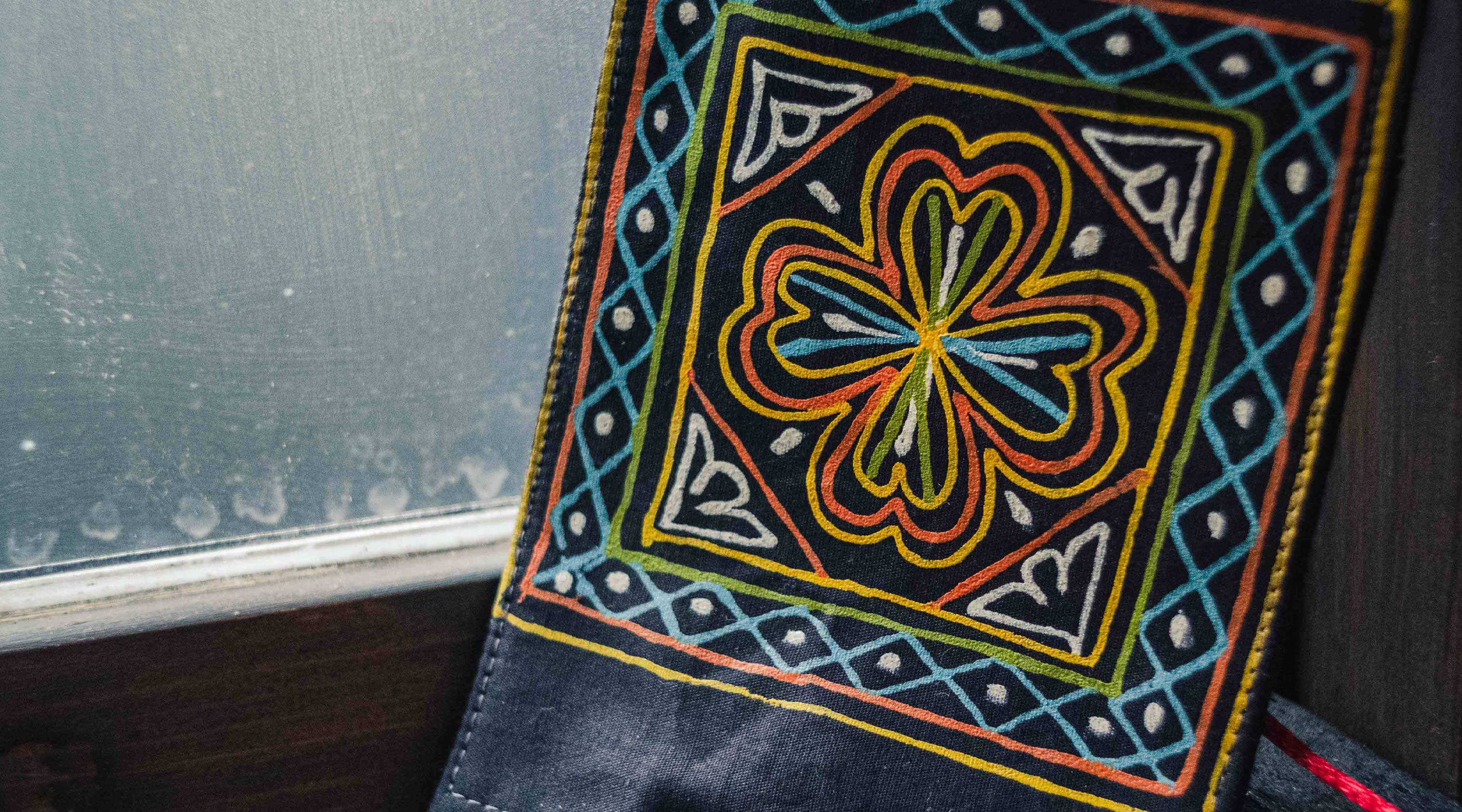
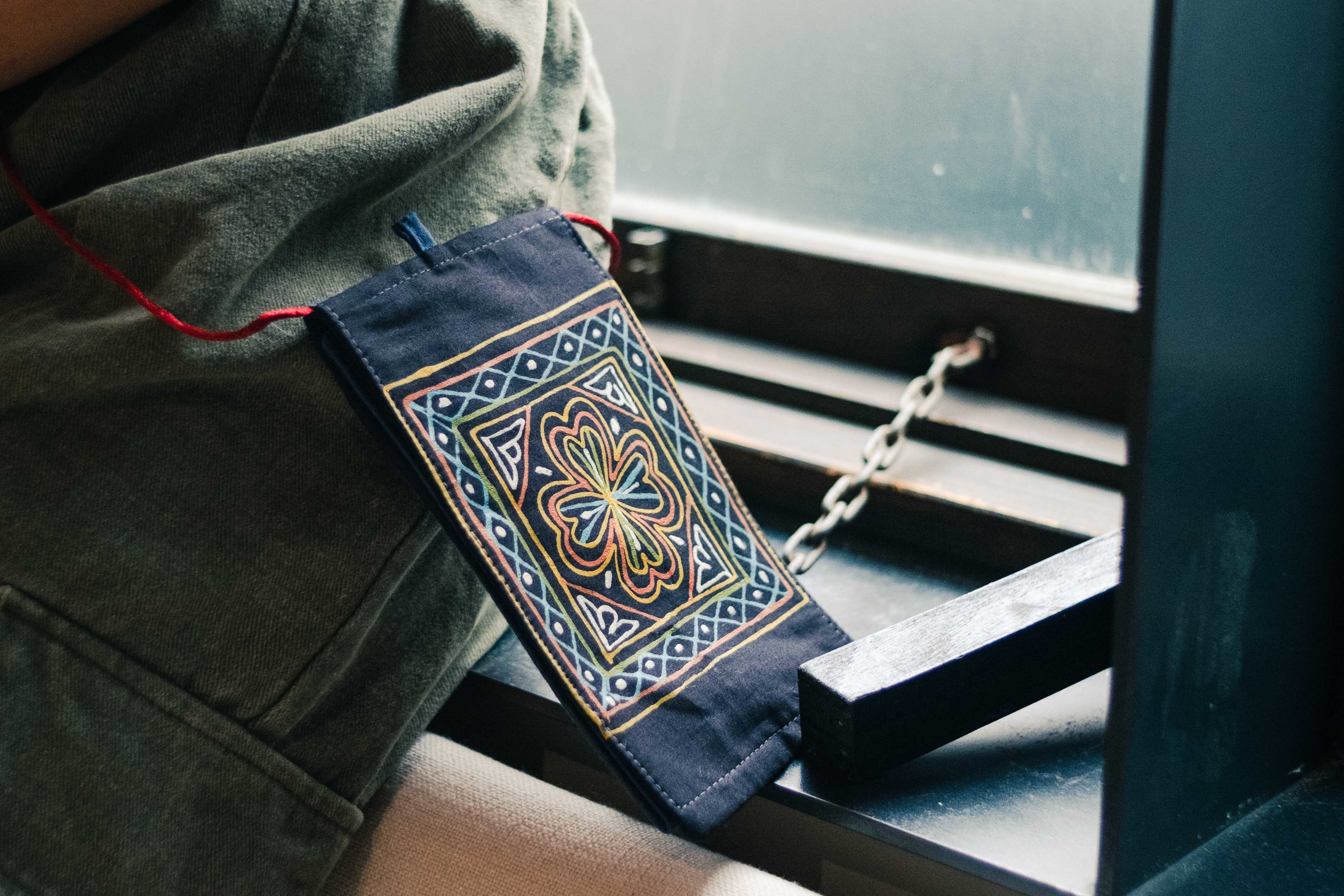
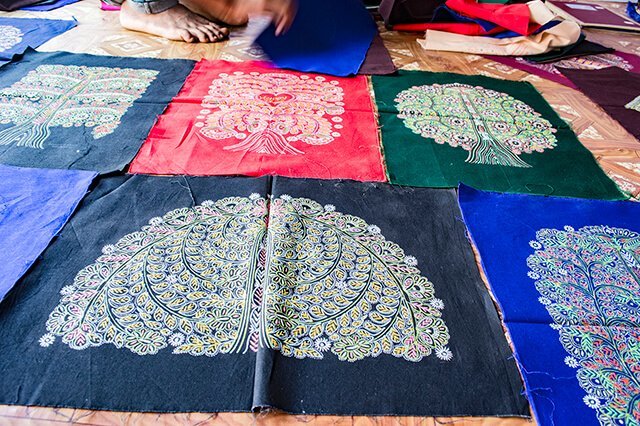
The characteristic of Rogan paintings is that the finished product looks like embroidery, and its fine key does not only comes from the artist's exquisite craftsmanship but also from its high degree of symmetry. In order to ensure the uniformity of printing and pigments, the Bedi family try to only paint on cotton or silk. When part of the pattern is complete, the painter would fold the cloth in half and carefully pull it out to form a symmetrical and complicated beautiful pattern. This kind of creation has no drafts and cannot draw blueprints, which shows the genuity of the painter and the endless sense of design in his mind.
Rogan paintings exhibit a high degree of symmetry (FootLoose Dev)
The fabrics created with Rogan paintings were originally used on gorgeous costumes and decorations worn for Indian celebrations and weddings. However, due to industrialization and the replacement of manpower by machines, the Rogan painters in Nirona Village gradually turned to other industries, and now this art is in danger of disappearing.
Abdul Gafur Kahtri, the painter who made the Bedi family famous, has received numerous awards and one of his works was even presented to former US President Barack Obama. In the 1980s, seeing the decline of Rogan paintings, he rushed to Mumbai to engage in other industries, and it wasn't until the elders of the family persuaded him to go back and inherit this handcraft, that was about to disappear from the world, that he vowed to take over this art and tried to promote the Rogan paintings to the whole world.
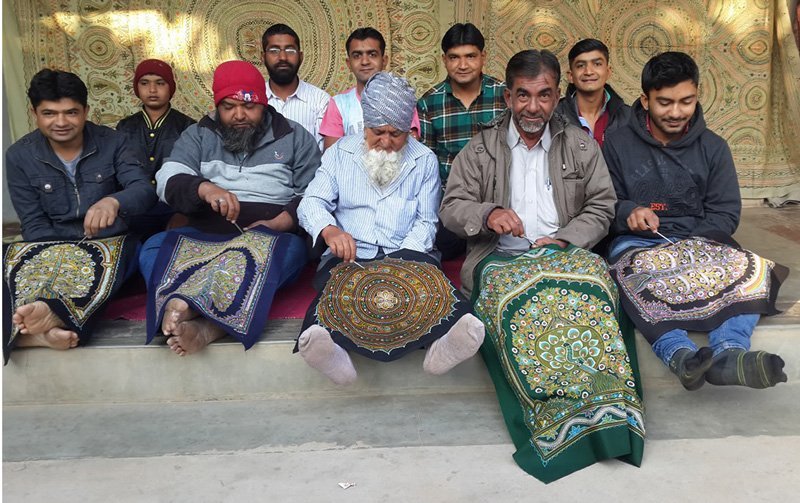
Abdul Jaafar Bedi (front row, second from right) is one of the most famous Rogan painters in the family- (30 Stades)
The door of Rogan painting was not open to women at first, but since 2010, Abdul has been teaching more than 300 local women this art, one after another, hoping to pass on this handcraft to the next generations.
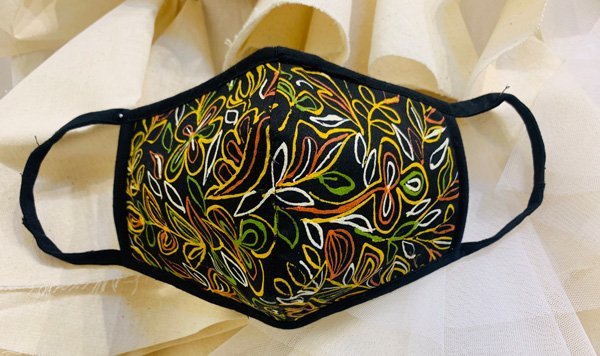
Due to the closure of the borders because of the epidemic, tourists could not visit the Nirona Village to buy Rogan painted clothes. The Bedi family also was not able to open related workshops, causing them to be unable to pay salaries in the short term. They continued to employ female painters outside the family, but they still had to work hard to develop new products, hoping to survive the crisis and continue with the life of Rogan paintings.
Because of the epidemic, the Bedi family developed a face mask drawn by Rogan (Vanshika Gupta // 30 Stades)
Southern Craft|India Rogan Art Indian Rogan Painting Craft
No product in this category