{{ 'fb_in_app_browser_popup.desc' | translate }} {{ 'fb_in_app_browser_popup.copy_link' | translate }}

{{ 'in_app_browser_popup.desc' | translate }}

Your Shopping Cart is empty.
{{ (item.variation.media ? item.variation.media.alt_translations : item.product.cover_media.alt_translations) | translateModel }} {{ (item.variation.media
                    ? item.variation.media.alt_translations
                    : item.product.cover_media.alt_translations) | translateModel
                }}
{{ 'product.bundled_products.label' | translate }}
{{ 'product.bundle_group_products.label' | translate }}
{{ 'product.buyandget.label' | translate }}
{{ 'product.gift.label' | translate }}
{{ 'product.addon_products.label' | translate }}
{{item.product.title_translations|translateModel}}
{{ field.name_translations | translateModel }}
  • {{ childProduct.title_translations | translateModel }}

    {{ getChildVariationShorthand(childProduct.child_variation) }}

{{ 'product.set.open_variation' | translate }}
  • {{ getSelectedItemDetail(selectedChildProduct, item).childProductName }} x {{ selectedChildProduct.quantity || 1 }}

    {{ getSelectedItemDetail(selectedChildProduct, item).childVariationName }}

{{item.variation.name}}
{{item.quantity}}x NT$0 {{ item.unit_point }} Point
{{addonItem.product.cover_media.alt_translations | translateModel}}
{{ 'product.addon_products.label' | translate }}
{{addonItem.product.title_translations|translateModel}}
{{addonItem.quantity}}x {{ mainConfig.merchantData.base_currency.alternate_symbol + "0" }}
Nicaragua, located in the heart of the Americas, is the largest country in Central America. Also known as the "land of lakes and volcanoes", its diverse volcanoes create a rich landscape. However, this country is not only amazing for its spectacular natural scenery, but also its rich craftsmanship.

Pottery depicting the Feathered Serpent worshiped by the Aztecs of Mesoamerica

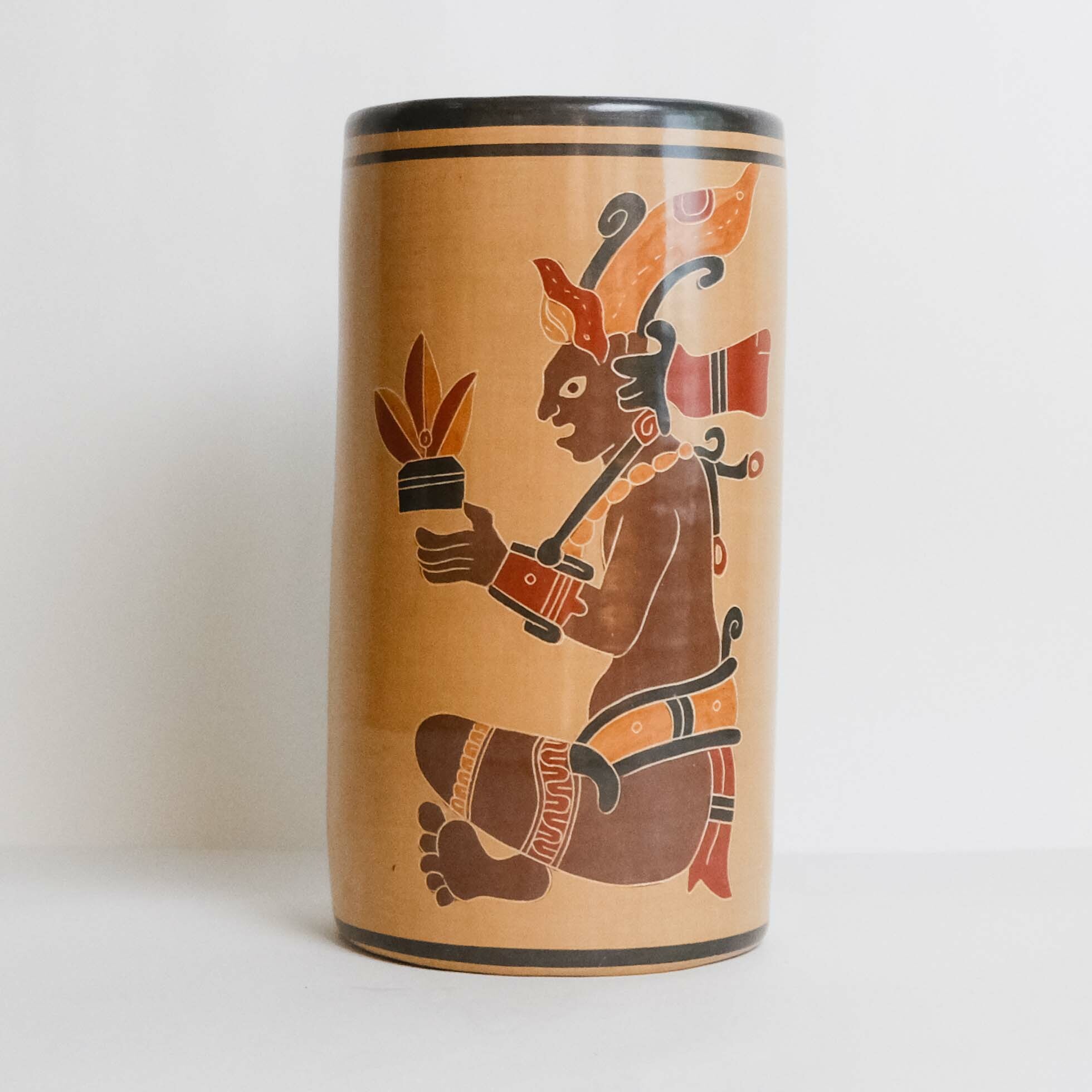
Important God of Maya Civilization - God of Corn

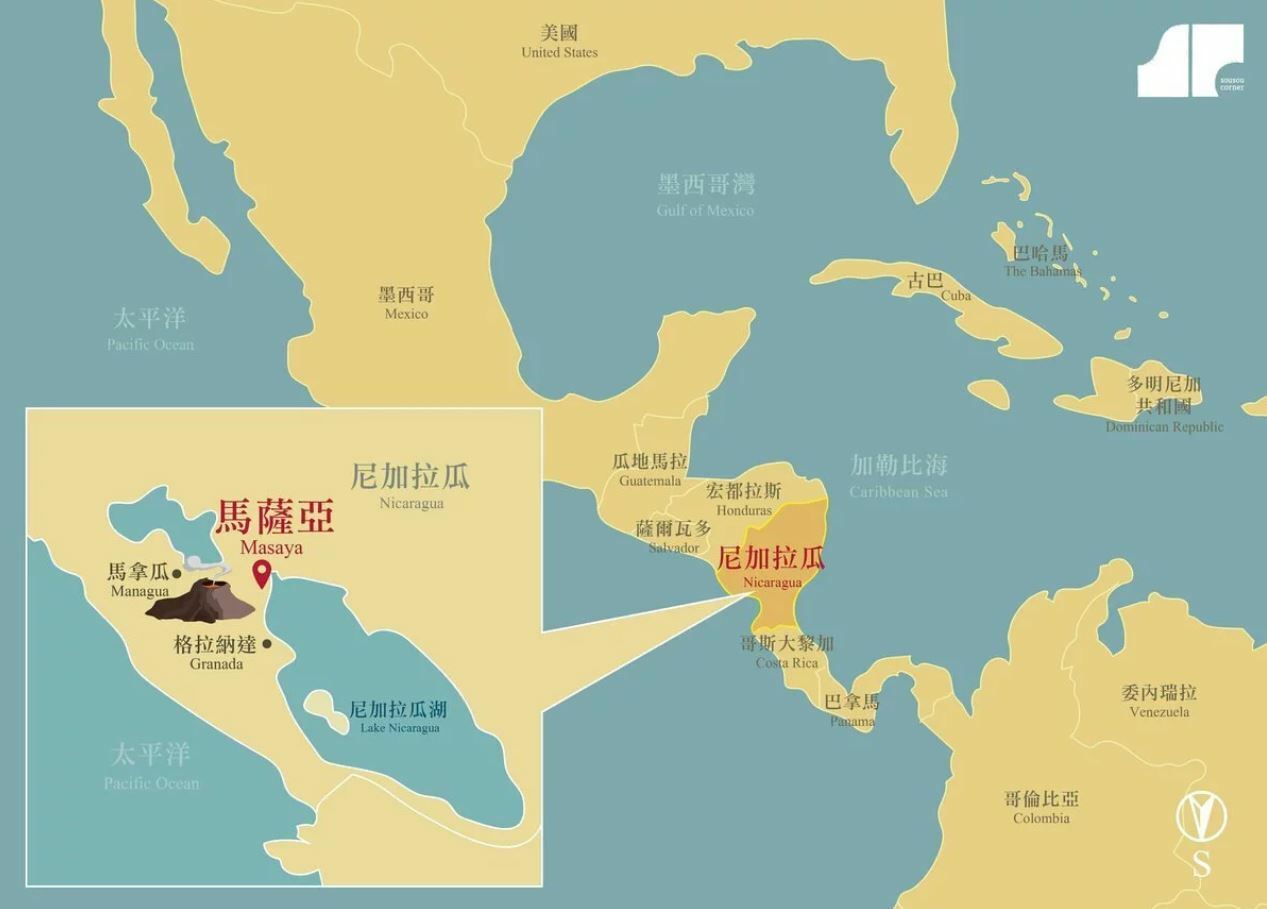
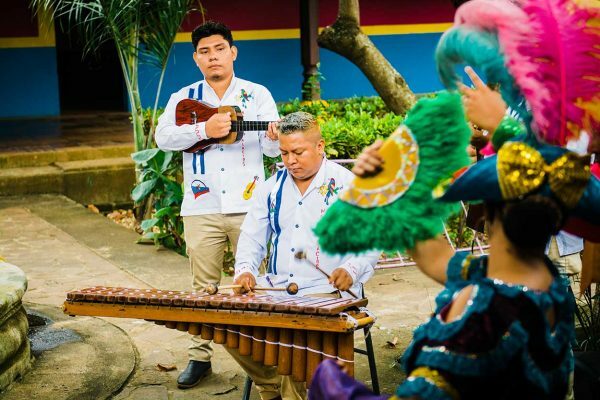
Located between the Masaya Volcano and the Mombacho Volcano, the Massaya Province, in addition to its amazing views of volcanic lava, is also the capital of craftsmanship and culture in Nicaragua. It was declared a national cultural heritage in 1989 because of its rich folk music and dances born by striking the marimba xylophone, as well as their various handicrafts such as the hand-woven hammocks of Masaya (previously introduced in our store), and San Juan de Oriente, a town of pottery.

Figure / Masaya, located in central Nicaragua, is the capital of culture and art
Source / SouSou Corner


Figure / Famous marimba in Nicaragua
Source / mapa nicaragua


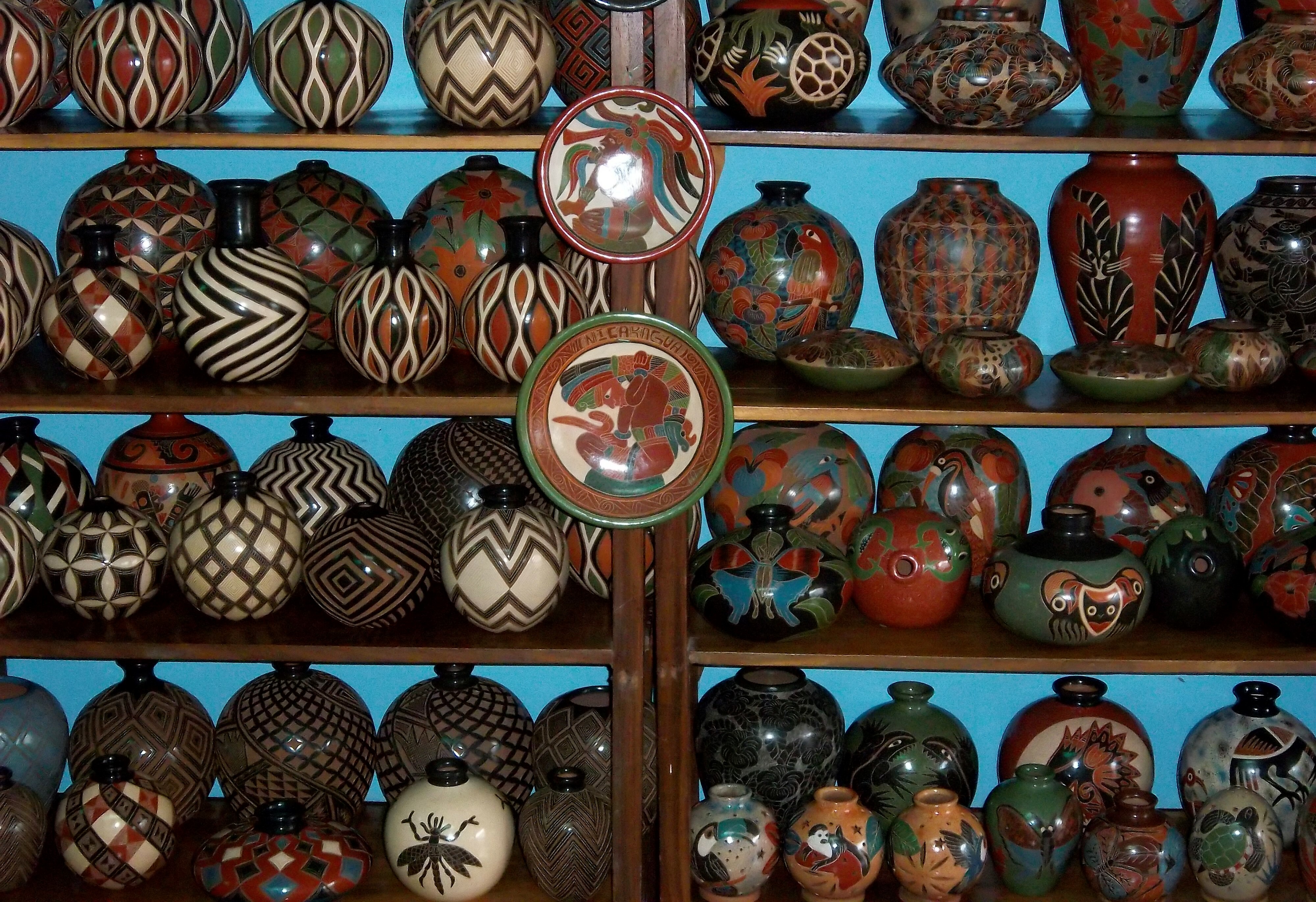
Figure / Pottery town in Masaya

Source / goshen.edu


Figure / Masaya Hammock
Source / SouSou Corner


Colorful pottery in a white town

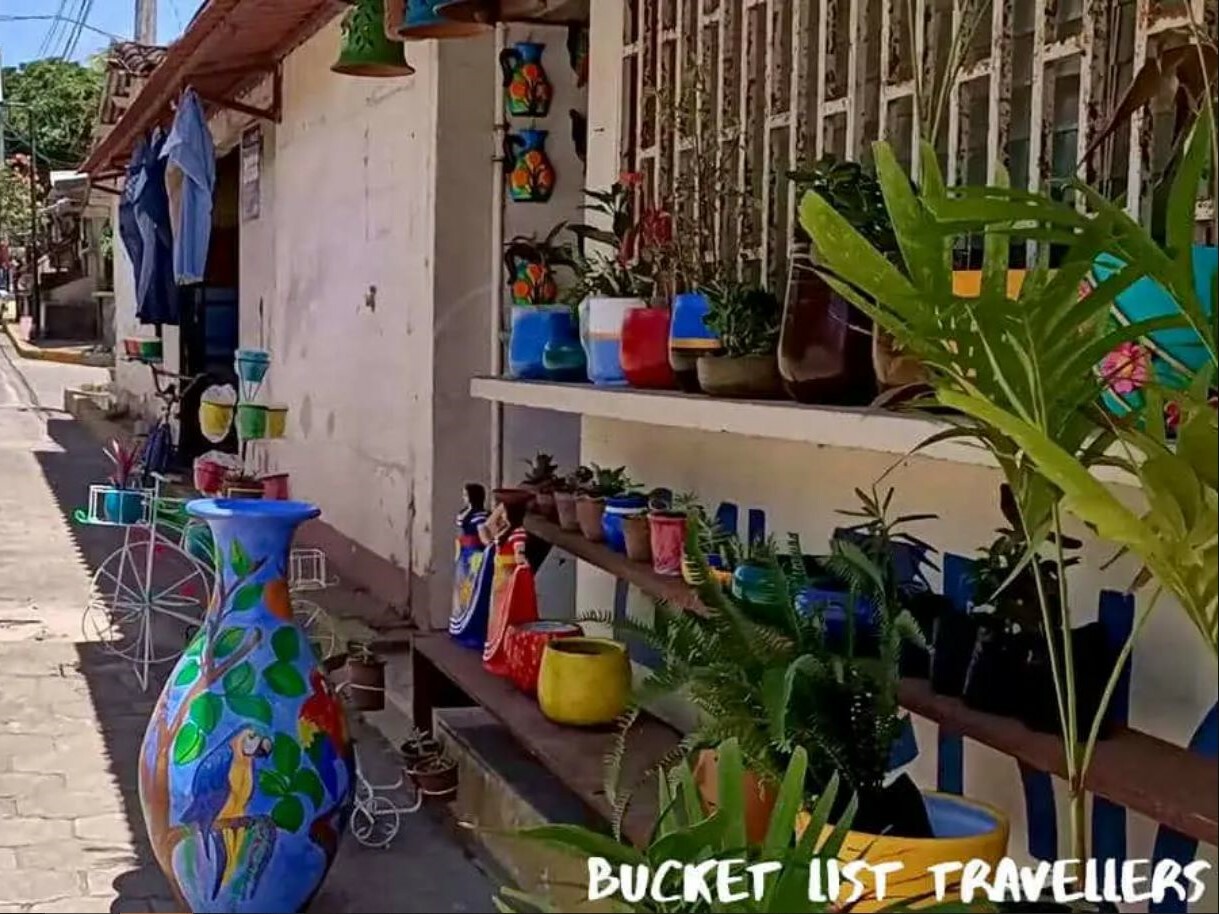
When you walk into San Juan de Oriente you can feel the strong atmosphere full of craftsmanship. The gray and white buildings and streets are filled with colorful vases, pots and tripod pottery sculptures. In 1585, the Spanish colonists established a village there and named the town San Juan de los Platos. Platos means plate, so it means "San Juan of the plates". As early as the "Pre-Columbian" period, before the Spanish colonists arrived, local firing and kneading pottery already had a history of about a thousand years.

Figure / The traditional houses in the town are built with lime, so it is called "White Town"
Source / mapio.net、bucket list travelers


Obtained from natural soil, pottery has greatly changed human life and cooking habits, and has become the daily basis of agricultural society. However, in addition to pottery for daily use, San Juan de Oriente is famous for its exquisite painted pottery with unique shapes and glaze colors. People would exchange pottery for cocoa nuts or shells, which became extremely valuable trading commodities in the market at that time, comparable to Jade and even gold from Mesoamerica. The ornate pottery was not only a display of status but also served as a ritual vessel or funerary object.

The American Aztec Empire, Maya, Inca and Moche cultures all belonged to the Pre-Columbian period of civilization, also known as the Indian period.


In Nicaragua, before it was colonized by Spain, the creative style was originally created by the ancestors of the local residents and the creative output included animal deformation, urns, tripod table, totem, etc., from embryonic drawing to pattern carving, they were all purely handmade and unique.

In the 16th and 17th centuries, the Spaniards came to Nicaragua in search of silver and gold, capturing thousands of Nicaraguans. They went to Peru to mine silver and completely banned the production of pottery related to ceremonies, causing the decline of local culture and making the pottery craft of  San Juan de Oriente to gradually fade away.


The original ornate pottery was no longer made and was replaced by everyday cooking utensils and plain pottery. In modern times, the town is actively reviving traditional pottery culture, engraving old ancient pottery and drawing inspiration from books of ancient civilizations such as Maya and Aztec to restore the prosperity of pottery in the past.

City of Craftsmen

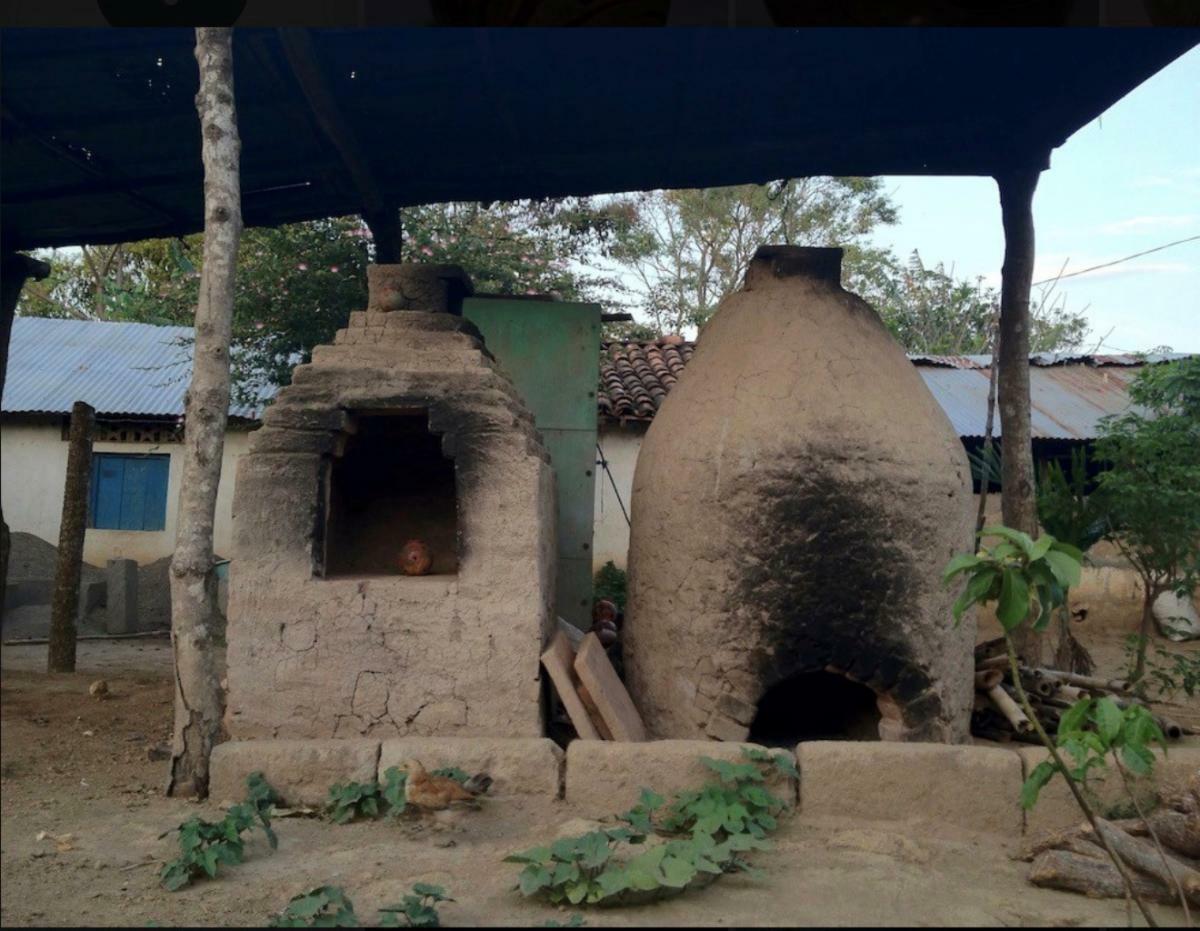
Smoke from burning pottery is the daily life of the small town of San Juan de Oriente. More than 80% of the residents are engaged in pottery crafts, and pottery production is carried out on a family basis. Every household has its own kiln, which is placed on the street or in a semi-outdoor studio. In the 1960s, men were responsible for working in the fields and pottery became a job for women. Now, regardless of gender, they learn pottery from their grandmothers and mothers, and jointly produce and create. Several craftsmen have won international awards, making the town's pottery world famous.

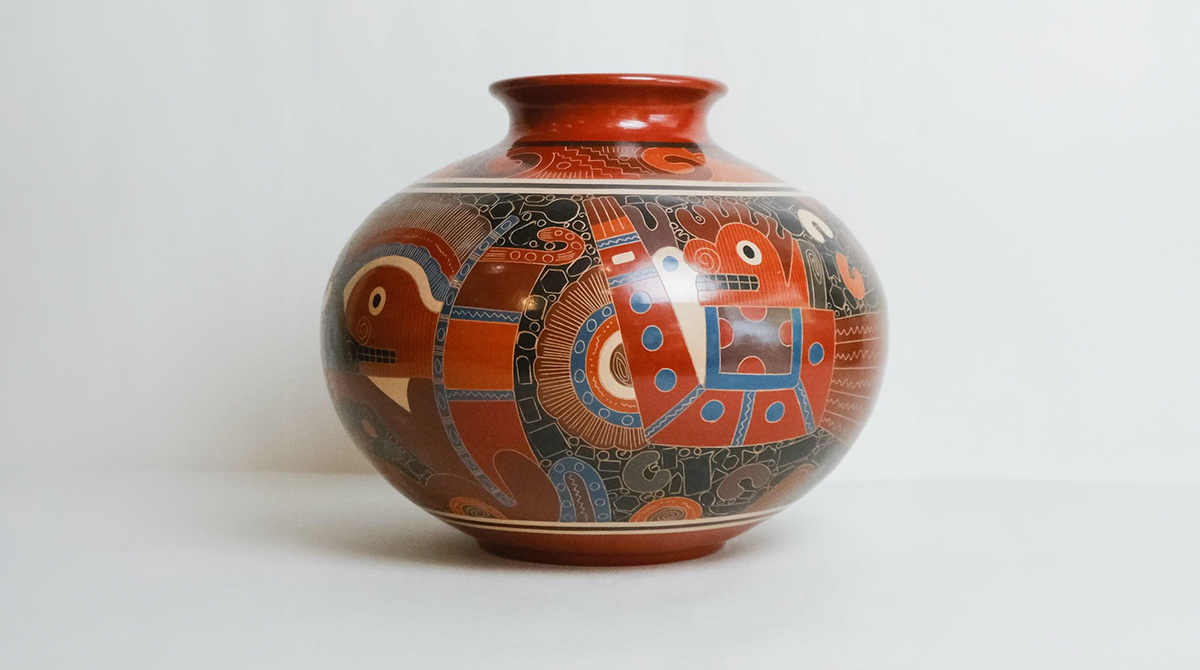
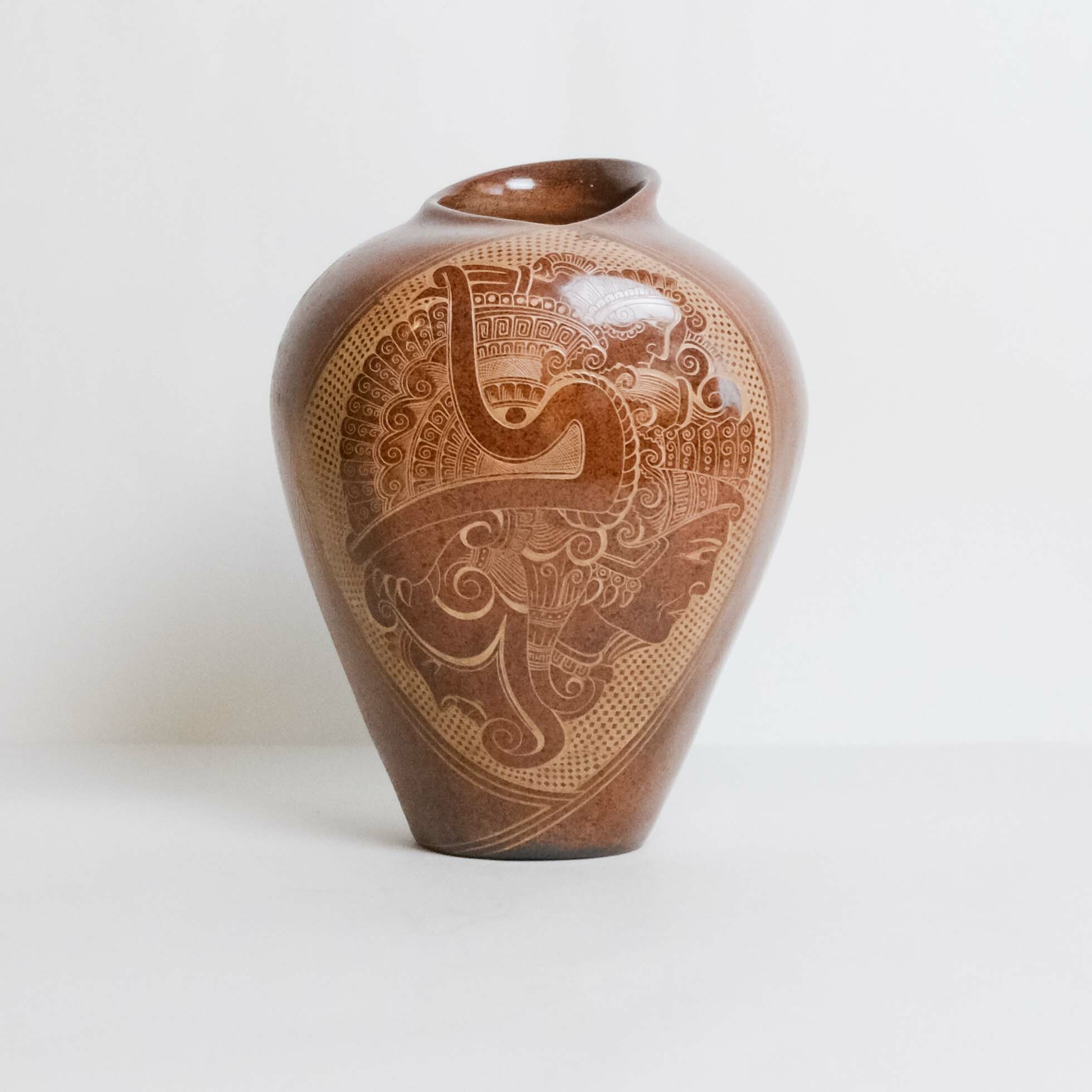
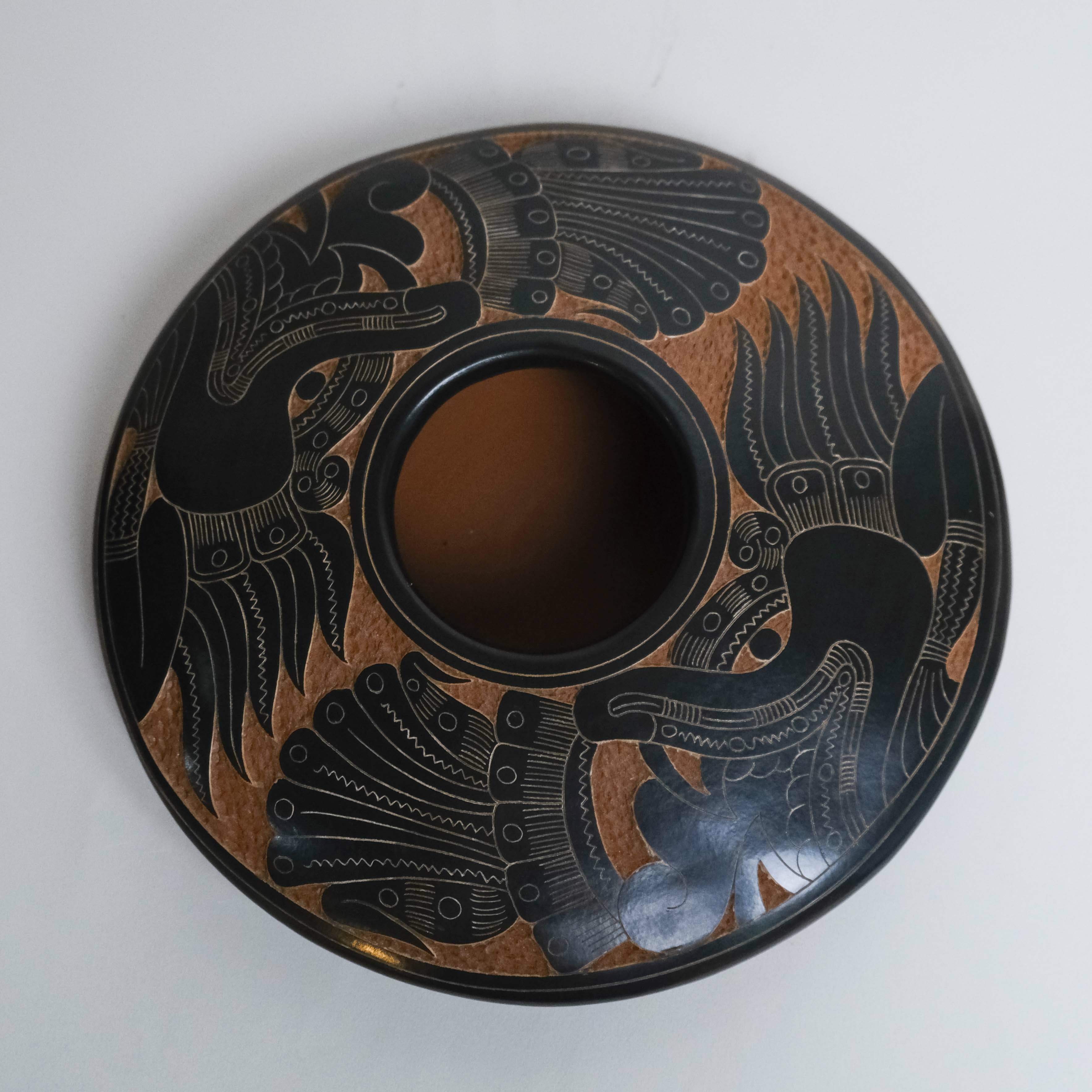
The most common pottery in the town can be roughly divided into four types: Natural Realistic, Geometric Lines, Ancient Civilization painting style and Traditional Engraved pottery. Among them, traditional engraved pottery is the most popular.


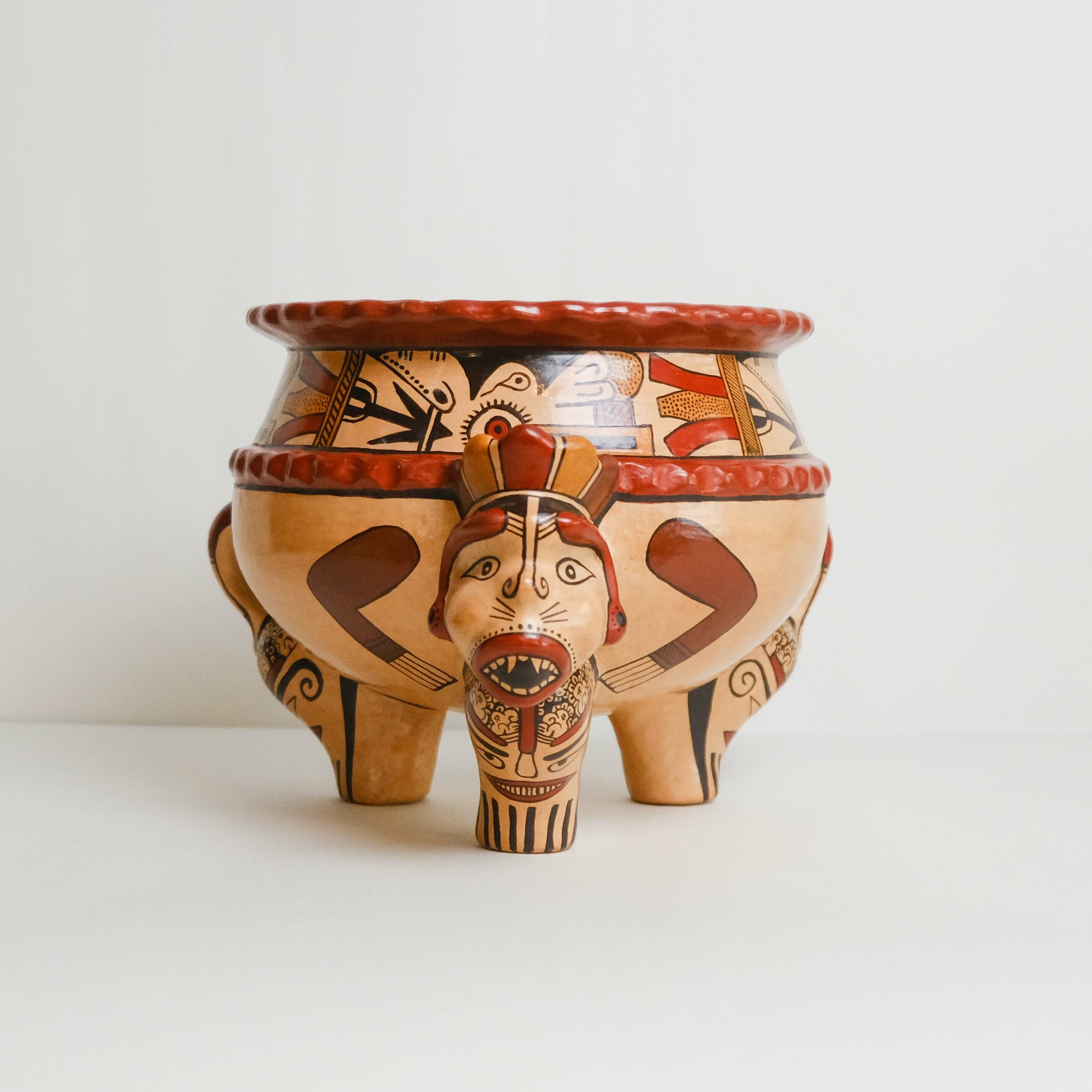
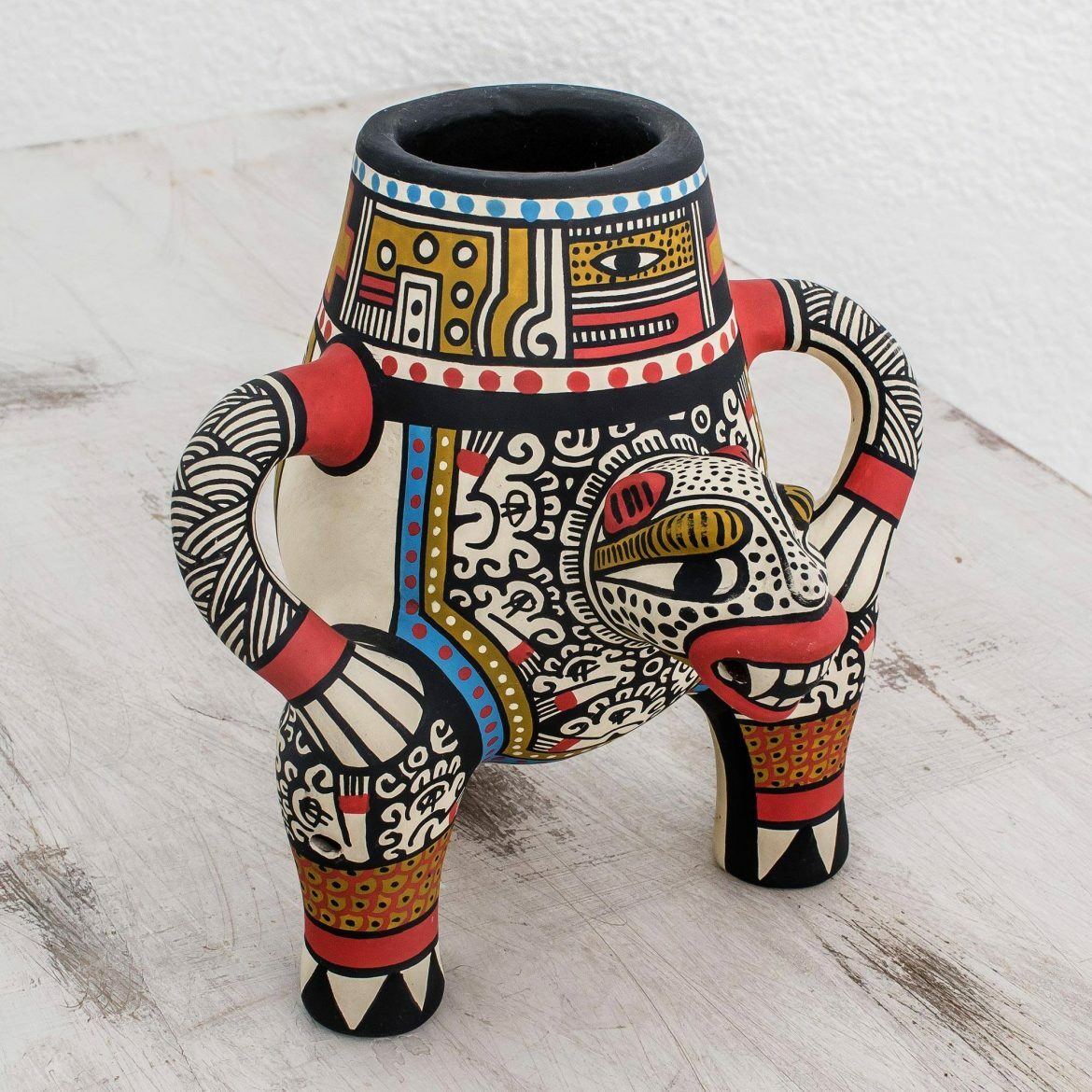
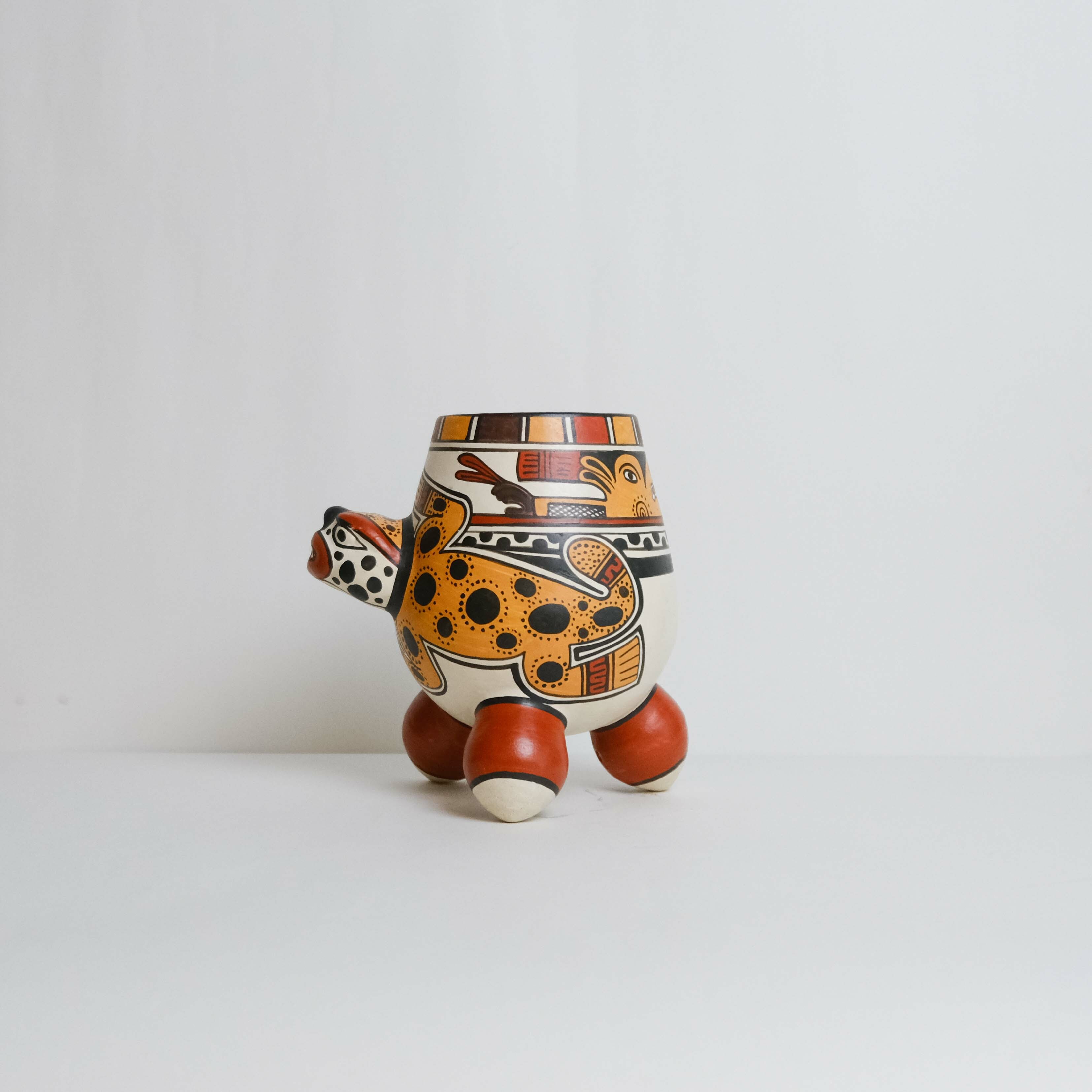
Not directly under the rule of the Mayan and Aztec empires, Nicaragua inherited the ancient cultures of Mesoamerica Olmec. Ancient cultures such as Maya and Aztec made tripod pottery pots with human faces or jaguar carvings to hold tequila, cocoa or other offerings, which also imbued the town with a strong ancient civilization style and gave it its name as the cradle of art before colonialism.

Figure / small town artist Gregorio Bracamonte reproduces the three-legged utensils common in ancient civilizations
Source / novica


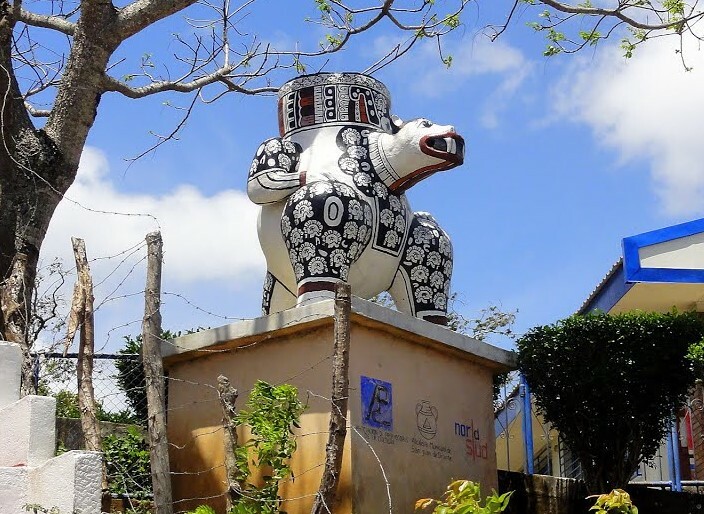
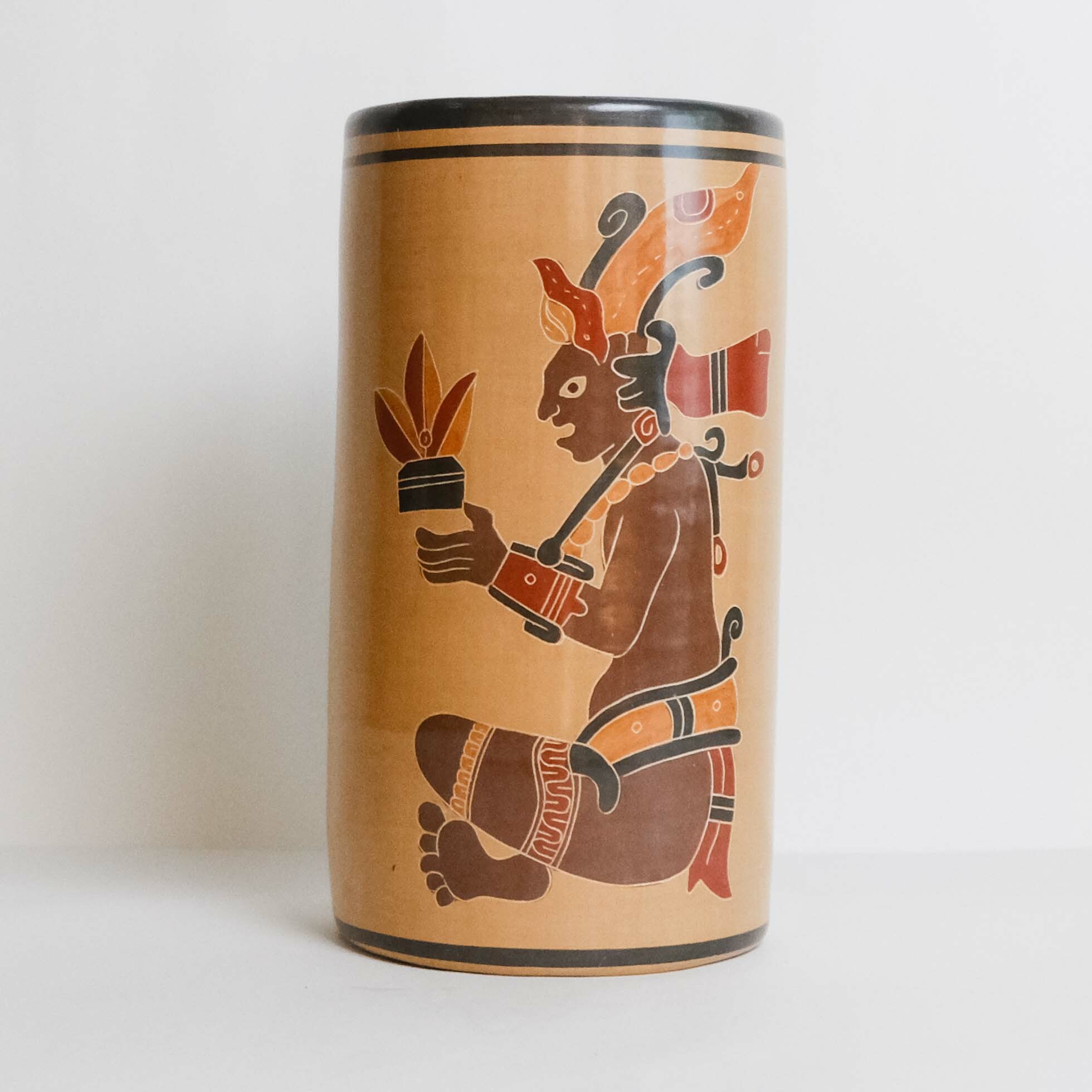
Cultural totems that are closely related to life or spirit often appear on pottery, such as the Corn god and the Feathered Snake god of the Mayan civilization. The Mayans believed that humans were made of corn; they worshiped the "God of Corn" and called themselves a nation of corn. This type of pottery has also become the national representative of Nicaragua and a national gift in diplomatic etiquette. It has also been presented to President Ma Ying-Jeou, Tsai Ing-Wen and others, and is currently exhibited in the National Museum of History.

Figure / Claypot of the Corn God

In addition to the feathered snake god and the corn god, the myths of the birth of human beings were passed down by the Mayan civilization and filled the pottery with rich images of jaguars, sea turtles and parrots.


Legend has it that Hurricane, the god of the sky, and Gucumatz, the god of the sea, created the earth and made four men out of corn dough, named "Jaguar Kitze", "Jaguar Night" , "Mahukuta" and "True Jaguar", these four are the ancestors of the Mayans and all of them had superpowers. Then, Chuangshi God created four more women, "Sea Turtle", "Shrimp", "Hummingbird" and "Macaw". They gave birth to many Mayan offspring, with different skin colors and speaking different languages.

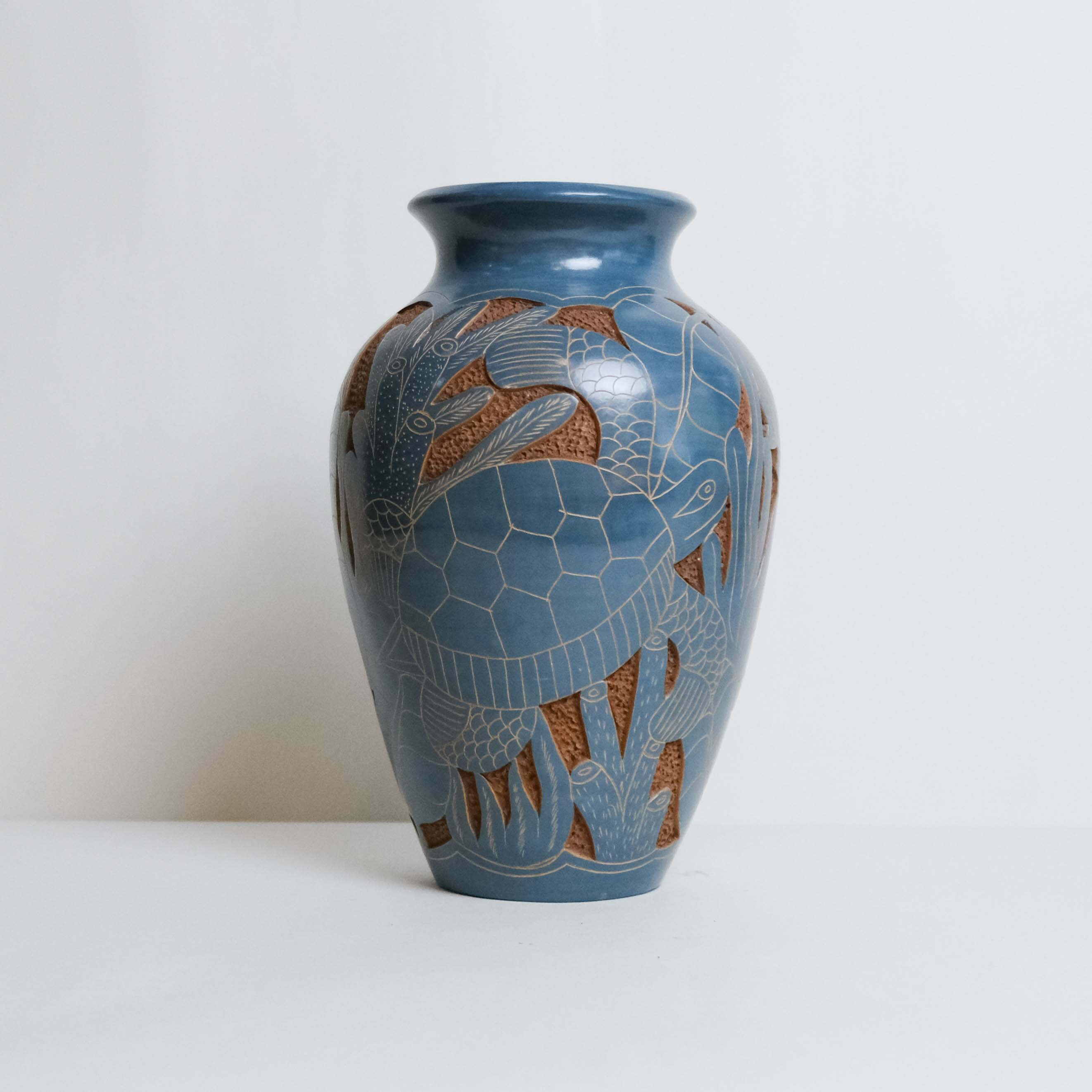
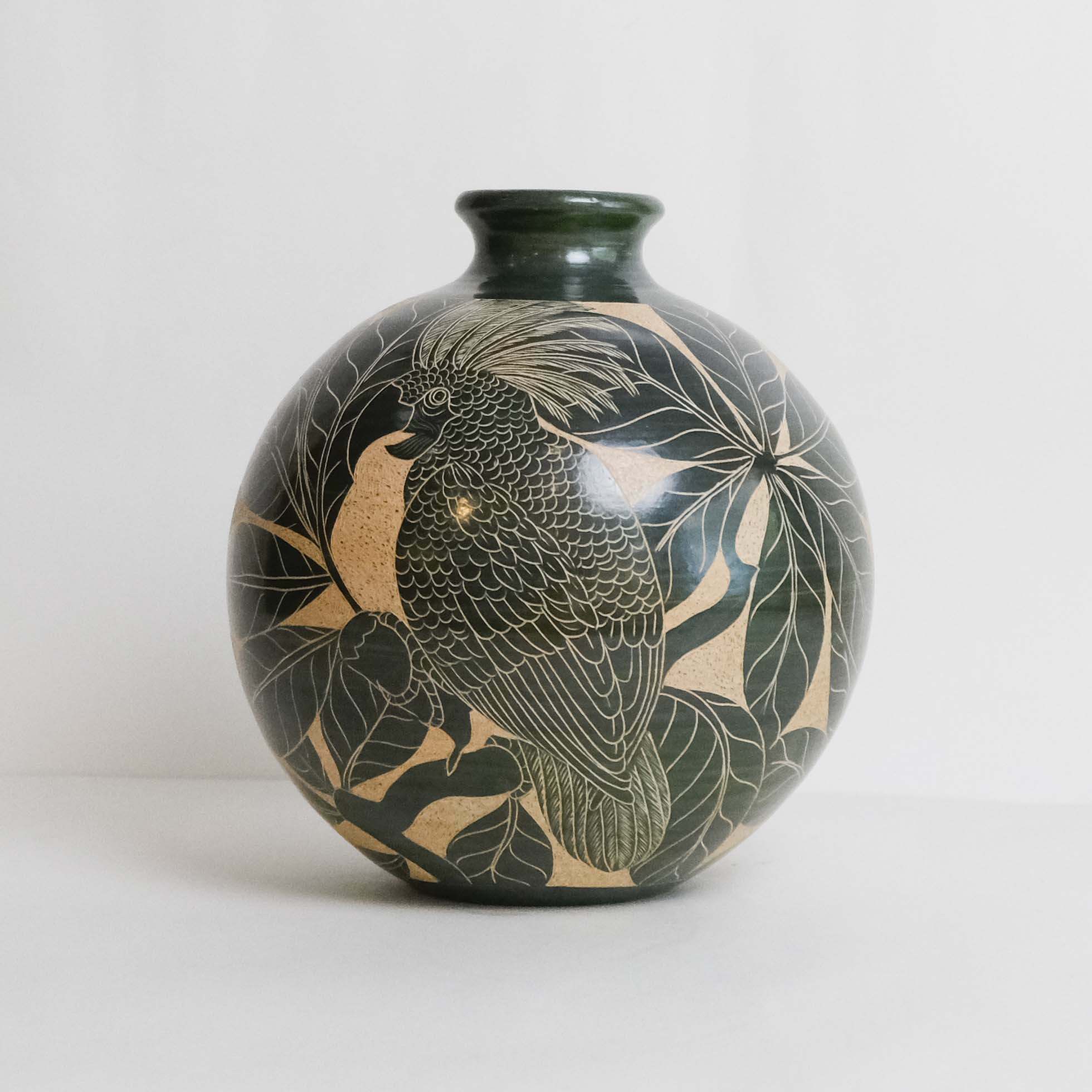
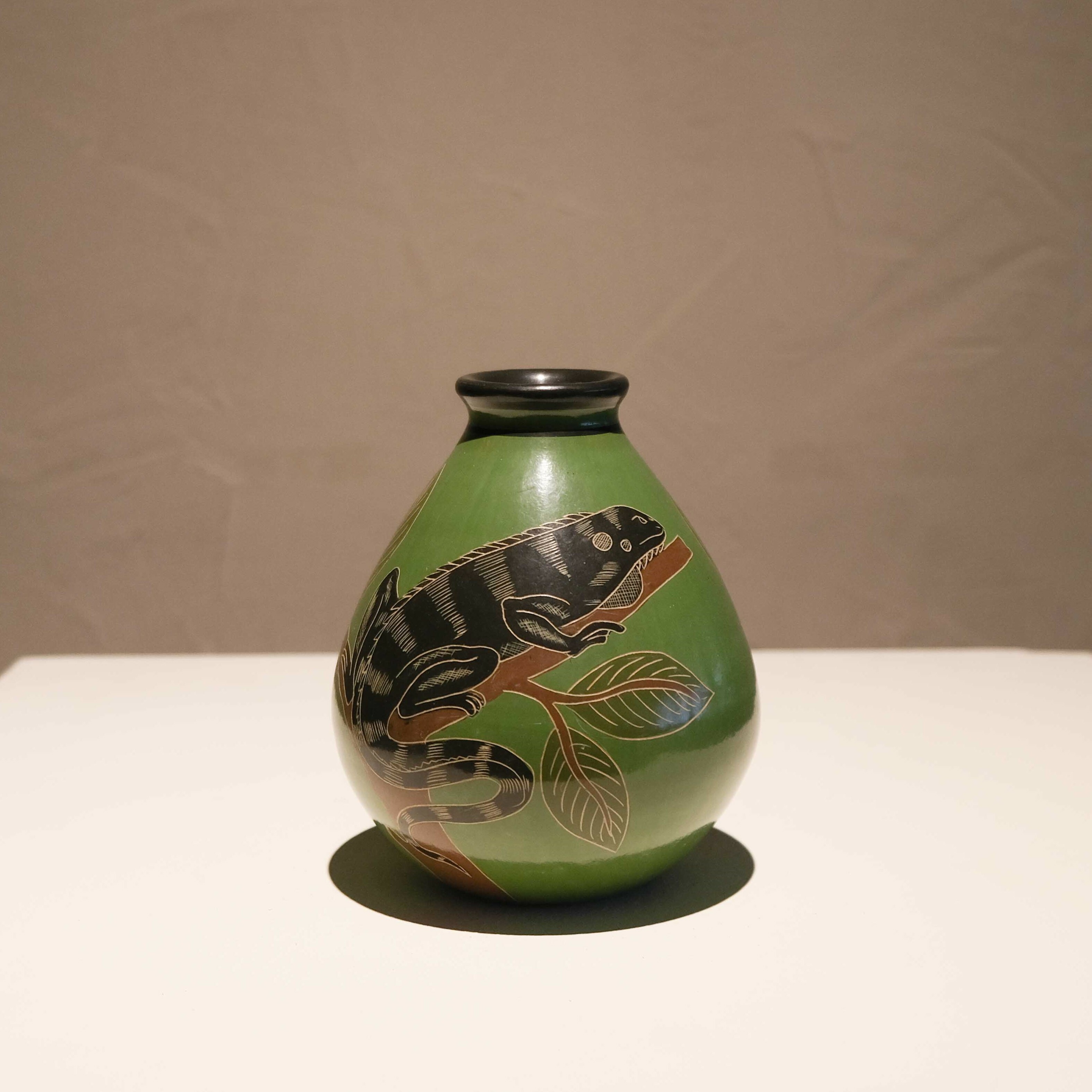
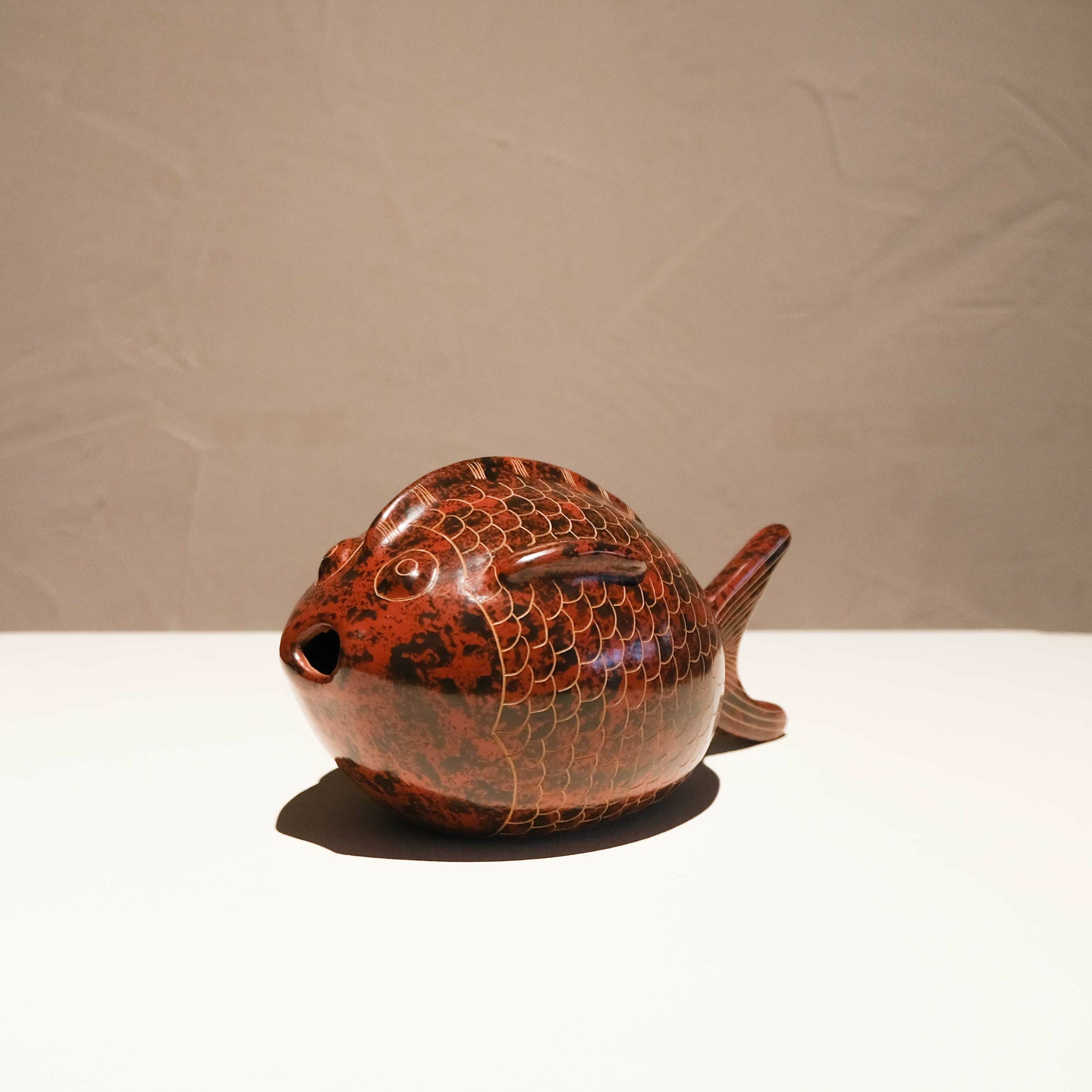
Natural scenes are also one of the common pottery themes. Since Nicaragua borders the Caribbean Sea to the east and the Pacific Ocean to the west, and has the two largest freshwater lakes in Central America, it is full of rich ecology. With the knife blade on the clay, the natural ecological background is carved as the theme of creation and natural elements such as local flowers, turtles, fish and tropical birds are carved out.

Figure / Nicaraguan Cichlids

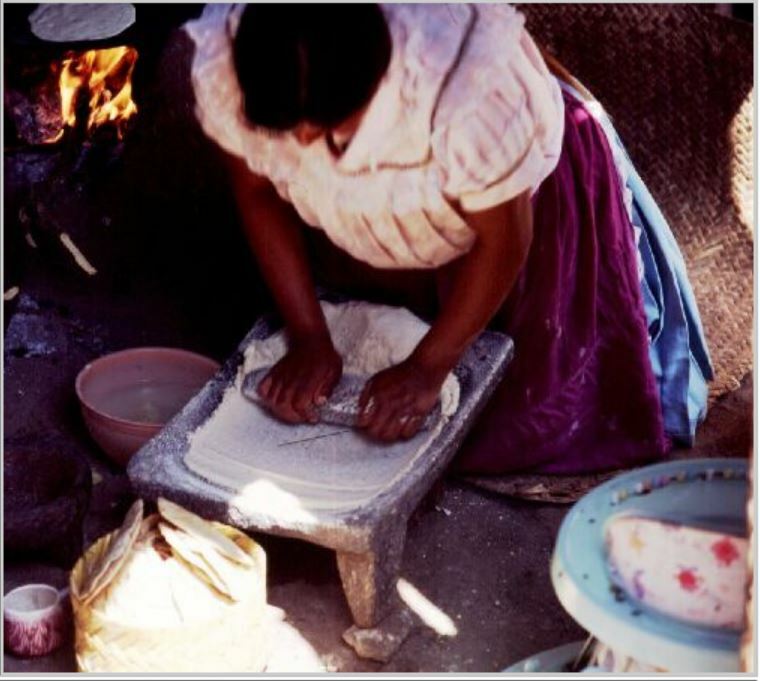
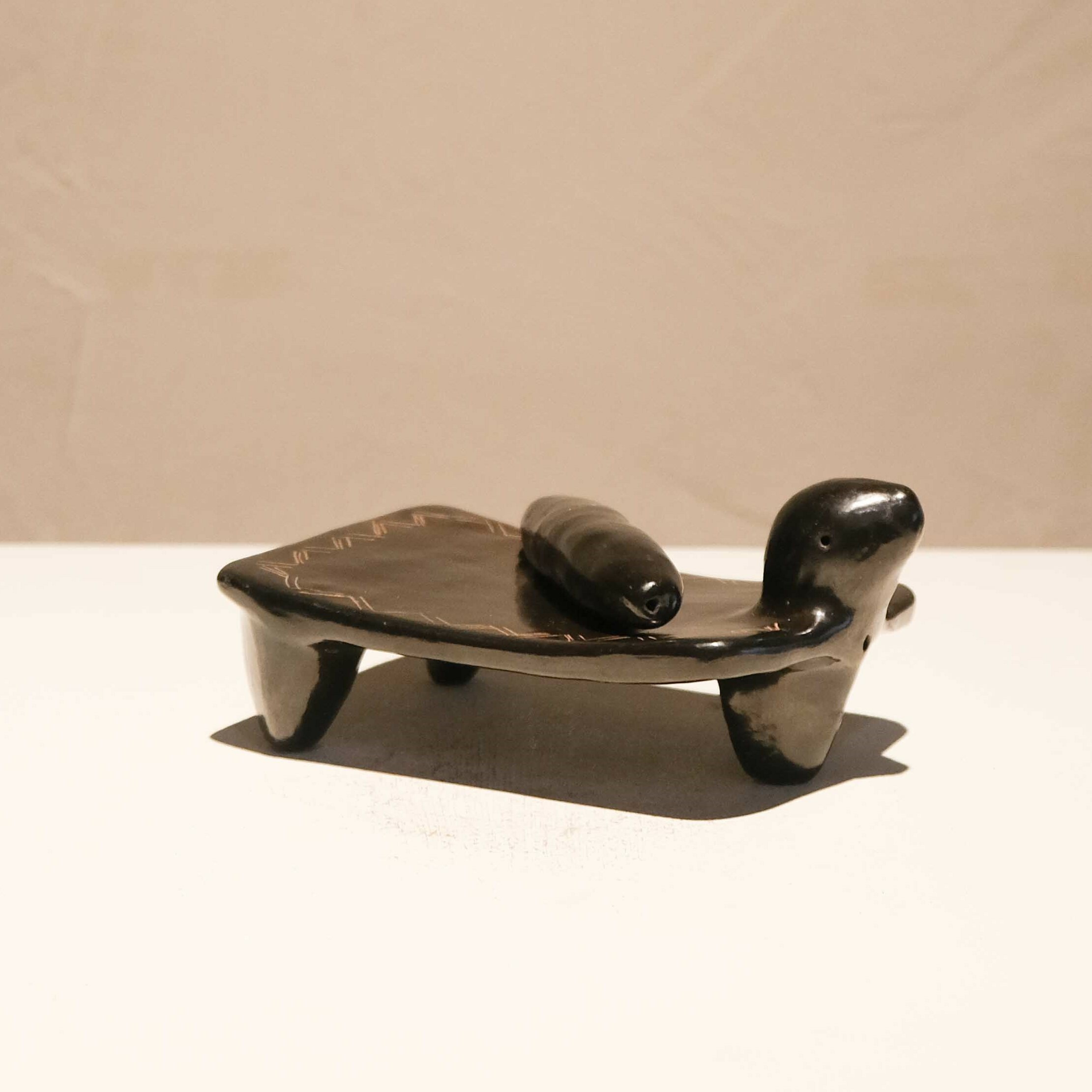
Among all kinds of pots and vases, there is a special one that works as a grinding tool: Metates, an indispensable tool for making tortillas by the native peoples of Mesoamerica. It stands on three legs and has a flat surface. Every day before dawn, the sound of grinding can be heard. Women kneel on the ground, use their bodies to push stone sticks, grind grains into flour, and then knead them into dough.

Figure / Metate, a traditional stone tool for making tortillas
Source / the mija chronicles


Figure / Replica Small Metate

Small town pottery making

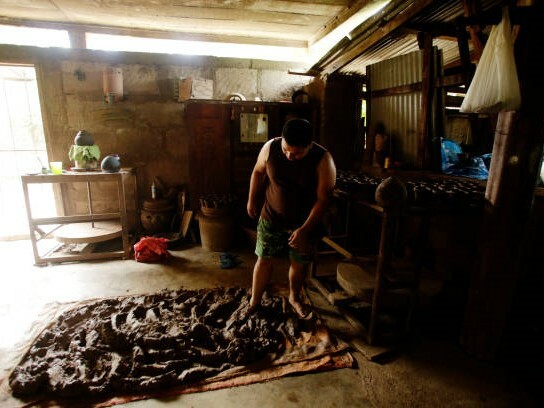
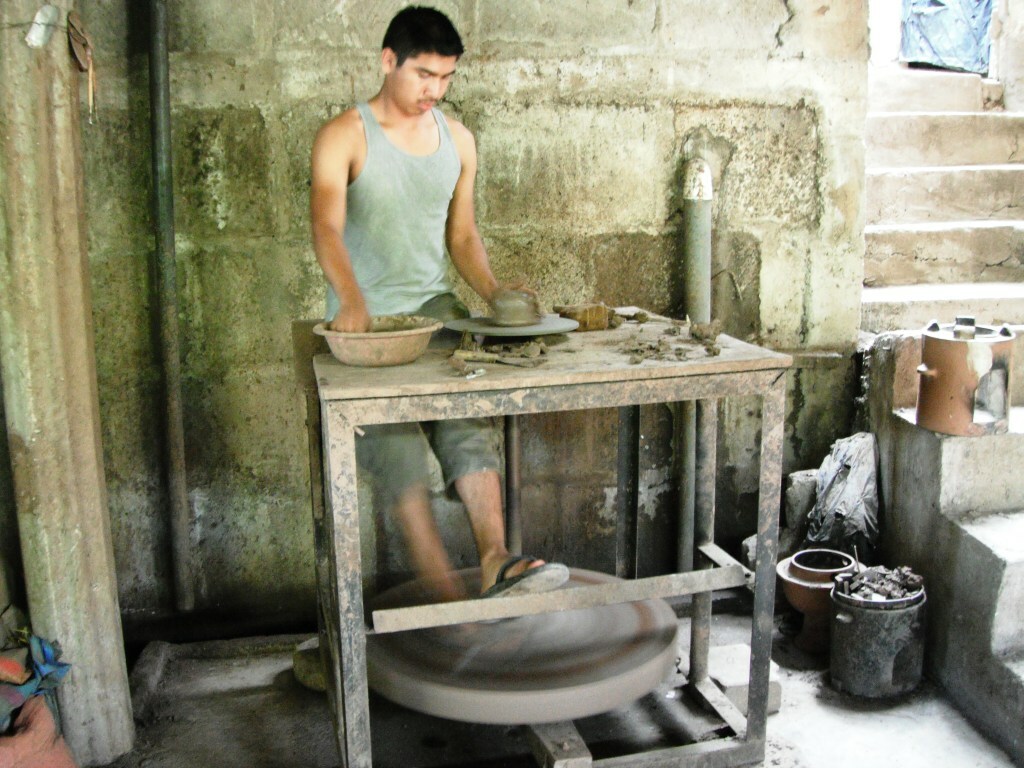
In the small town of San Juan de Oriente, craftsmen collect natural red mud near the volcano and step on the red mud with their feet for several hours to narrow the pores of the soil and make the soil softer. Then, use a foot-operated pottery wheel to quickly kick the wheel with their feet to generate kinetic energy and shape the clay with their hands. In the process, both hands and feet are required, and skillful maintenance of speed and balance is necessary.


Figure / Collected red mud needs to be softened with feet first
Source / Marianna Massey


Figure / The most traditional hand-drawn billet, using the feet to turn the wheel
Source / Laguna de Apoyo


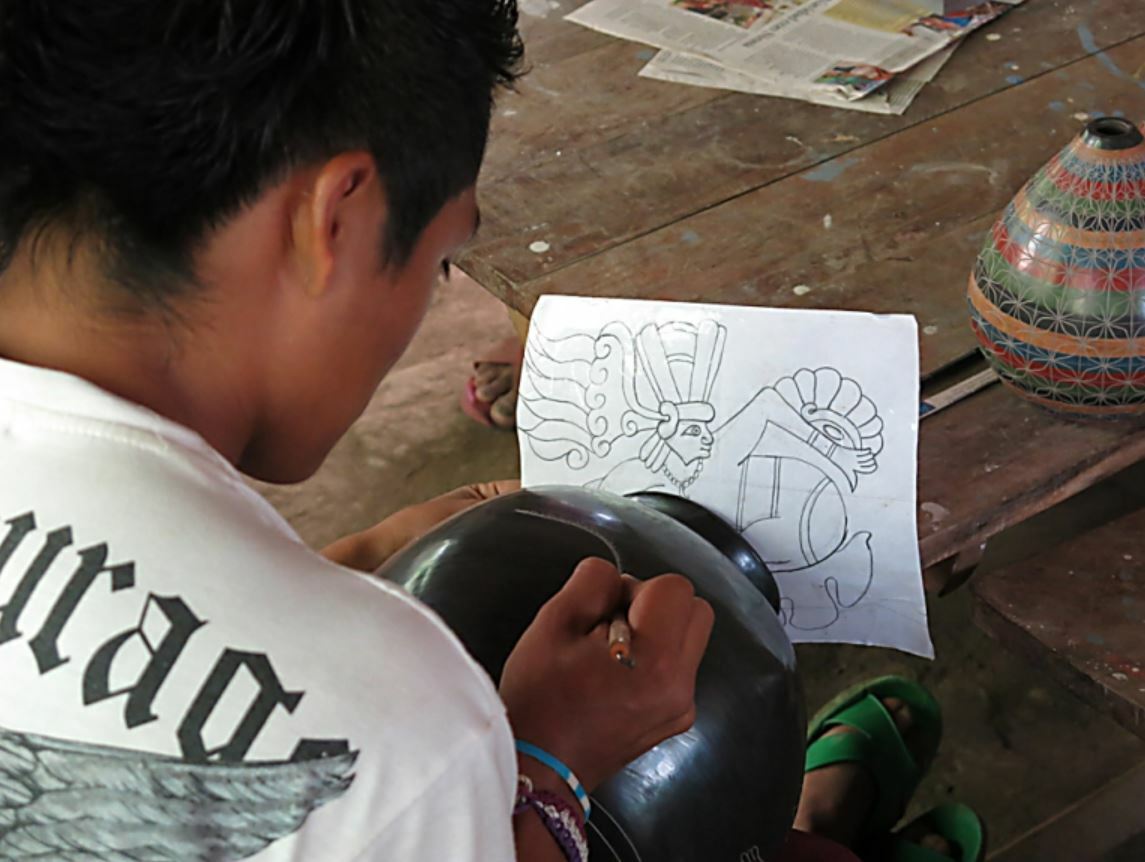
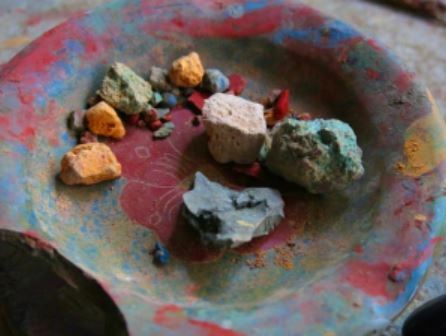
The shaped pots are dried, polished with stones, and painted with natural pigments or carved with a sharp knife edge. This process usually takes several hours. Then, they are glazed and finally finished in a brick kiln. Cooked at low temperature.

Figure / Painting of ancient civilizations using natural minerals
Source / Md Leader、myemail