{{ 'fb_in_app_browser_popup.desc' | translate }} {{ 'fb_in_app_browser_popup.copy_link' | translate }}
{{ 'in_app_browser_popup.desc' | translate }}
{{ childProduct.title_translations | translateModel }}
{{ getChildVariationShorthand(childProduct.child_variation) }}
{{ getSelectedItemDetail(selectedChildProduct, item).childProductName }} x {{ selectedChildProduct.quantity || 1 }}
{{ getSelectedItemDetail(selectedChildProduct, item).childVariationName }}
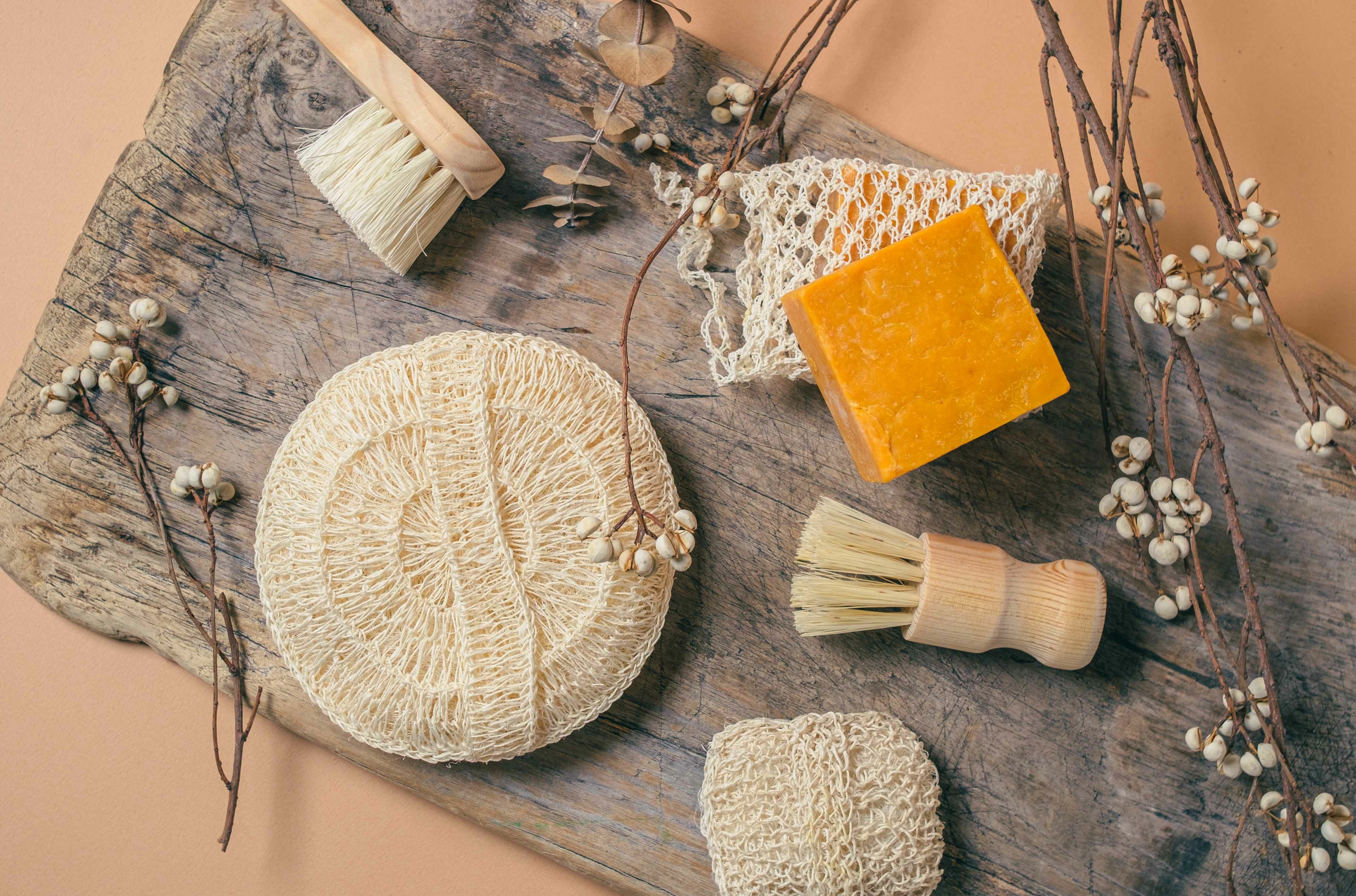
The natural plant light brush from Agave fiber weaving process has been passed down for thousands of years in Mexico.
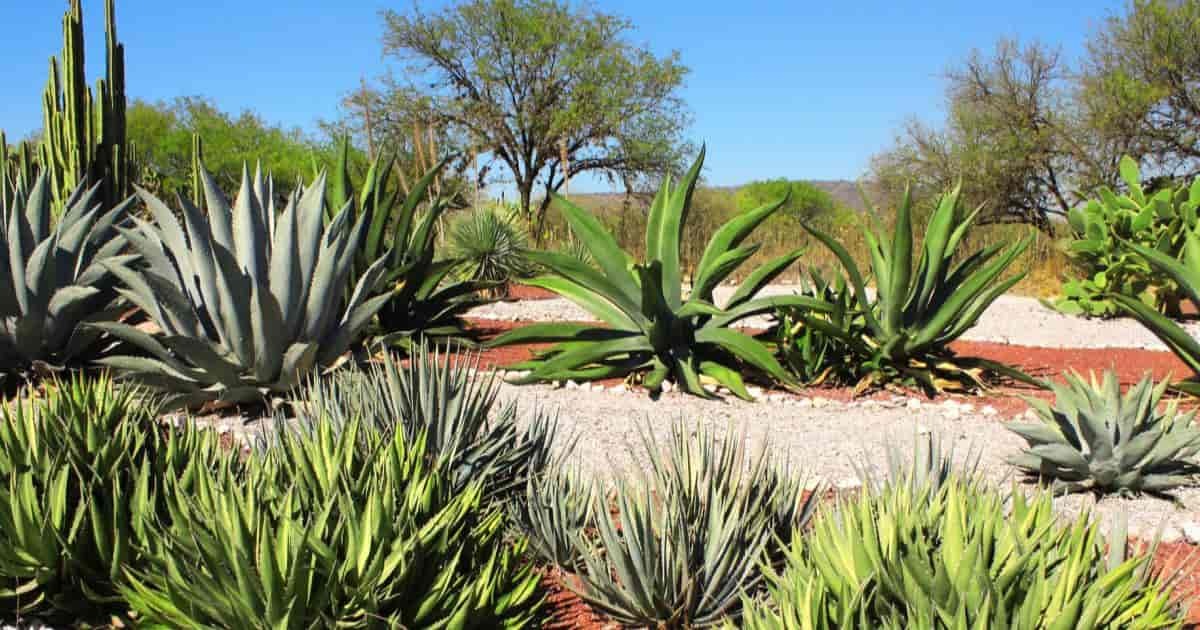
Agave: the representative plant of Latin America
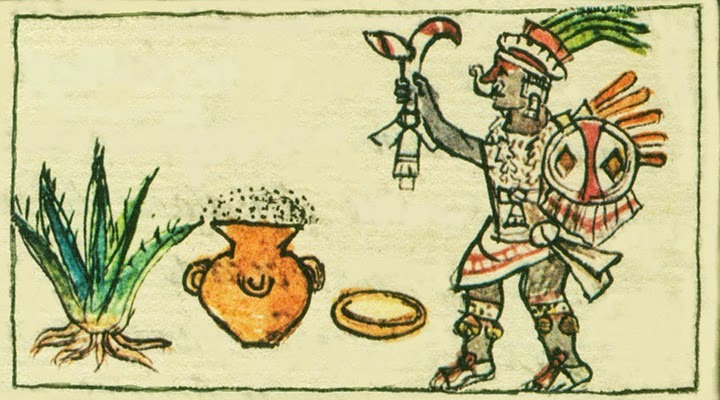
The Agave we often hear is actually a general term for the plants of the Agave family (Agavaceae). It is a perennial herbaceous large succulent plant. There are about 300 species distributed in the world, mainly native to the warm and arid regions of the Americas, including the southwest of the United States, Central America, Mexico, the Caribbean coast, and South America. Among them, Mexico is the distribution center of agave plants, with more than 1/3 of the agave species.
Source / Plant care today
Source / Pinterest
The Agave is widely distributed in the Americas, and the indigenous people from everywhere in the continent have developed its unique application for it. This plant's thick leaves have been found to be roasted to be eaten, or mashed to make a salve, and the plant's core (bulb) is used to make classic Tequila and Mezcal. The fibers in the leaves can be used for weaving after drying, and the remaining parts can be burned as fuel. Agave, because of its many uses, is an indispensable and precious plant in the lives of local people.
Source / celestemundo
Agave plant fiber weaving is a common craft in Central and South America, but it also has different names and crafts depending on the variety of the used plant. For example, the Fique weaving process from Colombia, which is the weaving of Agave fibers into chairs and stools, is the craft representative of the local indigenous of Guane; while in the region of Hidalgo, Mexico, in Central America, it is mostly called Ixtle weaving.
Ixtle weaving: Aboriginal craftsmanship passed down for thousands of years
Ixtle is a natural fiber extracted from the Agave plant, including other varieties such as Maguey, Agave Lecheguilla and Palma Samandoca. It is mostly distributed in the arid and semi-arid regions of Mexico. According to historical and archaeological data, as early as 8080 BC, some people in the central and northern parts of Mexico used Ixtle fiber to weave.
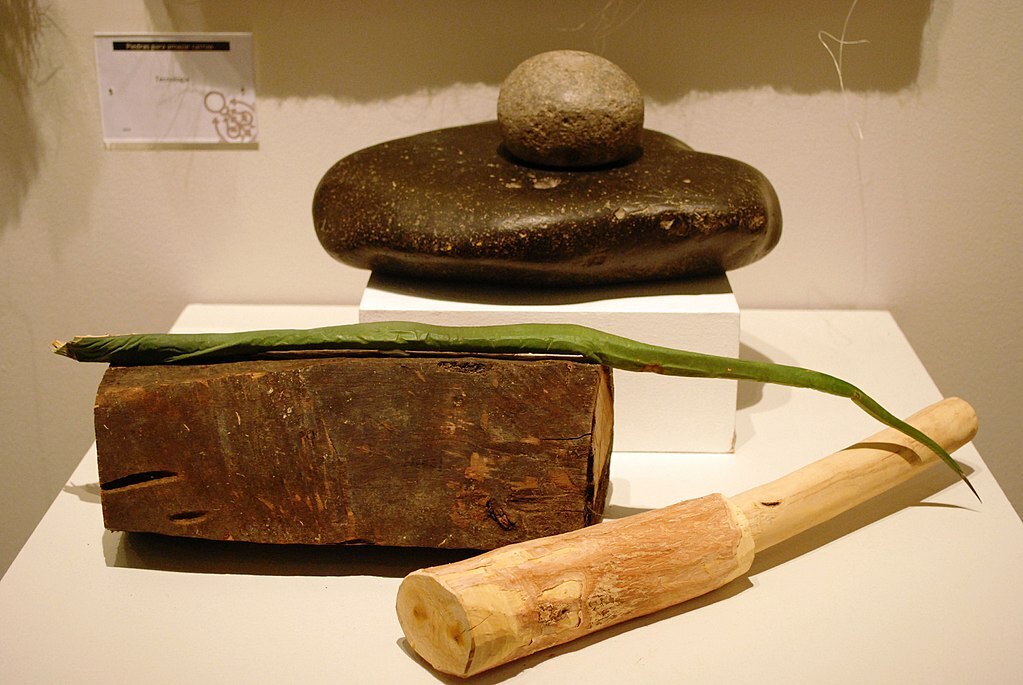
Photo / Traditional utensils used to harvest agave fibers on display at the Museum of Mexican Folk Art (Museo de Arte Popular)
Source / Agave American
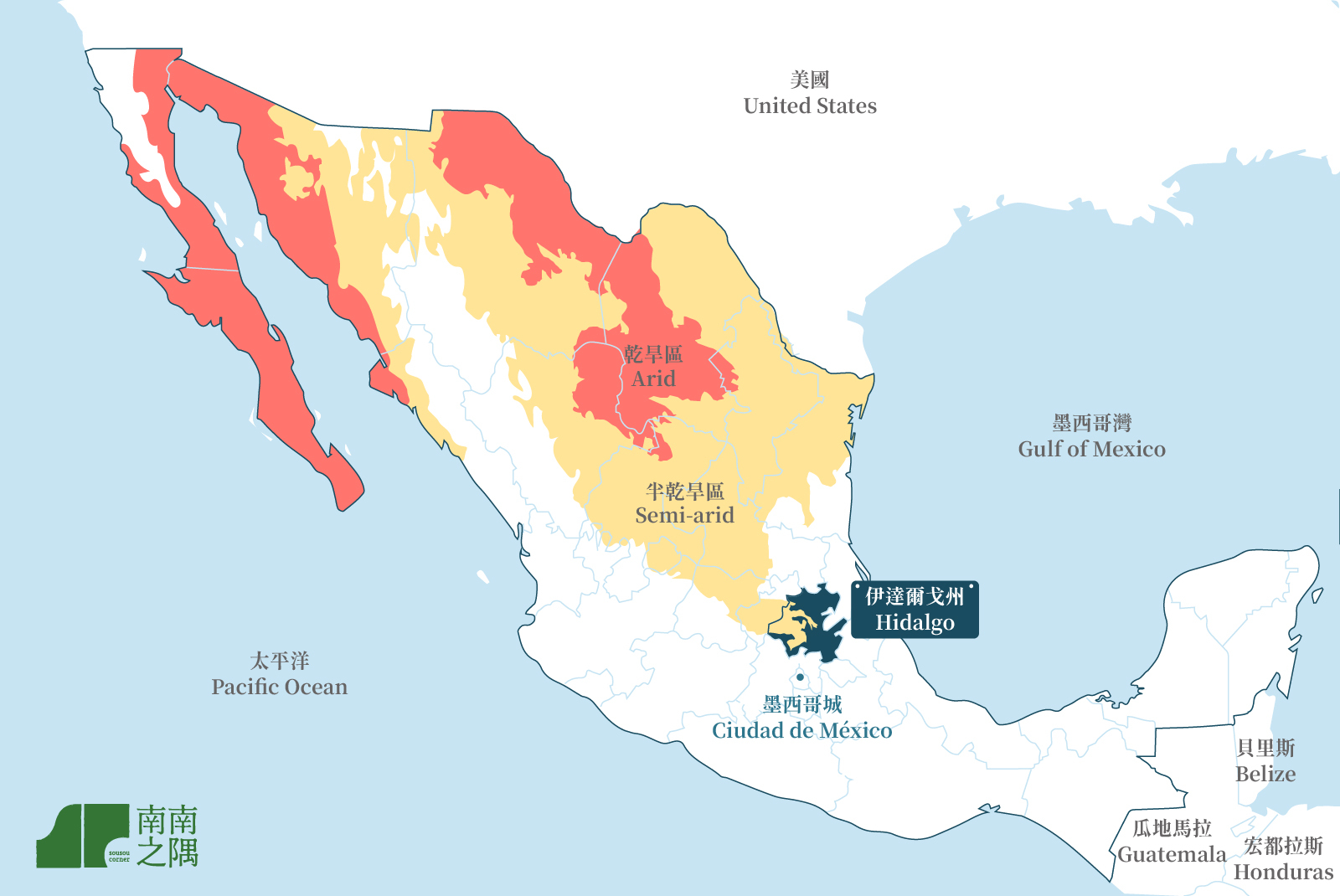
From north-central Mexico to the Mesquital Valley in the central state of Hidalgo, all are arid or semi-arid regions where people use Agave fibers for weaving; these people are also known as Ixtle weavers (Ixtleros). The Otomi tribe, a native of the Mesquital Valley, is one of the most representative communities using Ixtle fiber weaving, traditionally using fibers to make ropes, floor mats, or bags, and clothing with finer fibers; for example, during the Spanish colonial period, people used agave fiber instead of linen to make the priests’ coats.
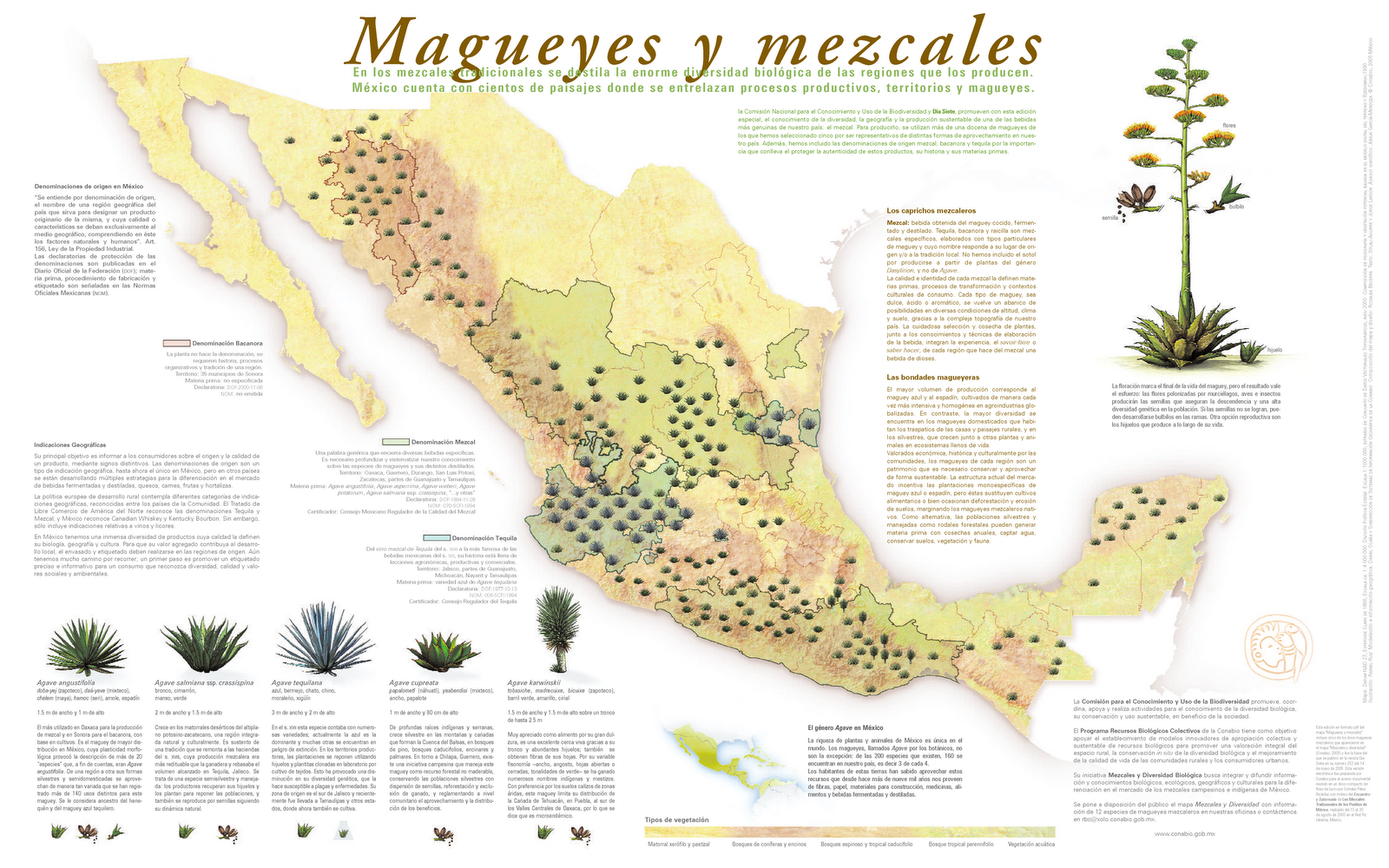
Figure / Mexico, where nearly half of the country is arid or semi-arid
Source / Corner of the South
By the mid-20th century, the Mexican government assembled local organizations that used Ixtle weaving and established 745 cooperatives and related units which could make Agave fiber crafts more efficiently. However, later on, it was impacted by the emergence of alternative materials such as plastics. Cheap and mass-produced nylon ropes, plastic bags and other plastics were produced, replacing ropes and bags woven from traditional plant fibers, and which Ixtle weavers could not compete against. Therefore, the usage of this process began to decline gradually.
Until recent years, the residents of Hidalgo acknowledged the loss of their traditional weaving culture and decided to revive and preserve this precious Agave fiber weaving craft. With the evolution and innovation of recent times, people are attempting to weave Ixtle fibers into bath products to give them new value. It has been found that these fibers soften after being soaked in water which can help to gently exfoliate the skin; else the firmer and rougher parts can be made into pots and bowls which can be used in a variety of purposes. These objects woven with Agave fiber not only reflect the traditional way of life passed down by the local aborigines for thousands of years, but are also one of the important economic sources for the local people.
Ixtle weaving process steps
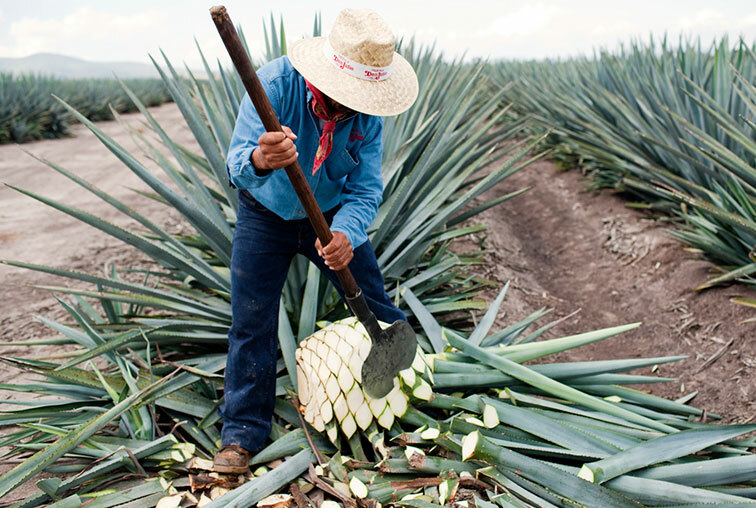
Step 1 - Harvest and Roast: A tajadera is used to cut leaves of sufficient size from the Agave plant and burn them over a stone fire. The leaves are dried and softened for the next step. This process takes about 1-2 days.
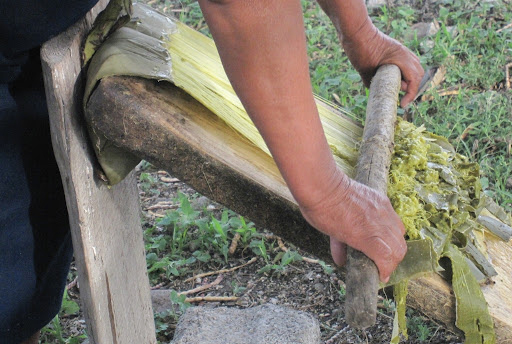
Step 2 - Collect the Fiber: Place the roasted Agave leaves on a wooden board and use a stick, stone or knife to trim off the excess mesophyll, leaving the vegetable fibers behind.
Source / Mexican-ish
Source / integrities
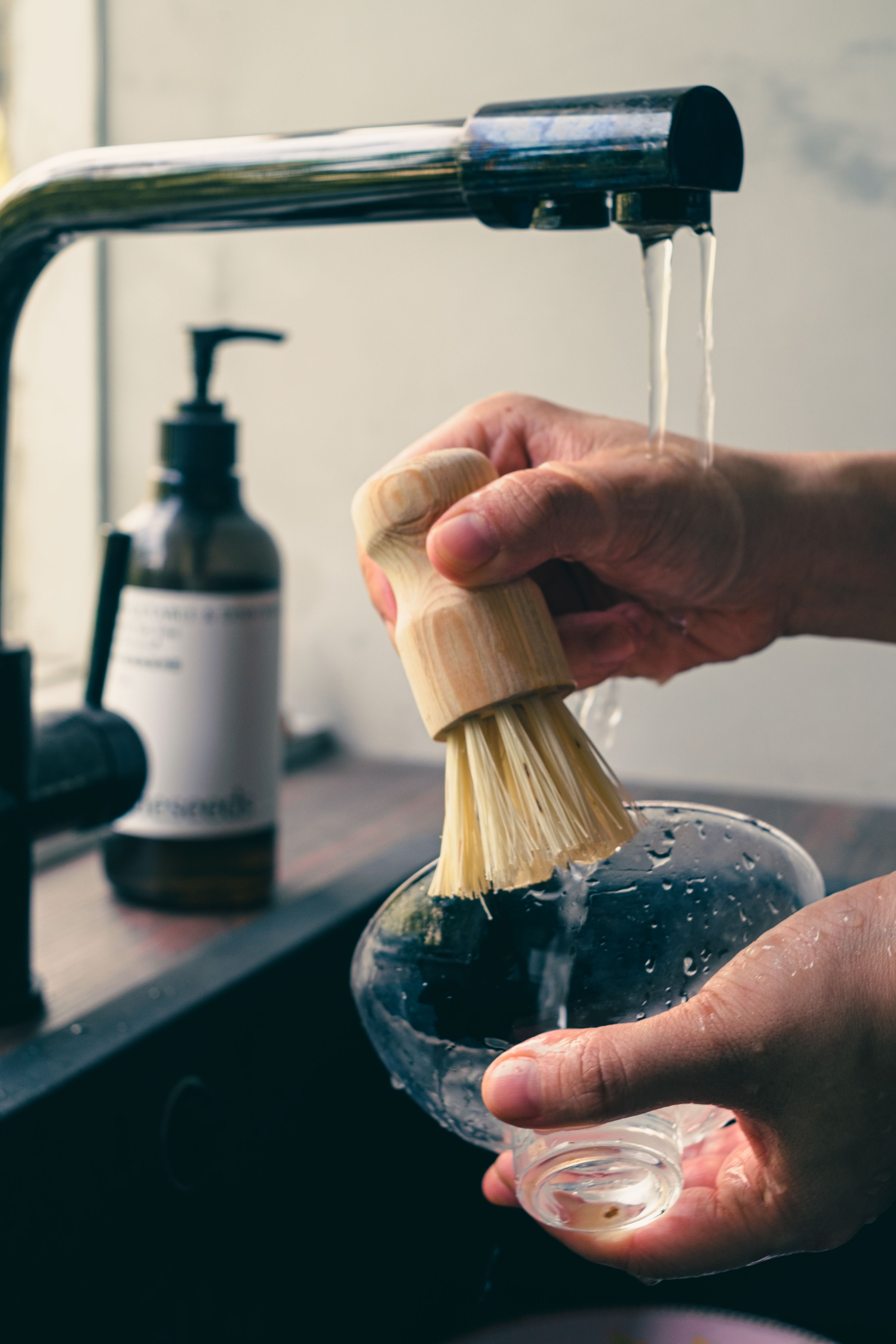
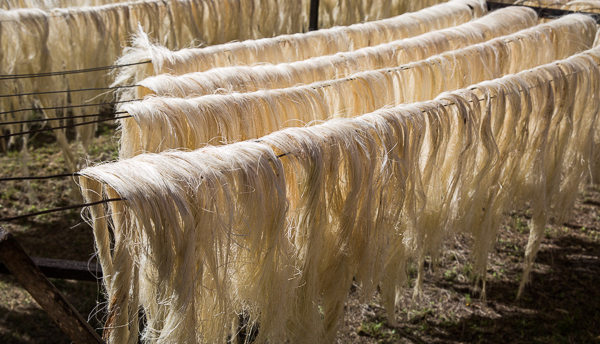
Step 3 - Wash and Dry: Rinse the Agave fibers with water to remove any remaining juices. The fibers are then exposed to the sun to dry, the longer the drying time, the whiter the fibers will be.
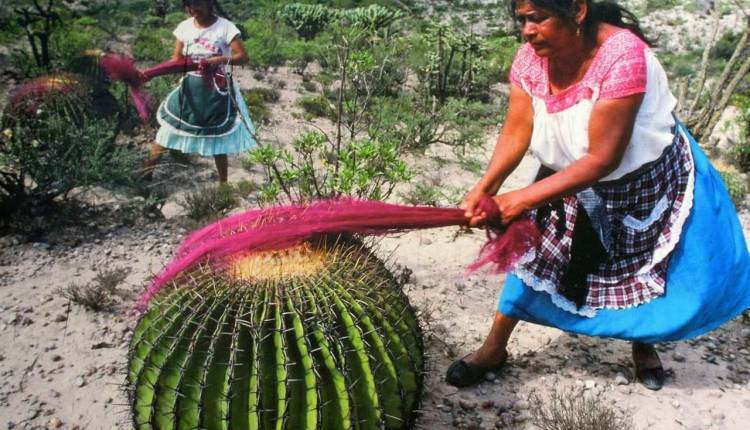
Step 4 - Comb the hemp: The bundles of fibers are placed on a carding machine with many pin combs, or traditionally using a cactus as a base, and the knotted fibers are combed through by pulling vigorously to straighten them into smooth fibers.
Source / UST Greenhouse Project
Source / Rac Noticias
Step 5 - Twist: Twist the fluffy fibers tightly, use your fingertips to connect the fibers together and wrap them into a coil for later use.
【Sousou Corner Store】