{{ 'fb_in_app_browser_popup.desc' | translate }} {{ 'fb_in_app_browser_popup.copy_link' | translate }}

{{ 'in_app_browser_popup.desc' | translate }}

Your Shopping Cart is empty.
{{ (item.variation.media ? item.variation.media.alt_translations : item.product.cover_media.alt_translations) | translateModel }} {{ (item.variation.media
                    ? item.variation.media.alt_translations
                    : item.product.cover_media.alt_translations) | translateModel
                }}
{{ 'product.bundled_products.label' | translate }}
{{ 'product.bundle_group_products.label' | translate }}
{{ 'product.buyandget.label' | translate }}
{{ 'product.gift.label' | translate }}
{{ 'product.addon_products.label' | translate }}
{{item.product.title_translations|translateModel}}
{{ field.name_translations | translateModel }}
  • {{ childProduct.title_translations | translateModel }}

    {{ getChildVariationShorthand(childProduct.child_variation) }}

{{ 'product.set.open_variation' | translate }}
  • {{ getSelectedItemDetail(selectedChildProduct, item).childProductName }} x {{ selectedChildProduct.quantity || 1 }}

    {{ getSelectedItemDetail(selectedChildProduct, item).childVariationName }}

{{item.variation.name}}
{{item.quantity}}x NT$0 {{ item.unit_point }} Point
{{addonItem.product.cover_media.alt_translations | translateModel}}
{{ 'product.addon_products.label' | translate }}
{{addonItem.product.title_translations|translateModel}}
{{addonItem.quantity}}x {{ mainConfig.merchantData.base_currency.alternate_symbol + "0" }}
Symbols of the royal family: Persian mosaics

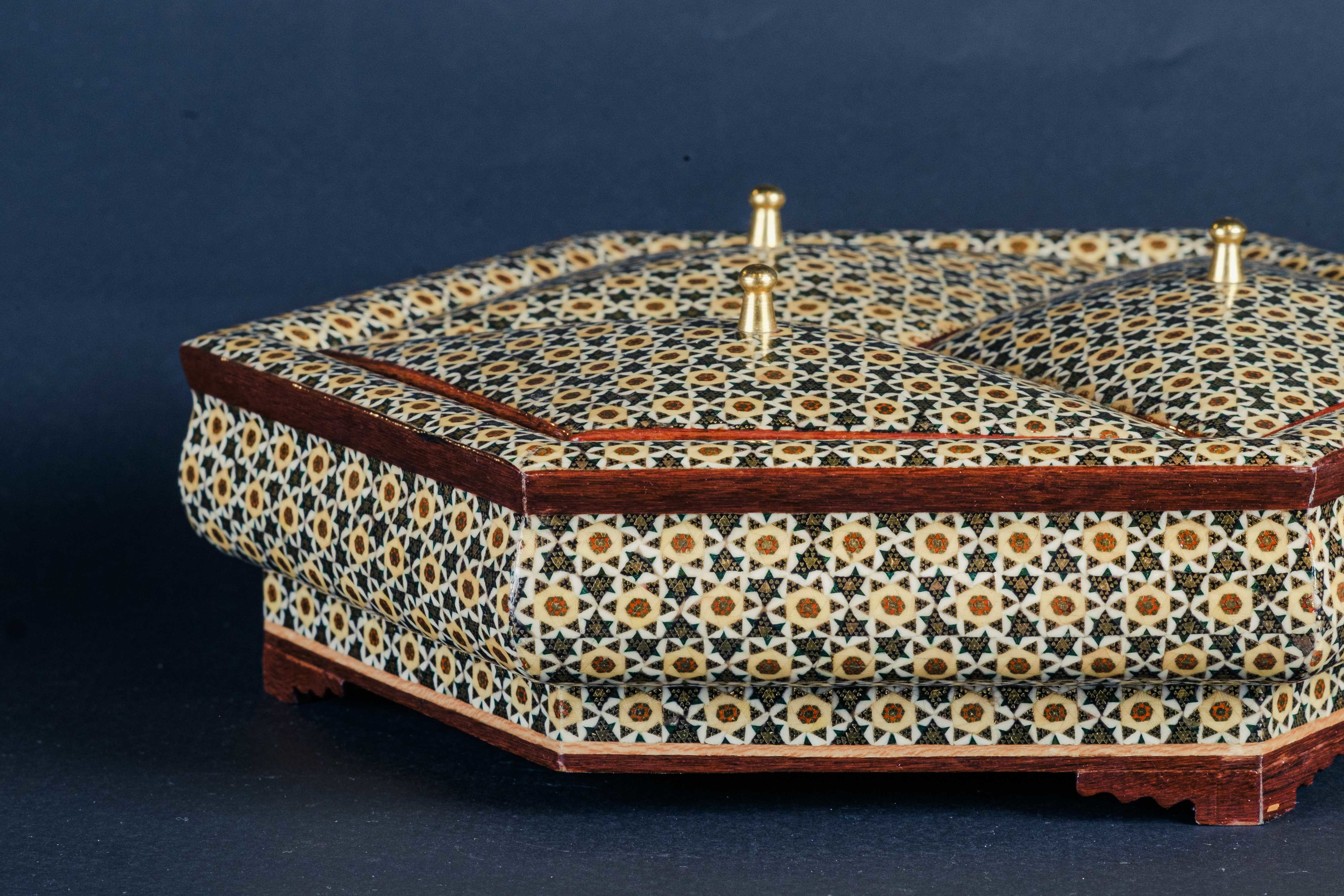
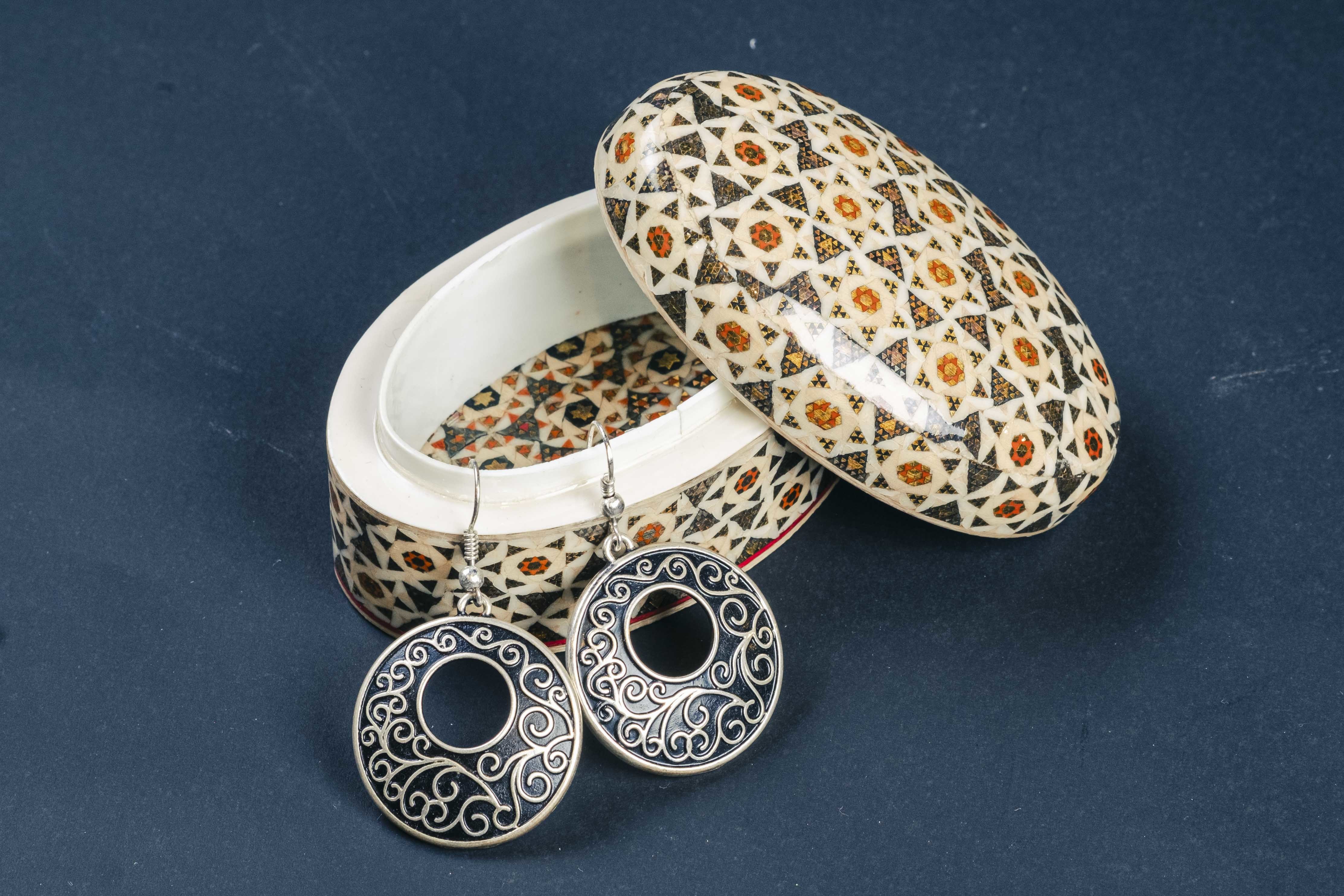
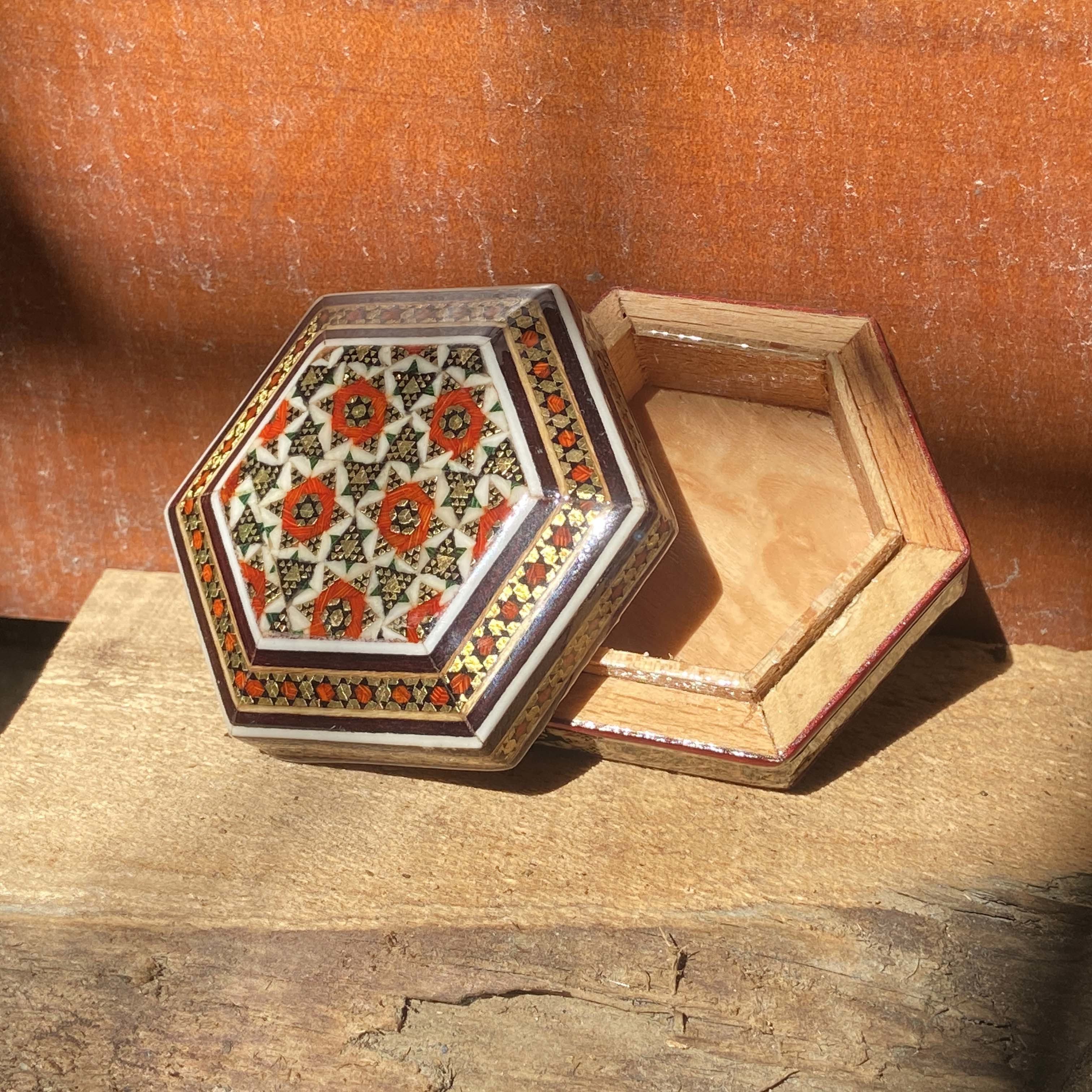
Persian mosaic crafts (Khatam Kari, خاتم‌کاری)are the most traditional and exquisite craftsmanship in Iran. “Khatam(خاتم‎)” means “Mosaic” in Persian, and “Khatam Kari” means “Works of art made by mosaics”. According to historical research, this craft’s origin started in the city of Shiraz, in southwestern Iran; however, due to the interest and attention from the kings of the Safavid Dynasty that ruled the Middle East in the 16th century, this mosaic craft also flourished in the capital during that time. Nowadays, Esfahan (Isfahan) is the central city of Iran and is known as the “Cultural Capital”.

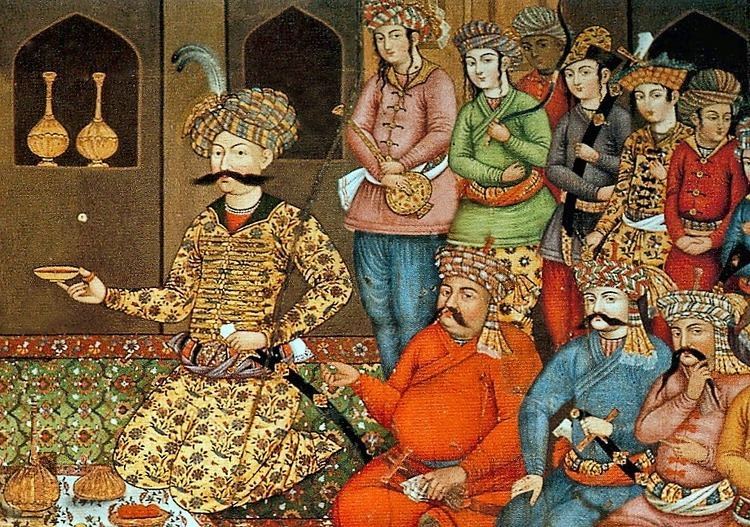
Safavid King Abbas I

Source / alchetron

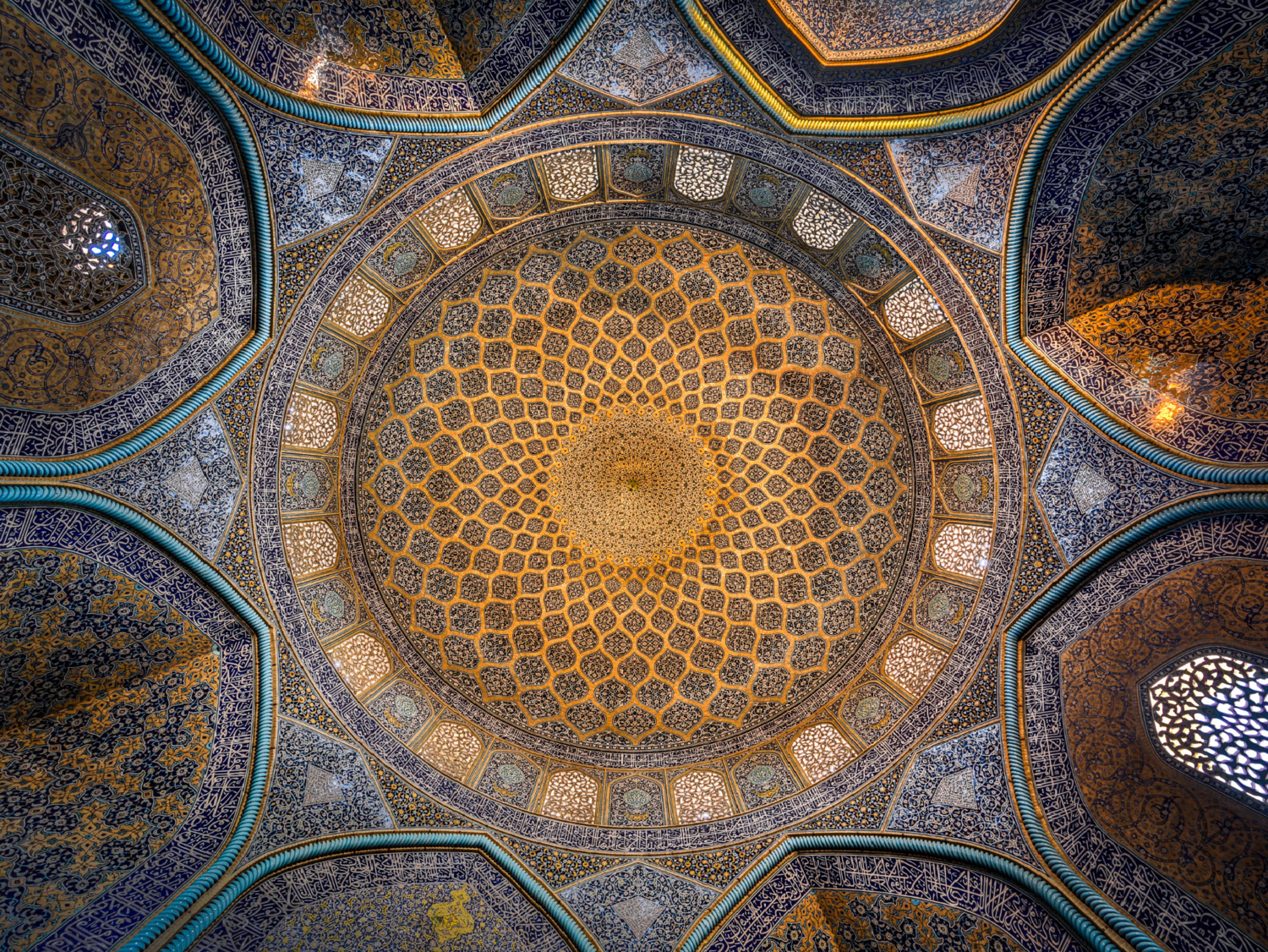
In the Safavid period, mosaic was a technique that the royal family had to learn. In the palace, the prince had to practice the techniques of Persian mosaic while learning music, calligraphy and painting. It symbolizes the Safavid designs, and this craftsmanship can be found on court doors, windows, mirrors frames, jewelry boxes, Quran boxes, and even along buildings. In the 18th and 19th centuries Persian mosaic techniques started to decline, and it wasn’t until the ruler Reza Shah opened art schools in the cities of Tehran, Isfahan and Shiraz, that this craftsmanship got the opportunity to continue.

The Shah/Emam Mosque

Source/Mohammad Reza Domiri Ganji

Persian mosaic craftsmanship was inherited from the ancient capital Isfahan, and was known as “Bone wood inflated with gold”, because its traditional technique used materials like wood,metal, camel bone and ivory. Nowadays, mosaicked products don’t use ivory, but have been replaced by cow bones and shells.


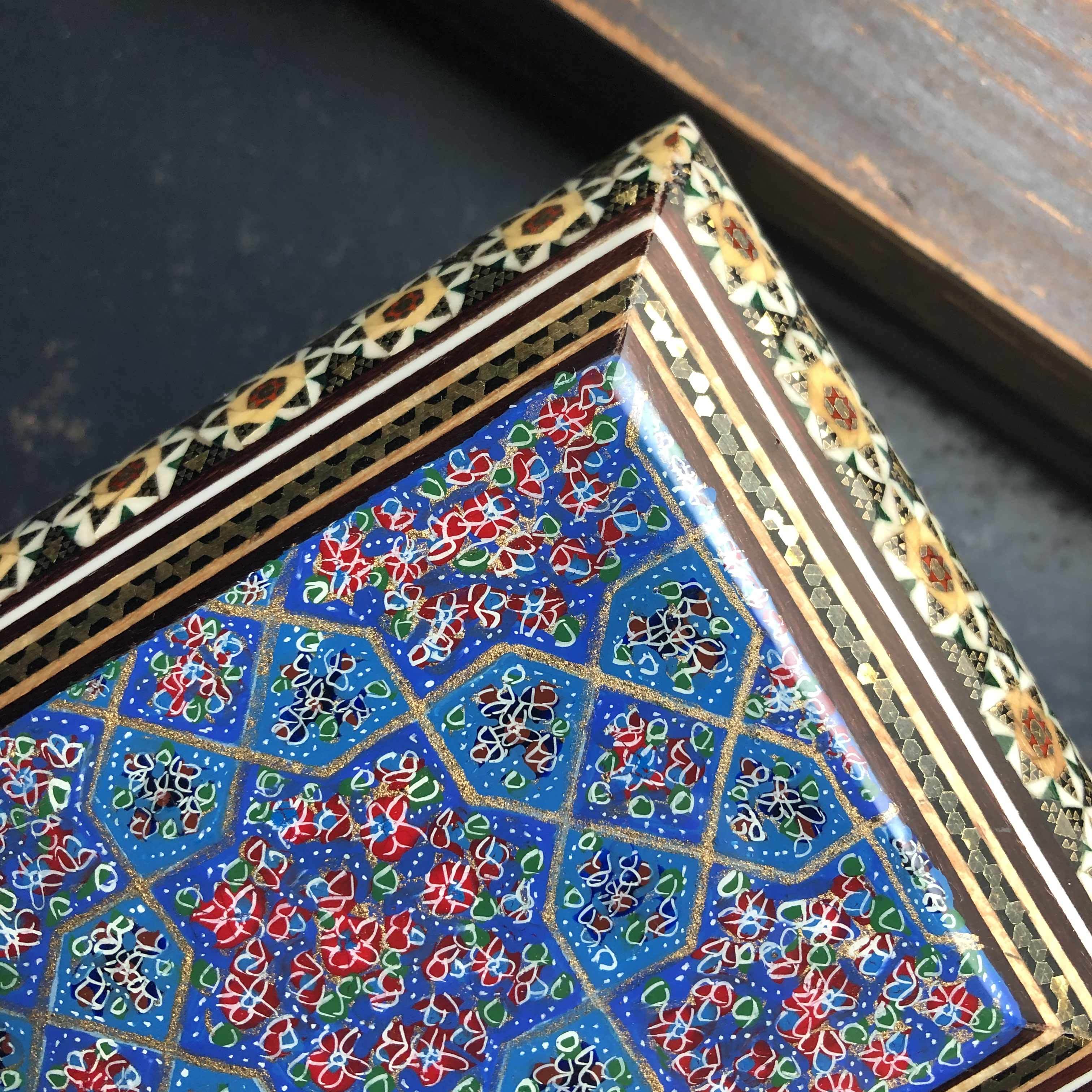
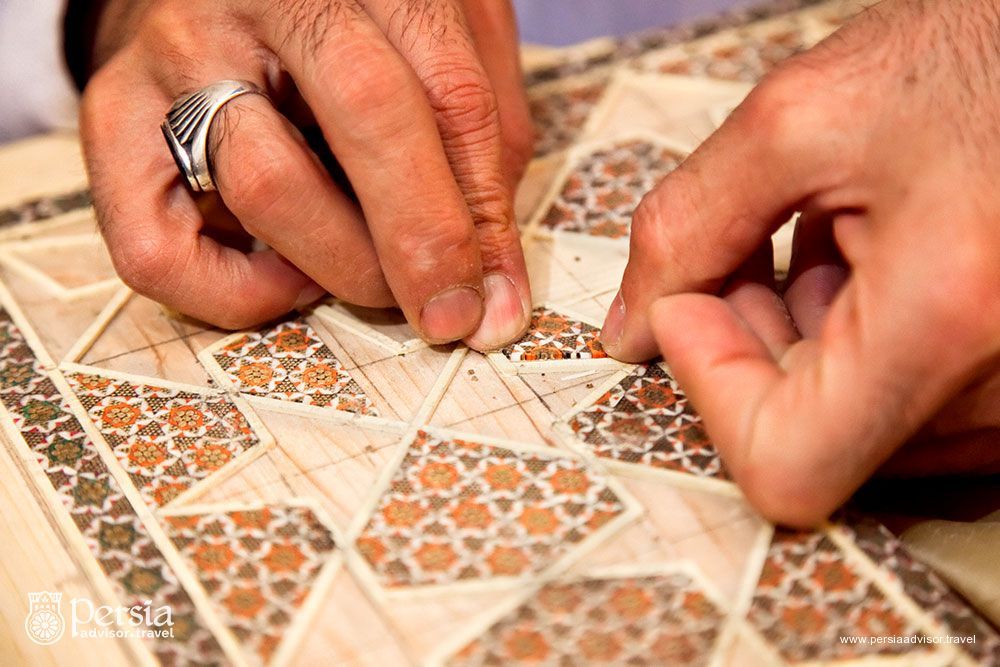
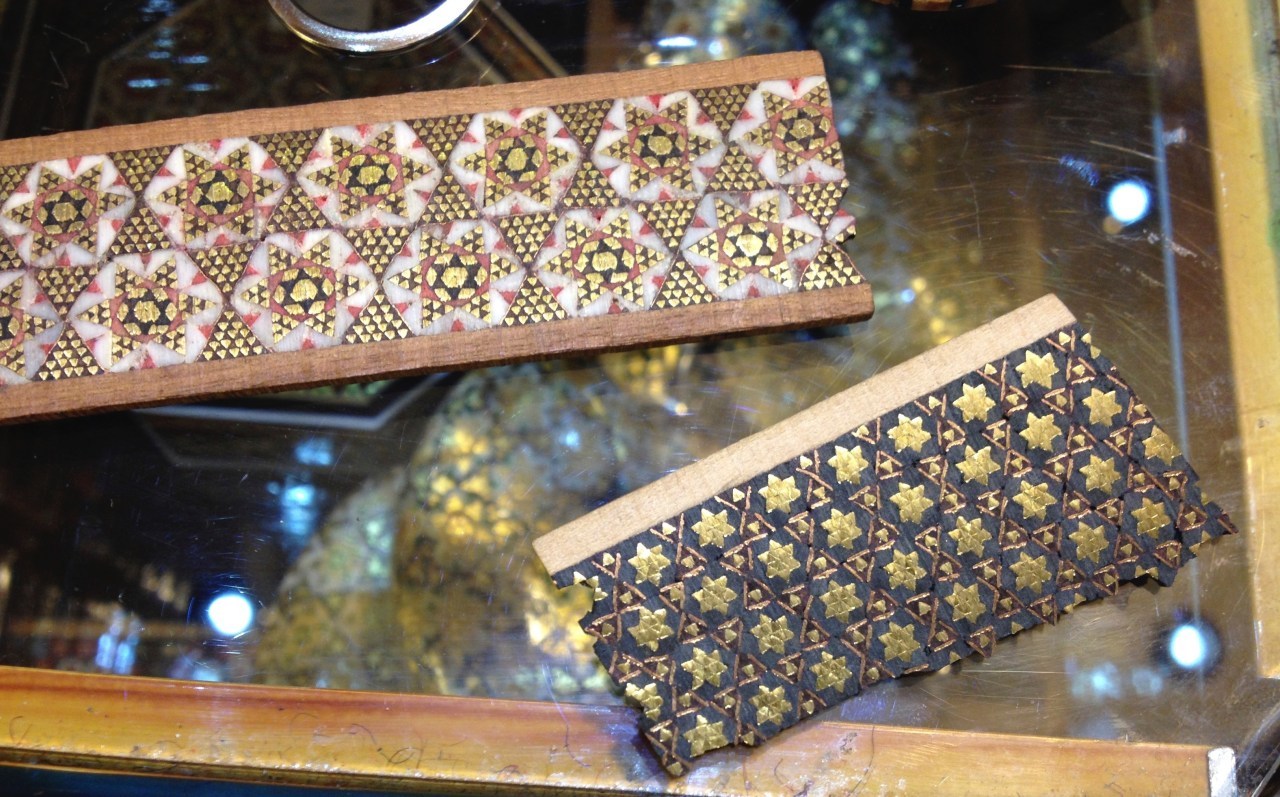
By bundling various materials and piecing them together into a geometric pattern, and then compressing and slicing them to obtain a cross-section texture, the mosaic is finished and ready to be pasted on a surface. Persian mosaics focus on the natural color of their materials and are not intentionally dyed. By using different kinds of wood, such as cypress, ebony, teak, and rosewood, and combining them with gold, silver, and brass, a rich and varied geometry pattern is obtained. 


Its meticulous design heavily relies on the craftsmanship of the craftsman, with up to 250 mosaics of metal, wood and bone per cubic centimeter of volume. Such exquisite craftsmanship is more appreciated by the international art market . For example, at an art fair in Brussels, the capital of Belgium, a Persian mosaic wooden table that won the gold medal is now preserved by the center of the  National Museum of Washington, USA.

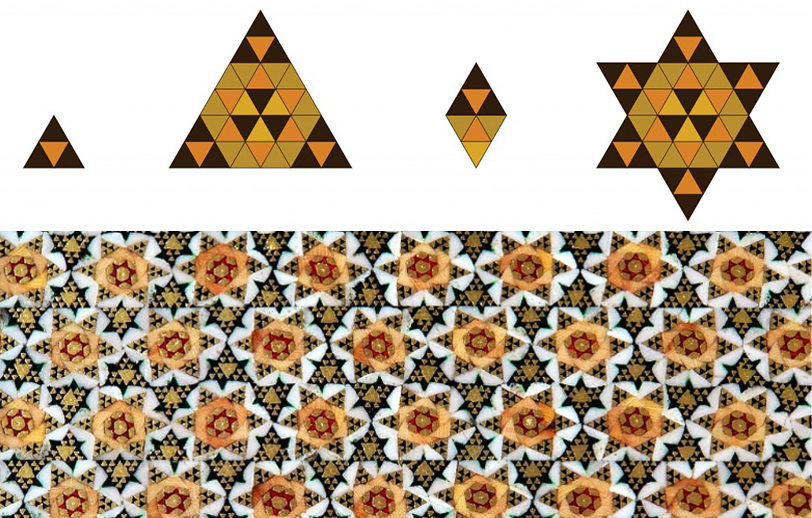
Mosaic craftsmanship mostly presented in geometric figures

Source / makezine

Iran, Persia

From the Sassanid Dynasty in the third century AD, the people began to call their country "Erânshahr", where "ērān" refers to "Iranian", and which also means "honorable, respectable and noble". In the third century, "Erân" had the same origin as the current country name "Iran". It is the name that Iranians have used for their country since ancient times.


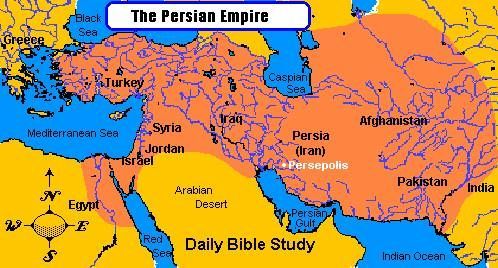
In history, the word "Persia" is a general term given to the area around Iran by Westerners. It comes from the name given to that area in ancient Greece and Rome, in Europe. It is said that it was first used by the Greek historian Herodotus to address people in the Perth region of Iran.

The term "Persia" was first given by Westerners to the area around Iran.

Source / Pinterest

1920年代建立的巴勒維王朝為了跟過去做出區隔,其統治者李查汗於1935年更改國號為伊朗,宣揚愛國主義。因此現在「波斯」通常指1920年代以前的伊朗,或描述該民族自古就有的物件與工藝,如波斯語及波斯地毯;而伊朗則是現在的伊朗。

In 1935 Richa Khan, the ruler of the Pahlavi Dynasty established in 1920, decided to change the country’s name to Iran, in order to differentiate themselves from the past. Because of this, the word "Persian" now usually refers to Iran before the 1920s, or describes the objects and crafts that people have used since ancient times, such as the Persian language and Persian carpets. And Iran is now just Iran.


Iran, which is located at the junction of the Eurasian continent, is a multi-ethnic country. Apart from about six people being Persians, the rest also have Jewish, Armenian, Arab, Turkic and other minor ethnicities . Therefore, Iranians try to portrait their nationality more than their ethnicity. Nowadays most Iranians call themselves "Iranian", but Iranians who travel overseas call themselves "Persian" because, since the Islamic Revolution in 1979, the Western media often portray Iran as a terrorist state, and the Persian designation can reduce some of the stereotypes.

The ancient capital of thousands of years of culture: Isfahan

The origin of Persian mosaic craftsmanship comes from Isfahan, the ancient capital of Iran (اصفهان‎), which means "The meeting place of the army" in ancient Persian.

The city has existed for more than two thousand years and was founded around  500BC by Cyrus the Great, the founder of the Persian Empire. It was once one of the largest cities in the world.


Located in the central region of Iran, Isfahan is geographically relevant as it is the intersection of two major roads that pass through the North and the East.

The city has been ruled by several different dynasties for which it has experienced both destruction and reconstruction. And it was in the 16th century that the Safavid Dynasty reached its peak and proclaimed this city to be the capital at that time, making this period of time the golden age of the city of Isfahan.

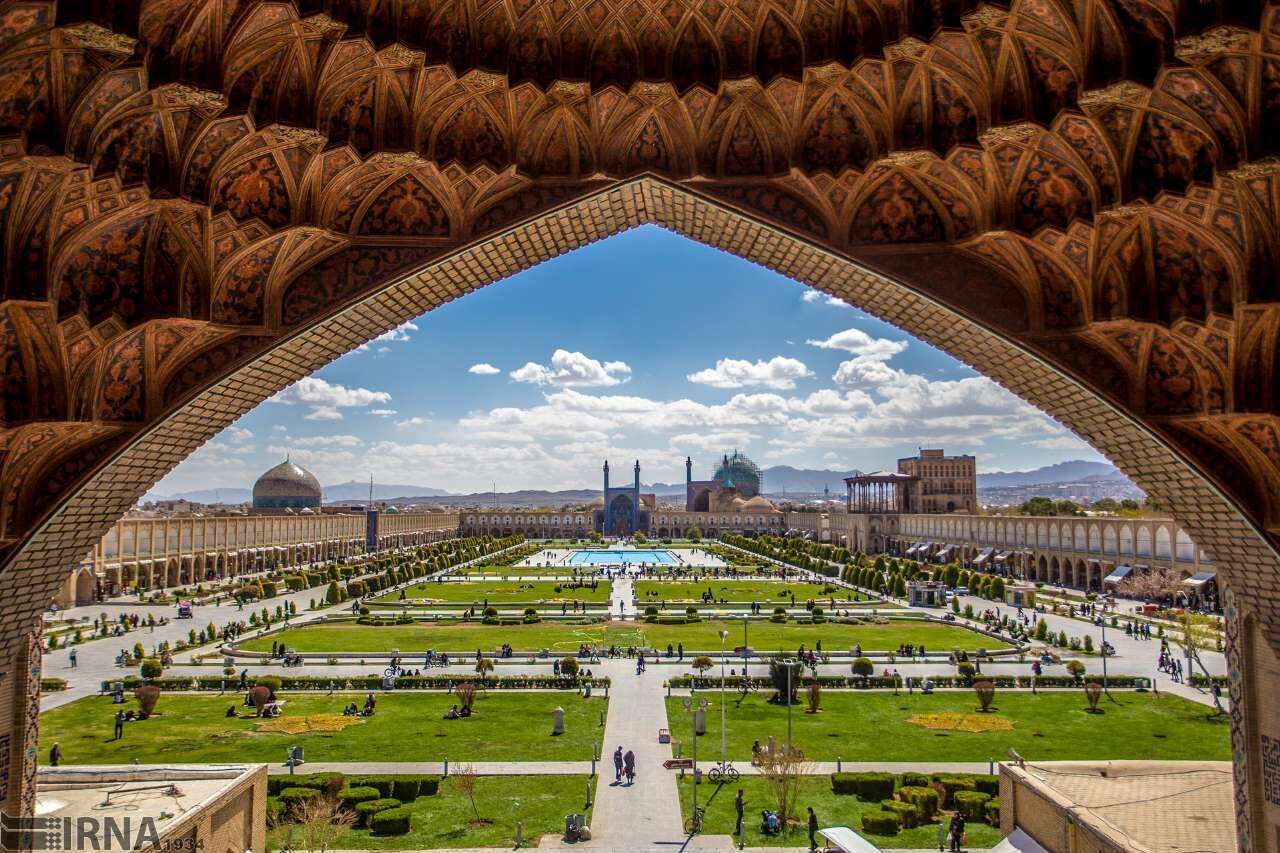
The amount of culture it conveys has led to the catchy proverb "Esfahānnesf-e-jahānast", meaning "Isfahan has a cultural richness equal to half of the world”.  This city preserves many historical buildings, monuments, paintings, and artifacts, and is known for its Islamic-style buildings, spacious boulevards, palaces, Persian-mosaic mosques and minarets, and its Imam Square (Naqsh-e  Jahan Square, میدان نقش جهان‎) that has been proclaimed as a World Heritage Site by the UNESCO.

Naqsh-e Jahan Square
Source/
 travelopersia

Today, the city still retains its former glory. As one of the most important cities in Iran, it has the largest steel production company in the Middle East and North Africa, as well as international airports, subways and other transportation constructions. It is also home for the production of traditional Persian goods as handicrafts, carpets, textiles and preserves.

Persian mosaic process

Step 1: Cut various materials such as wood, bone (or shell) and metal into thin slices with a width of less than 0.2 cm and a length of about 30 cm, and inlay and glue these slices together to form a triangle.


Step 2: After designing the overall graphic, piece each small triangle together to form a bunch of inlaid sticks and attach them with string and glue for 24 hours.


Step 3: After the inlaid rod is dry, cut 0.1 cm inlaid slices longitudinally, and then paste the surface of the object to be decorated.


Step 4: After sanding the surface smooth, oil, polish and finish with a finish coat.


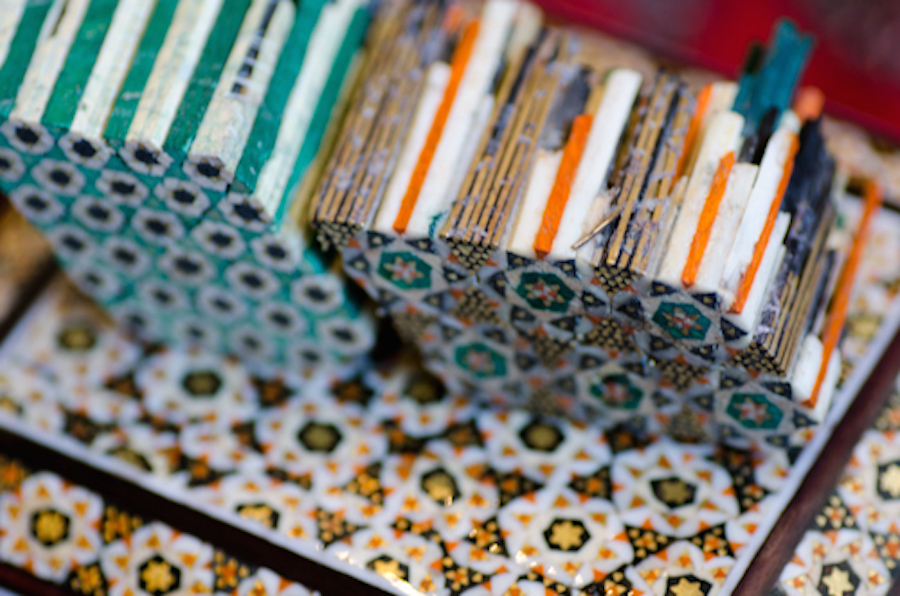
Mosaic bundles formed by pasting various materials together

Source / makenzine


Cut into 0.1 cm thick mosaic slices

Source / makezine

用駱駝骨製作的寶盒


除了鑲嵌工藝之外,伊朗工匠也使用駱駝骨打造寶盒。駱駝是中東地區居民相當依賴的「沙漠之舟」,因為駱駝的駝峰構造可以在需要的時候,把儲存的脂肪轉成熱量更水,不僅可以作為坐騎,從駱駝奶到皮革都會利用。

而在駱駝死亡以後,人們也會小心翼翼把駱駝骨蒐集起來,在古代是很珍貴的創作素材。由於駱駝的壽命可達40年,且生活在乾燥炎熱的環境,讓駱駝骨比其他動物更加細膩耐磨。

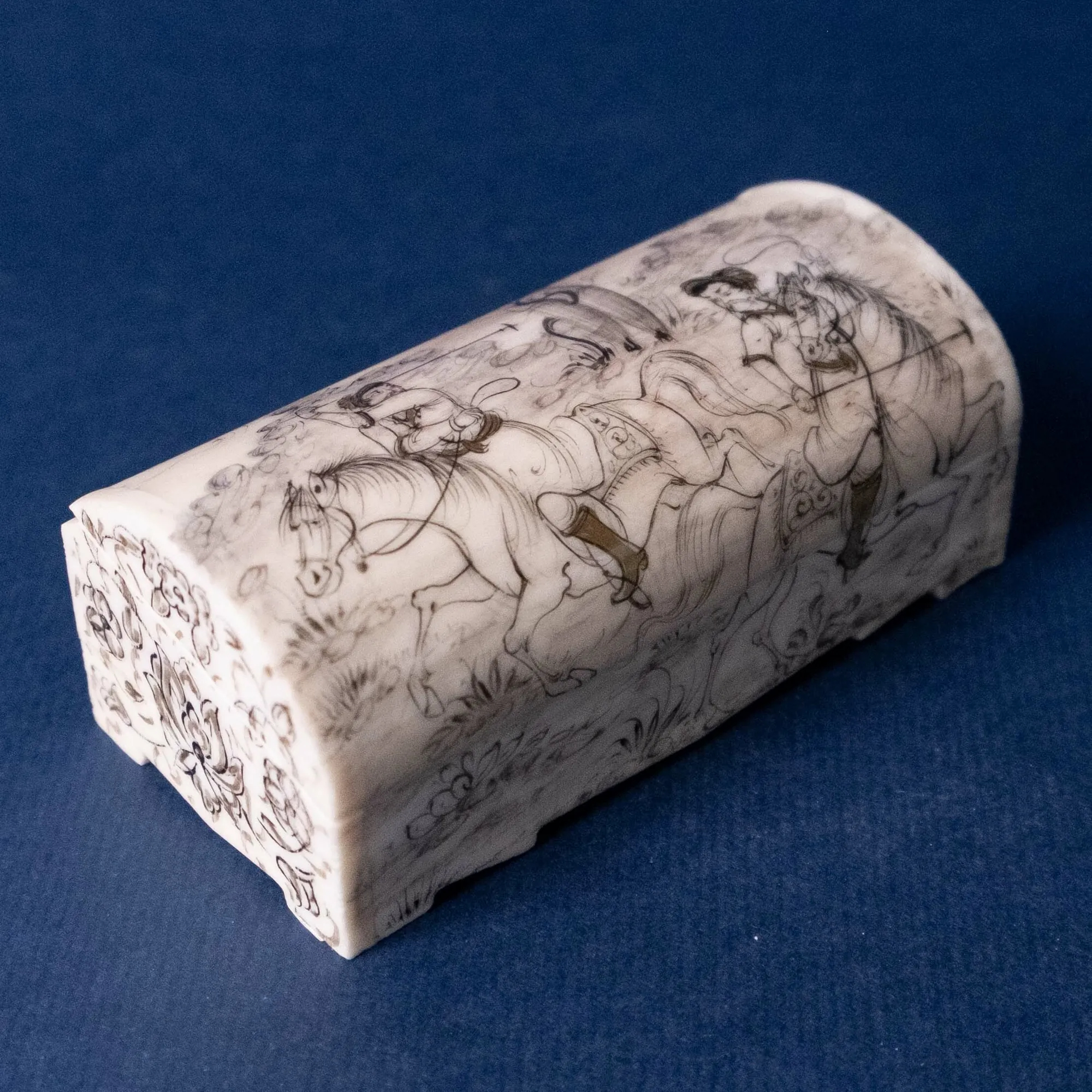
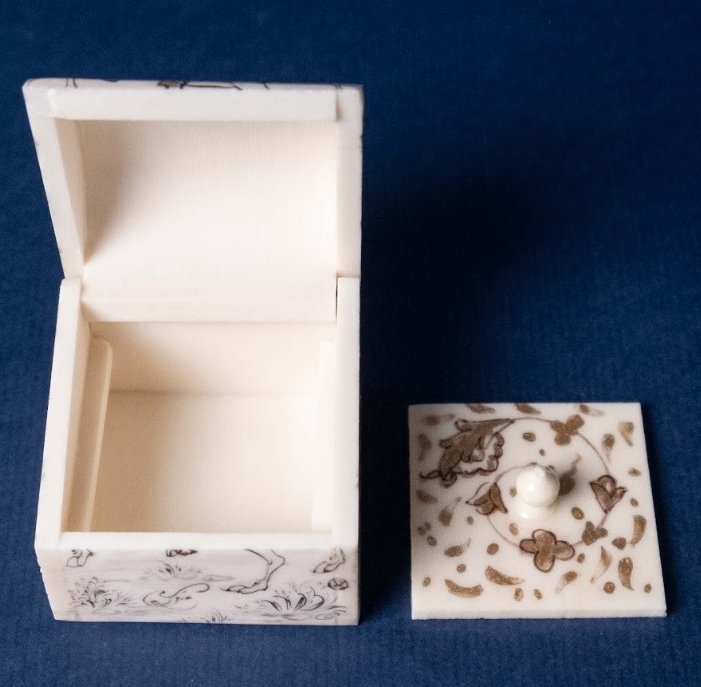
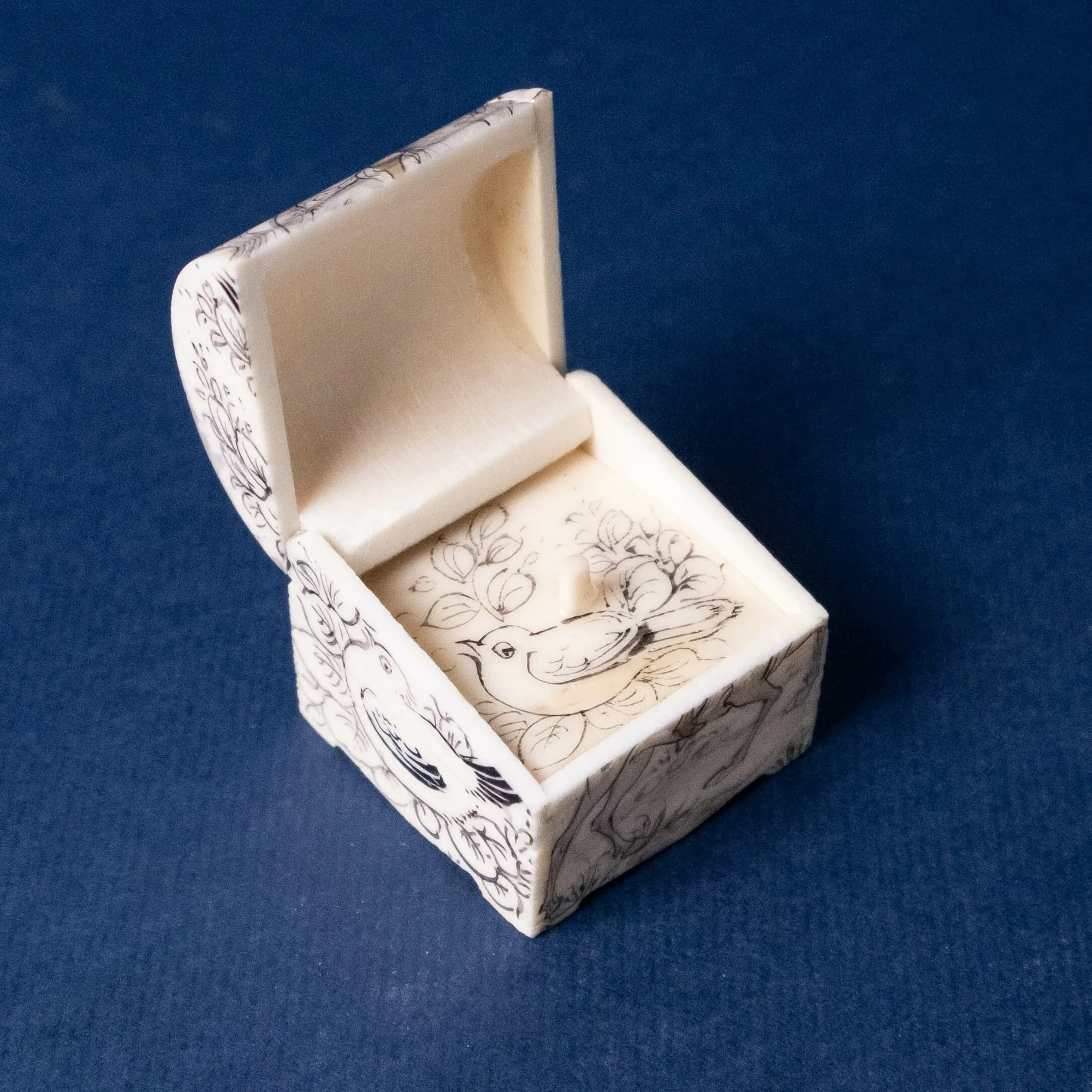
這次介紹的駱駝骨盒玩,是伊朗的工匠以較完整的駱駝臀骨或大腿骨,經過多次打磨與拋光打造而成,上頭還有用極細毛筆繪製的波斯風景,盒裡盒外都是不同的驚喜。每隻駱駝只能做出四個盒子,讓每個盒玩更顯珍貴。

Khatam Kari