{{ 'fb_in_app_browser_popup.desc' | translate }} {{ 'fb_in_app_browser_popup.copy_link' | translate }}

{{ 'in_app_browser_popup.desc' | translate }}

Your Shopping Cart is empty.
{{ (item.variation.media ? item.variation.media.alt_translations : item.product.cover_media.alt_translations) | translateModel }} {{ (item.variation.media
                    ? item.variation.media.alt_translations
                    : item.product.cover_media.alt_translations) | translateModel
                }}
{{ 'product.bundled_products.label' | translate }}
{{ 'product.bundle_group_products.label' | translate }}
{{ 'product.buyandget.label' | translate }}
{{ 'product.gift.label' | translate }}
{{ 'product.addon_products.label' | translate }}
{{item.product.title_translations|translateModel}}
{{ field.name_translations | translateModel }}
  • {{ childProduct.title_translations | translateModel }}

    {{ getChildVariationShorthand(childProduct.child_variation) }}

{{ 'product.set.open_variation' | translate }}
  • {{ getSelectedItemDetail(selectedChildProduct, item).childProductName }} x {{ selectedChildProduct.quantity || 1 }}

    {{ getSelectedItemDetail(selectedChildProduct, item).childVariationName }}

{{item.variation.name}}
{{item.quantity}}x NT$0 {{ item.unit_point }} Point
{{addonItem.product.cover_media.alt_translations | translateModel}}
{{ 'product.addon_products.label' | translate }}
{{addonItem.product.title_translations|translateModel}}
{{addonItem.quantity}}x {{ mainConfig.merchantData.base_currency.alternate_symbol + "0" }}
What is the first thing that comes to your mind when you hear Oceania? Is it a tropical island with bright sunshine? Or a resort with beaches, bikinis, and various water activities to enjoy life comfortably?


We have introduced objects from Africa, Central and South America, and Central, South and Southeast Asia. This time we extend to Oceania to introduce a bag that has been listed as an intangible cultural heritage by UNESCO. It can carry piglets, carry babies, and even be used as a ballot box for local elections. This bag is called "Bilum".

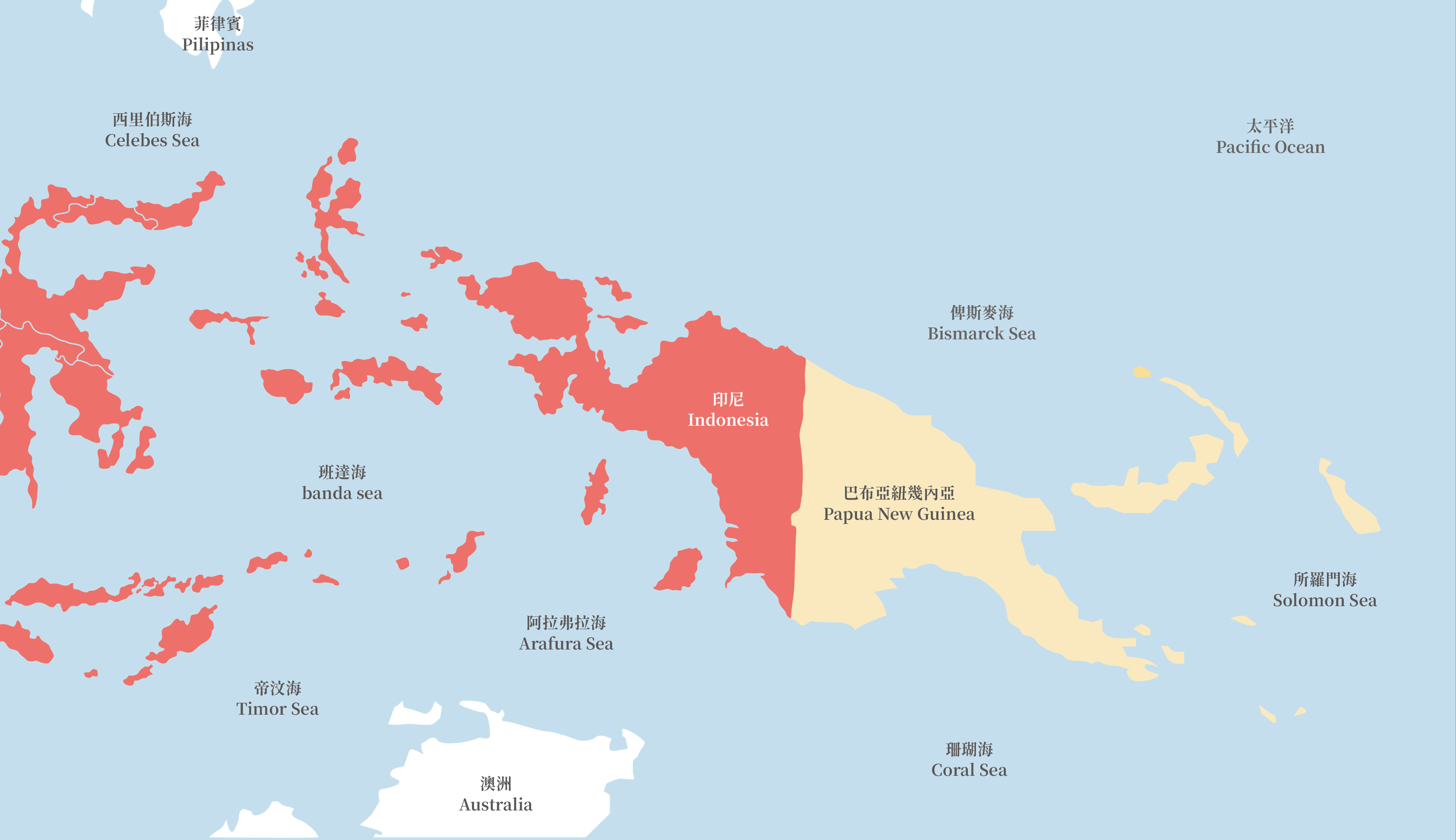
Oceania is the smallest of the six continents in the world. Except for New Zealand and Australia, most of it is composed of islands scattered in the Pacific Ocean, with a total of more than 10,000 of them. If you look at Oceania on a map, the first thing that catches your eye must be New Guinea, the largest island in the Pacific Ocean and the second largest island in the world. However, not only is it large in size, but the island of New Guinea is also forcibly divided into two countries due to historical origins: Indonesia in the west and Papua New Guinea in the east.

Figure / New Guinea is divided into two kingdoms

Source / SouSou Corner

In 1511, when the Portuguese first came to the island, the island was named "New Guinea'' because of the dark skin of the local people, similar to the African country: Equatorial Guinea. When the Dutch went to explore the island in the early 19th century, they drove out the Portuguese and started the battle for the island of New Guinea that lasted for more than 100 years.


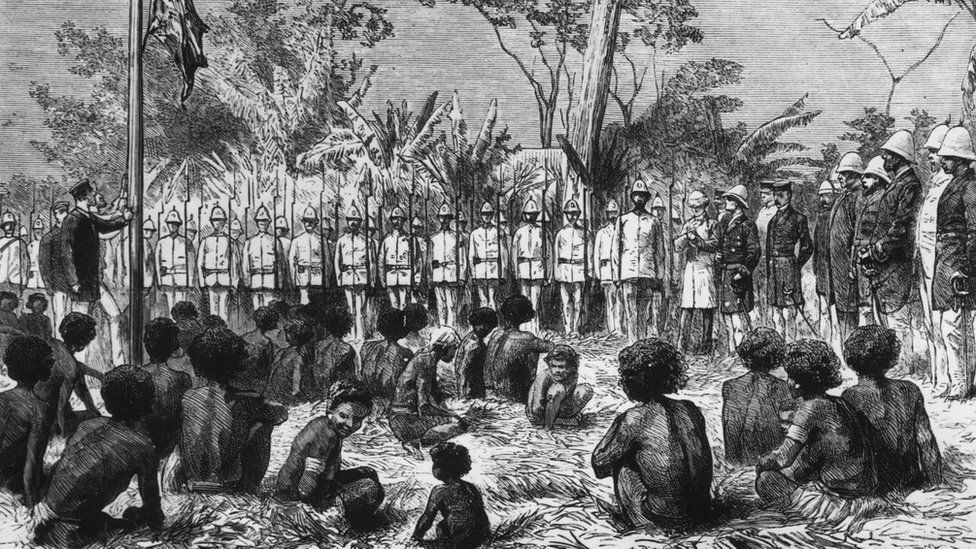
European countries came to this island one after another. Initially, the Netherlands and Germany demarcated their area of power in a 141 degrees sphere of longitude in the east, setting the pattern for the fate of New Guinea. Then there were the United Kingdom, France and other countries, so that the ownership of the island of New Guinea has undergone continuous changes. During World War II, Eastern New Guinea was handed over to Australia under a trusteeship, but it broke away from the jurisdiction of Australia in 1975, declaring the "Independent State of Papua New Guinea" and becoming one of the members of the British Association.


Figure / British Army raising the Union flag in Papua New Guinea in 1885

Source / BBC

Independant Papua New Guinea

Papua New Guinea is adjacent to the Indonesian province of Papua to the west, and the Solomon Islands and Australia across the sea to the east and south. In addition to the largest island of New Guinea, Papua New Guinea has more than 600 large and small islands. It is the third largest island country in the world, with a land area larger than Japan, and has a rich island culture.


In addition, most of the islands of New Guinea are highlands with uplifted mountains and lush trees growing into forests which makes it difficult for tribes to communicate with each other. Each tribe still retains its own language, culture and traditional rituals. According to research statistics, Papua New Guinea has more than 800 of the more than 7,100 languages that exist in the world, showing the rich and diverse ethnic groups there, and becoming a place that anthropologists are attracted to.


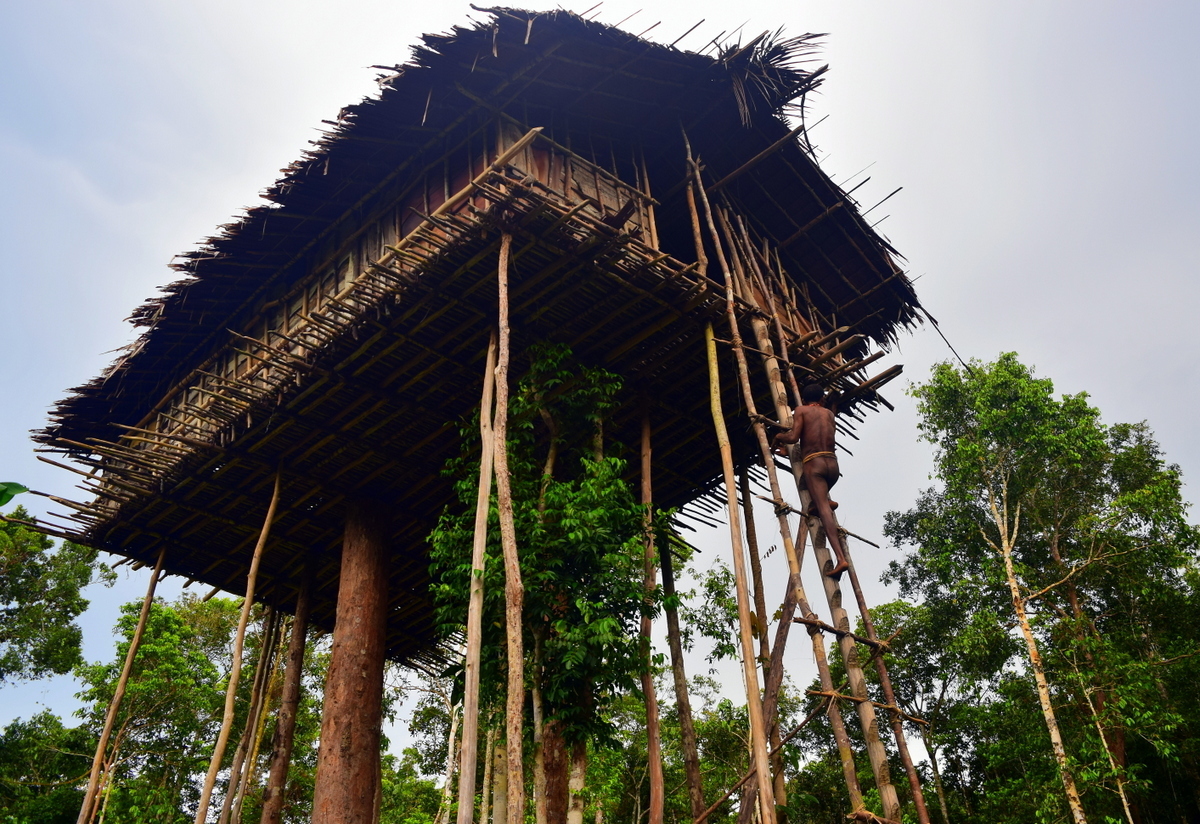
But the mystery of Papua New Guinea was not known until the 19th century, when Western colonists came one after another. However, there are still many isolated tribes today, such as the Korowai tribe on the border between Indonesia and Papua New Guinea, which is the only area that still has cannibalistic rituals. It was not until the late 1970s, when anthropologists entered the Korowai tribe for research, that the locals knew that there were other people besides themselves.

Figure / Traditional home of the Korowai tribe, built on high ground to protect it from insects, predators and demons

Source / Clarin


Bilum bags from all tribes


However, among so many different cultures in the island of New Guinea, there is an object that is quite popular and can be found in almost all villages and tribes. That is the "Bilum", a bag made of straw fibers.

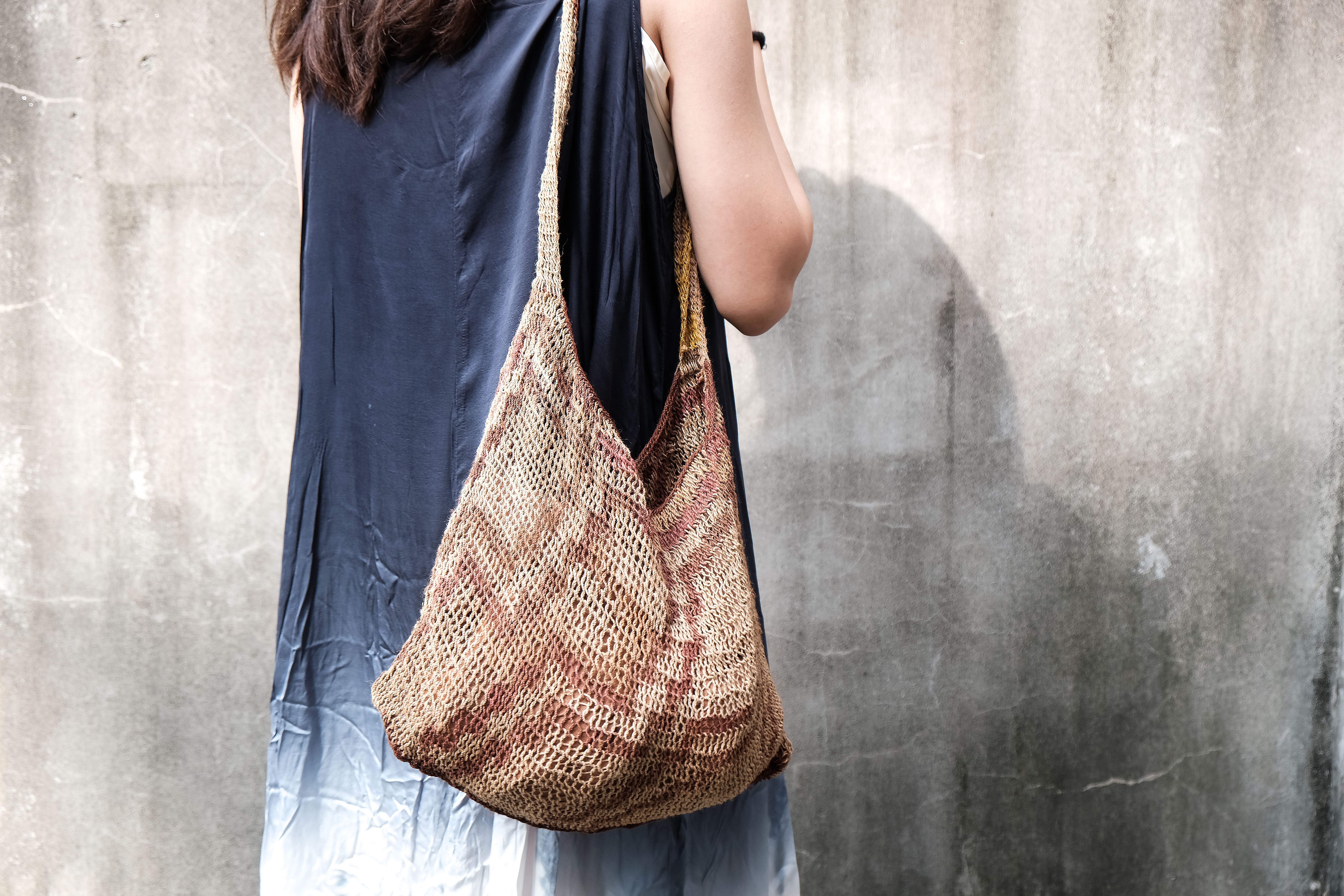
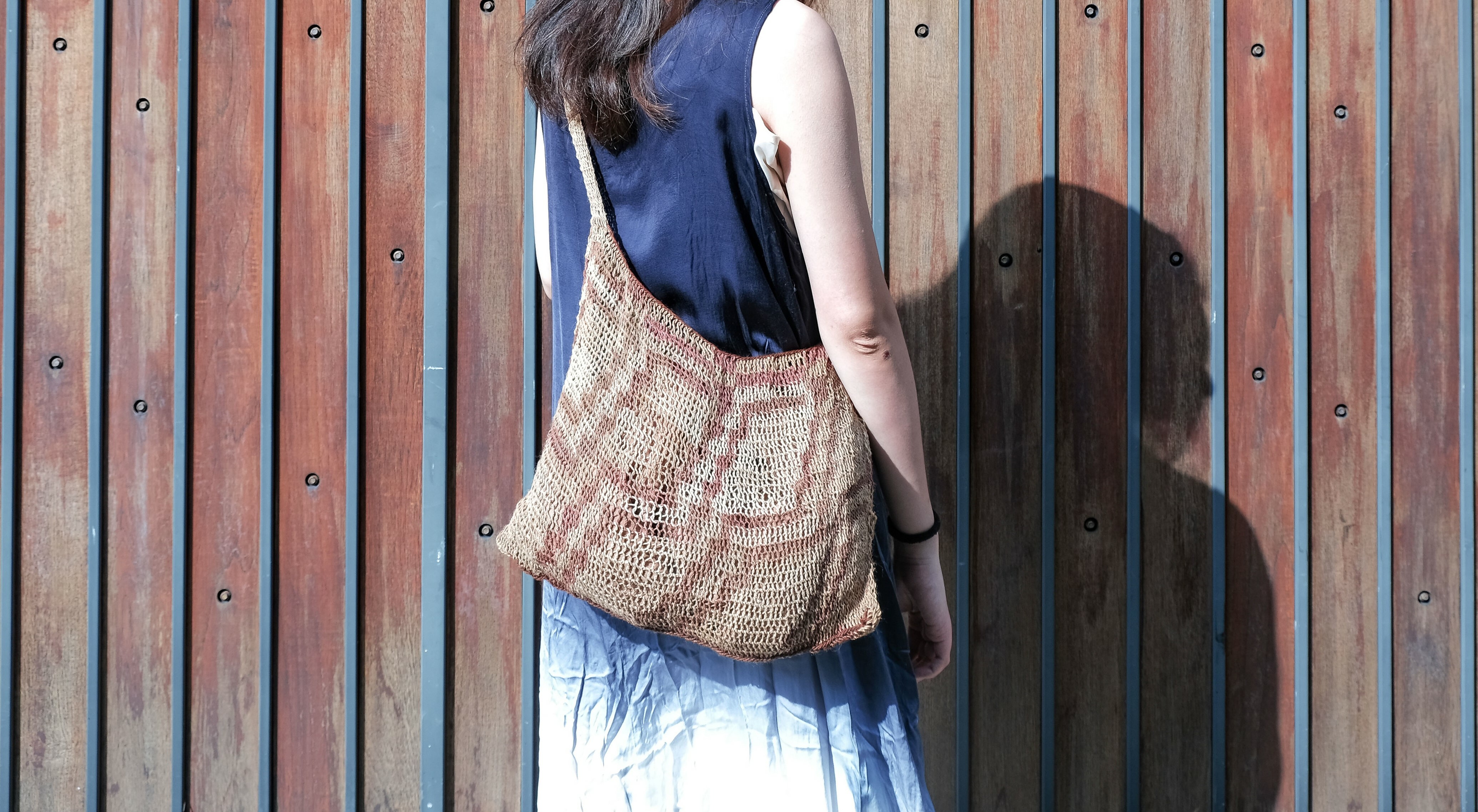
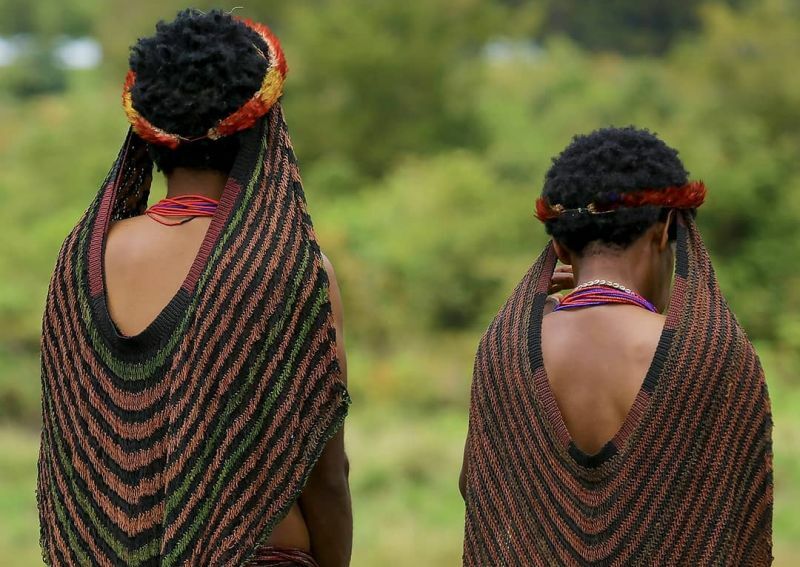
The Bilum is said to be the most important bag in Papua New Guinea. It looks like a common handbag or cross-body bag, but traditionally, the Bilum bag is worn horizontally on the head, using the strength of the head and back to balance and support, so it can carry a large weight.


The history of the Bilum bag can be traced back to the prehistoric times of Papua New Guinea, when prehistoric people came from other lands to this Pacific island, to live a nomadic life and make a living by hunting and harvesting. They began to use common natural resources to develop simple subsistence tools to gather food and useful objects, and gradually formed a settled and clustered society which began to knot and entangle ropes made of plant fibers, and that led to the emergence of the prototype of the Bilum bag.

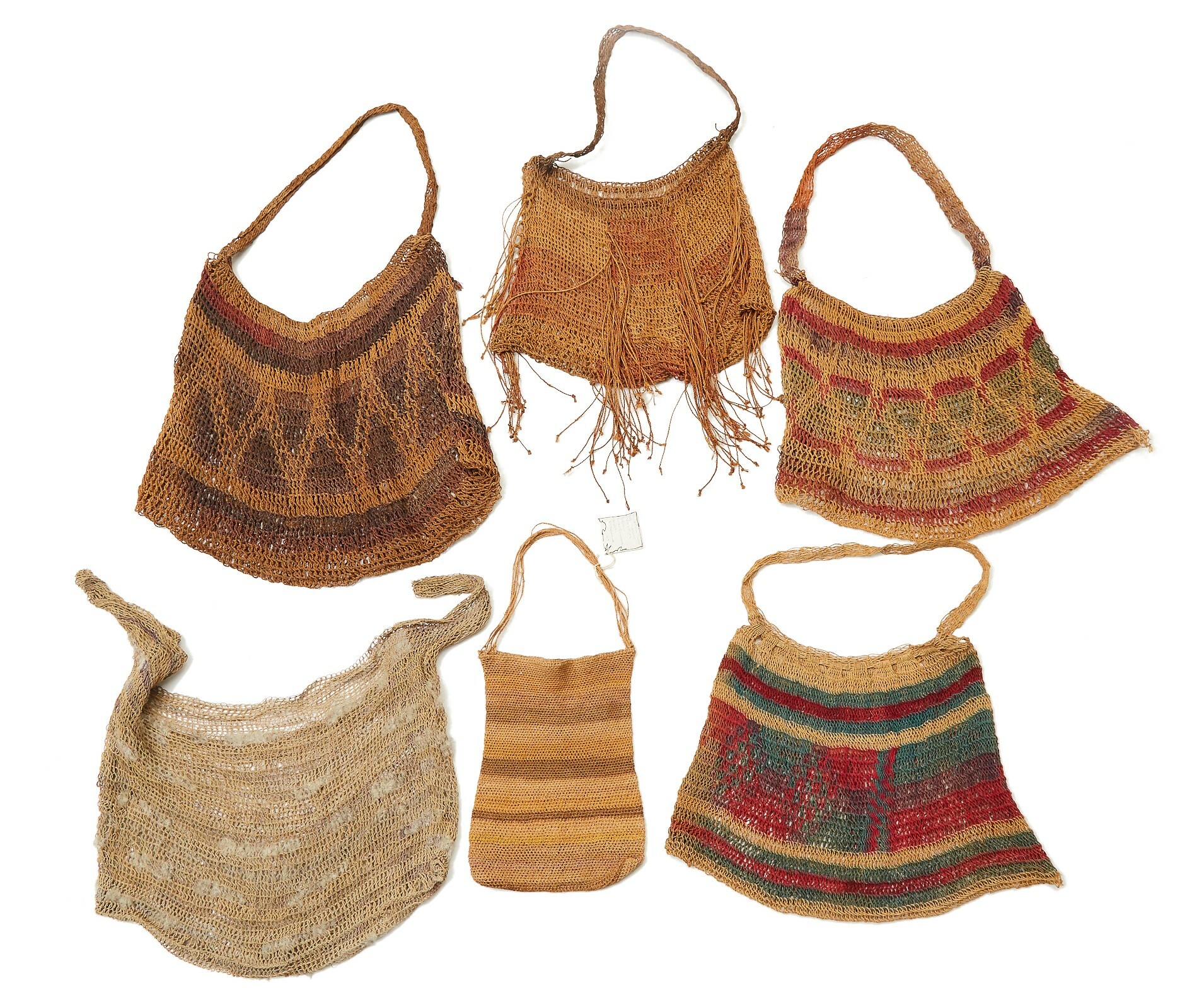
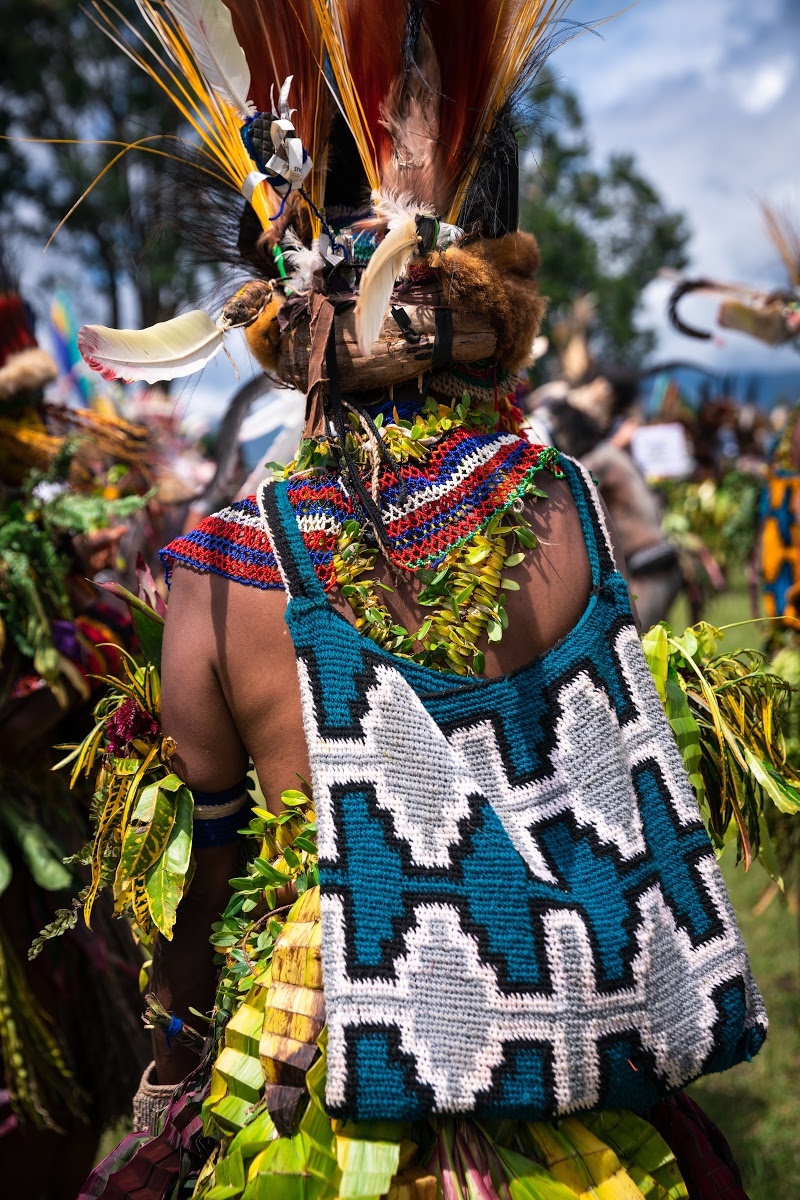
Figure / Various forms of Bilum bags

Source / Waddingtons

Figure / Wear a Bilum bag across your head

Source / kemenparekraf.ri

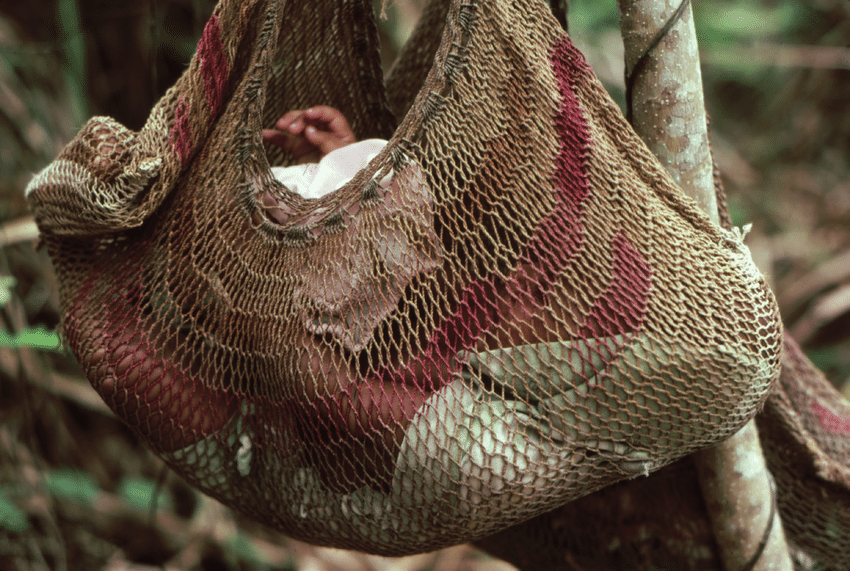
Figure / Putting the baby in the Bilum bag

Source / Brigitta Hauser

The bag of life comes from over a thousand species of plants

No matter which tribe you are in Papua New Guinea, life is almost inseparable from them. Everyone has their own Bilum bag, which can be used to carry crops, wood and other items, or hunted pigs and fish. But the most special thing about it is that the Bilum bag is actually a baby bag!


In Tok Pisin, one of the official languages of Papua, the word "Bilum" means "womb", which represents the origin of life and is the same word that refers to the "Bilum bag", because it has a triangular shape with a narrow top and a wide bottom, like an upside down female uterus. It is said that putting the baby in it is like returning to the mother's womb, so whether it is to accompany the mother to go out to farm or take a nap at home, as long as the baby is placed in the Bilum bag, they can sleep peacefully. It is an important parenting pattern for local women.


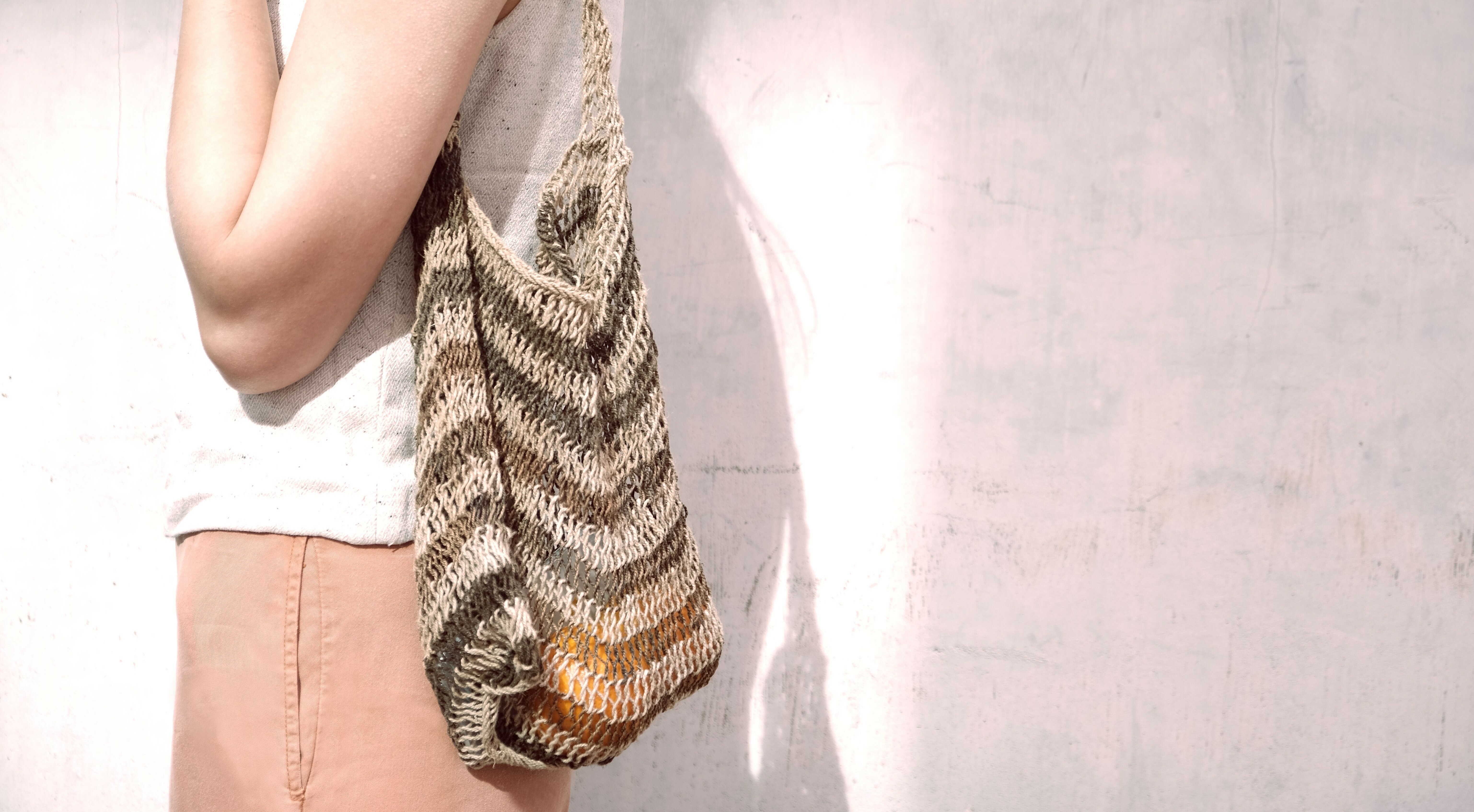
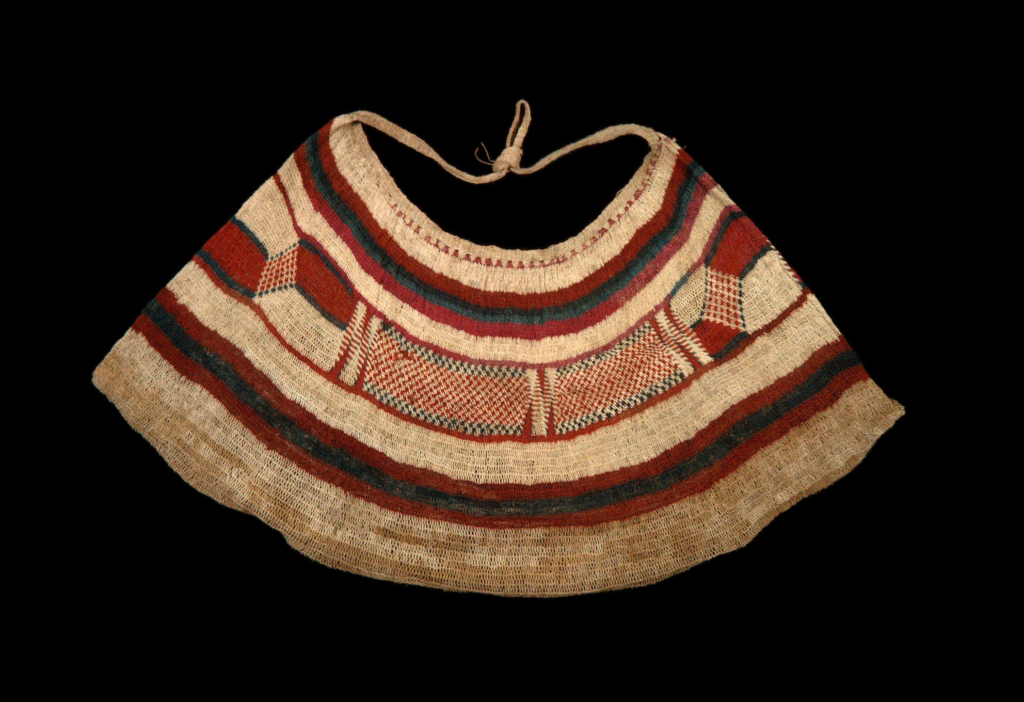
Although it is said that there are traces of Bilum bags in all tribes, the material, style and size of the Bilum bags made by each tribe are different because there are more than 1,000 kinds of plants that can be used to make these bags. Due to different living environments, the raw materials for making straw bales vary according to the local vegetation, there is not a specific plant species to use. Usually they take the stem, leaf or bark of the plant, crush it, remove the excess mesophyll, extract the fiber, and then twist the fiber into a thread before dyeing and weaving the bag to not only make it tough and elastic, but also extremely strong and durable.

Figure / Bilum bag woven with plant fibers

Source / Google Art & Culture

The Bilum bag that wears the sun

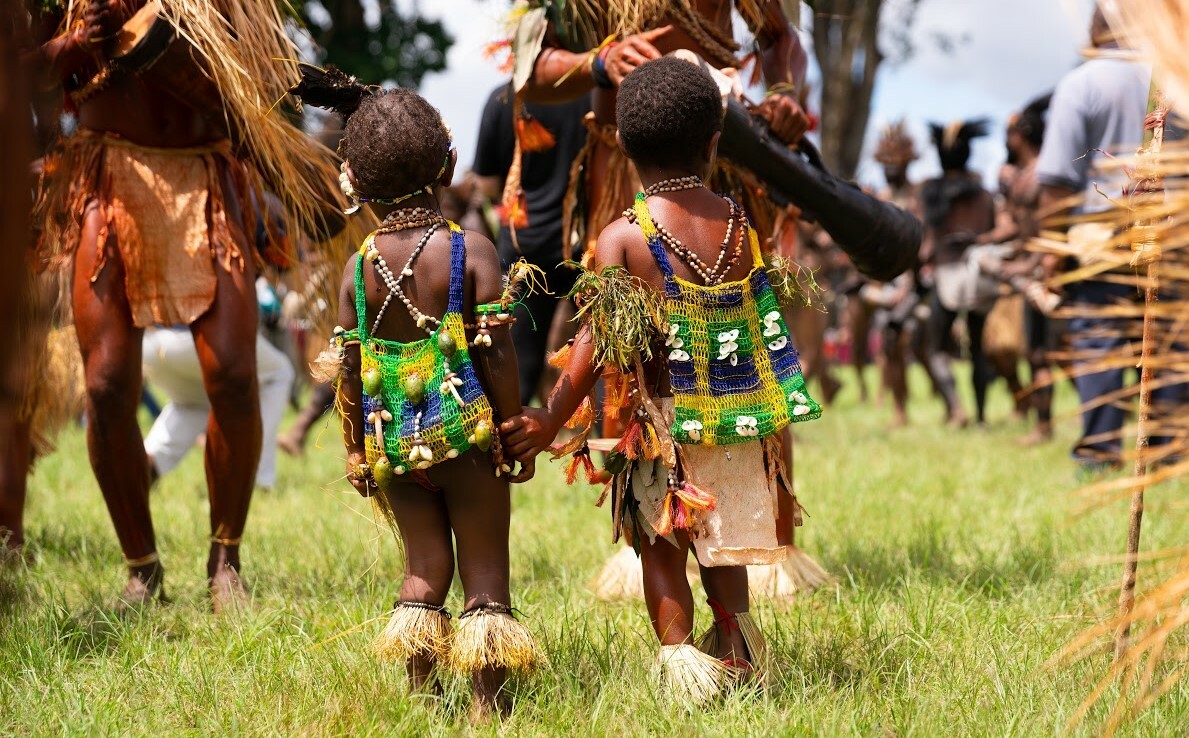
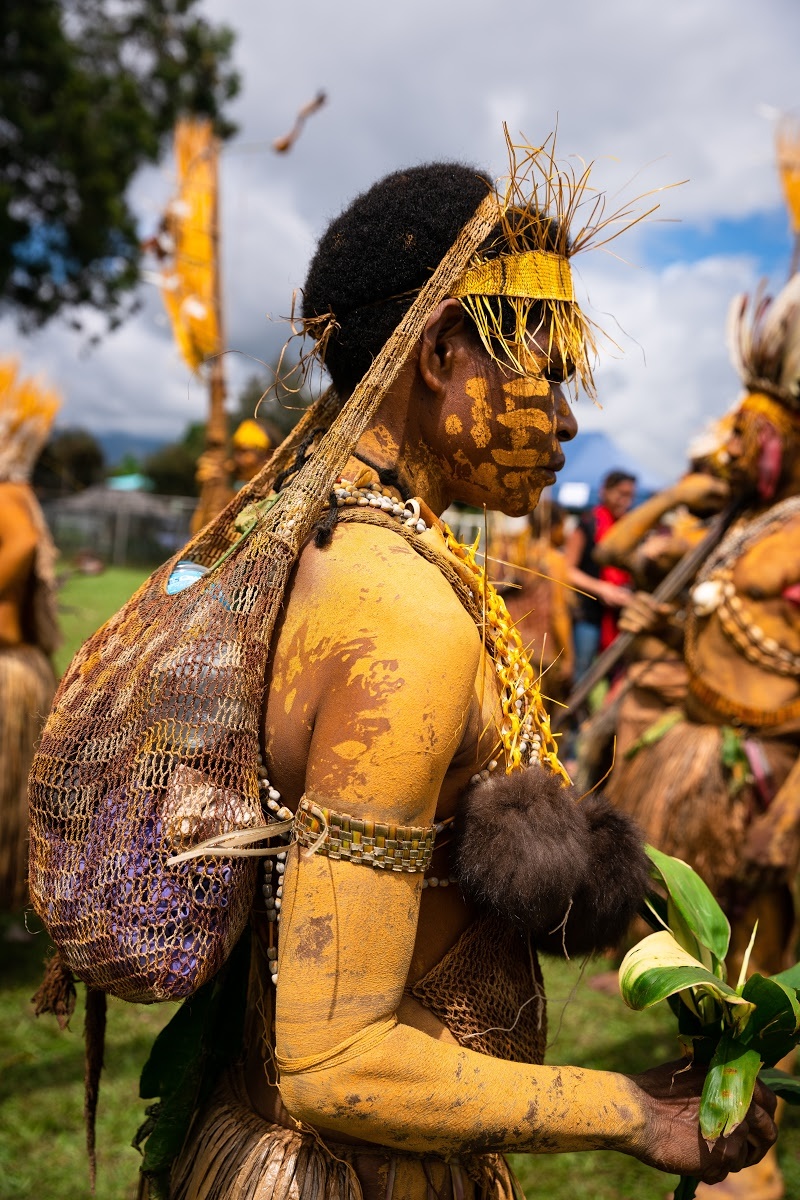
In addition to the Bilum bags that carry daily necessities, there are also amulets as small as fingertips that can be worn on the body, as well as special Bilum bags used in ceremonies and festivals. These bags have different meanings. For example, in Goroka, the central town of PNG, male warriors wear an exclusive Bilum bag that can be used to hold arrows and hang it on the back, so that warriors can use it as a backpack to fight .Or the spiritual Bilum bags that are exclusive for wizards to place herbs and use them in ceremonies.


There is also a famous legend about the Bilum bag: When the world was still dark, people lived in caves and saw no light. One day, a man suddenly saw a flashing light, so he traveled through mountains and rivers, and finally found the source of it. What he encountered was an old wizard making a bag with needle and thread, and inside the bag rested the shiny object. The man stole the bag while the wizard was away, but, between the chaos, the light slipped out of the bag and became the sun of today. In this ancient Papua New Guinea legend, the Bilum bag is a mesh bag that can hold the sun.


Figure / Bilum bag for ceremonial use

Source / Google Art & Culture

Twisting life together - Bilum bag craftsmanship

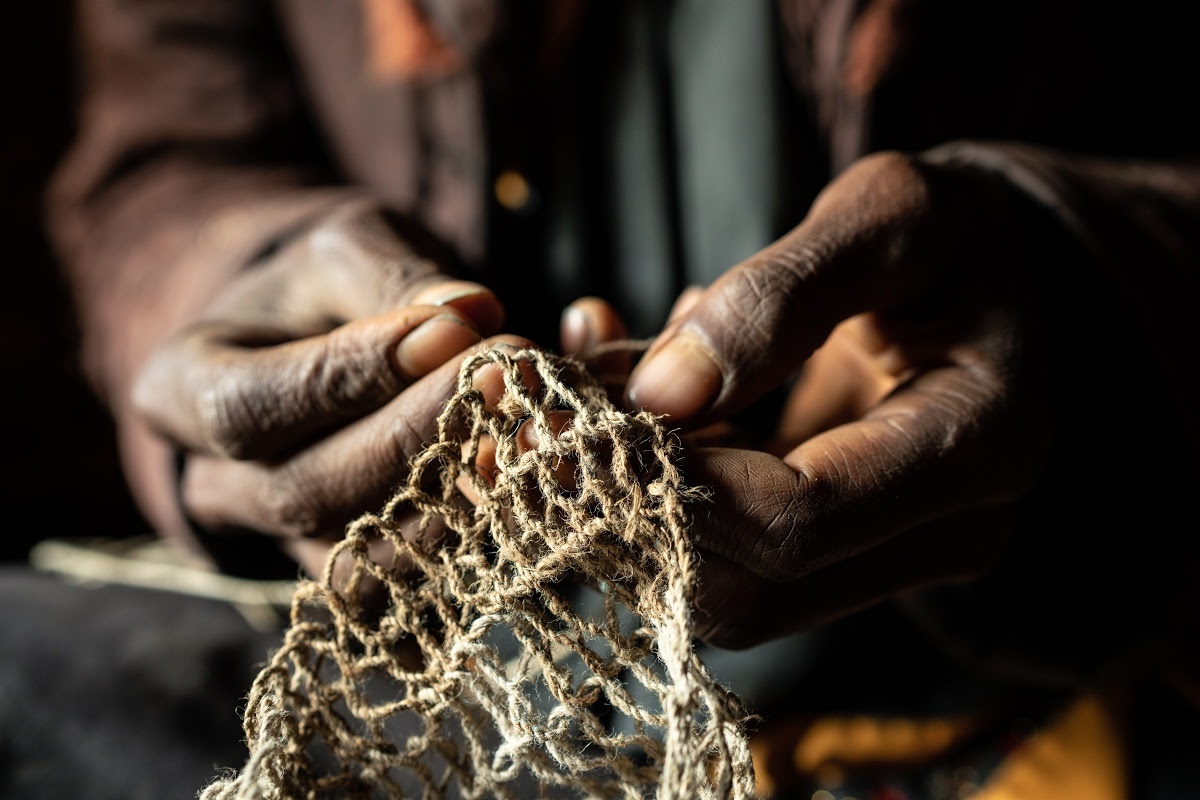
In Papua New Guinea, weaving Bilum bags is the job of women. Generally, girls start to learn how to weave Bilum bags from their mothers when they are about 5 to 6 years old. This is a very important cultural heritage, a symbol of identity as a Papua New Guinean, and a tradition passed down from their ancestors for thousands of years. Every year when the farming season is busy and the coffee season is over, it is time to weave Bilum bags. The traditional Bilum bag is woven with natural plant fibers, from the collection of the plants to the birth of a bag it takes about several weeks to several months to be finished, and the whole process is done with both hands.

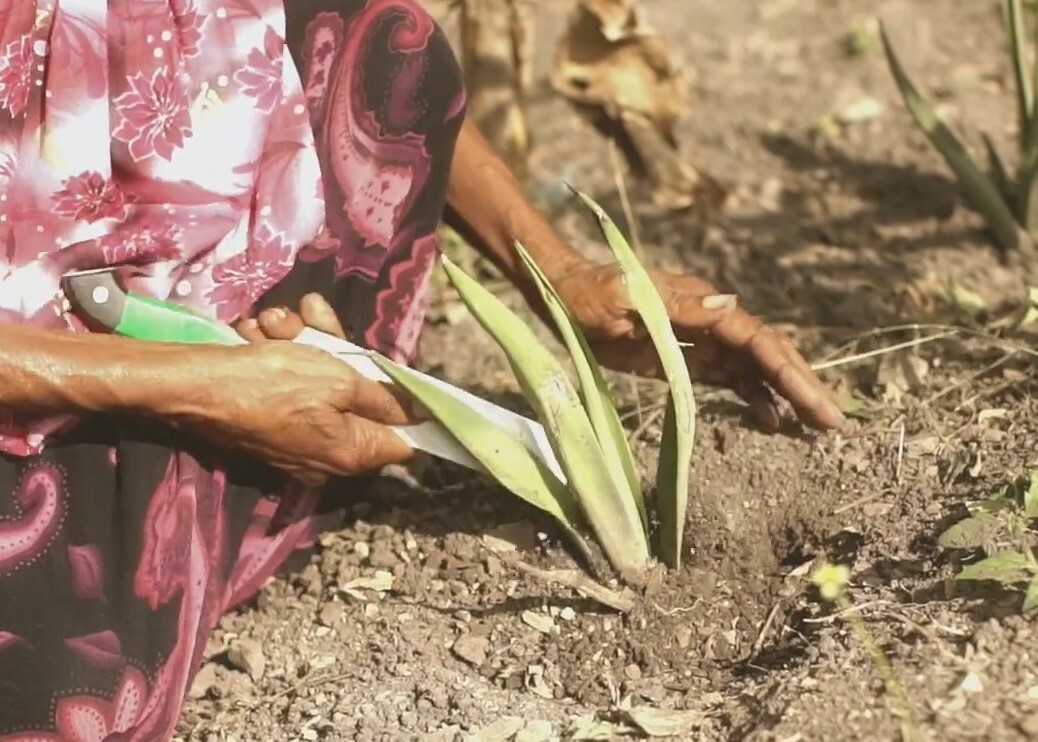
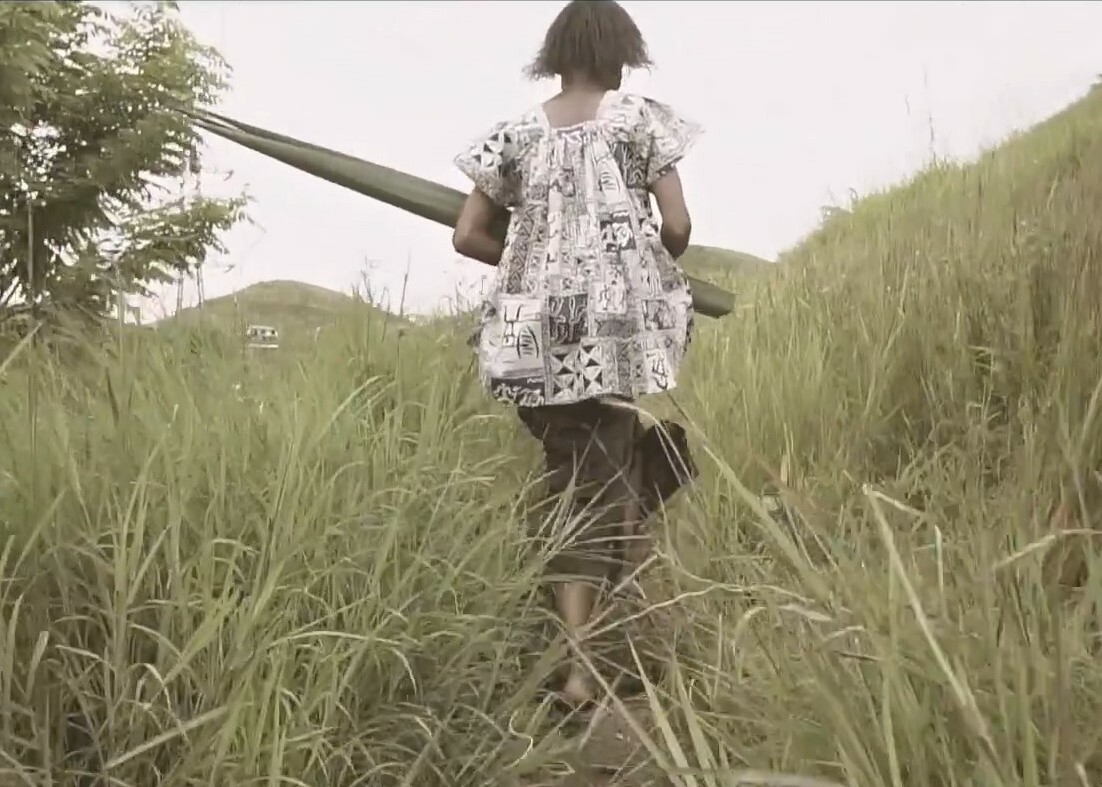
Step 1: Gather Plants


There is no specific plant species for making a BiIum bag. Small shrubs, large trees, or Agave can all be used to make it. The following takes the process of making Bilum bags from Sisal as an example. After local women harvest the sisal stems, they first use a knife to cut off the thorns and cut the stems in half, allowing the juice to flow out and turn into nearly white fibers.

Source / Bilum and Bilas

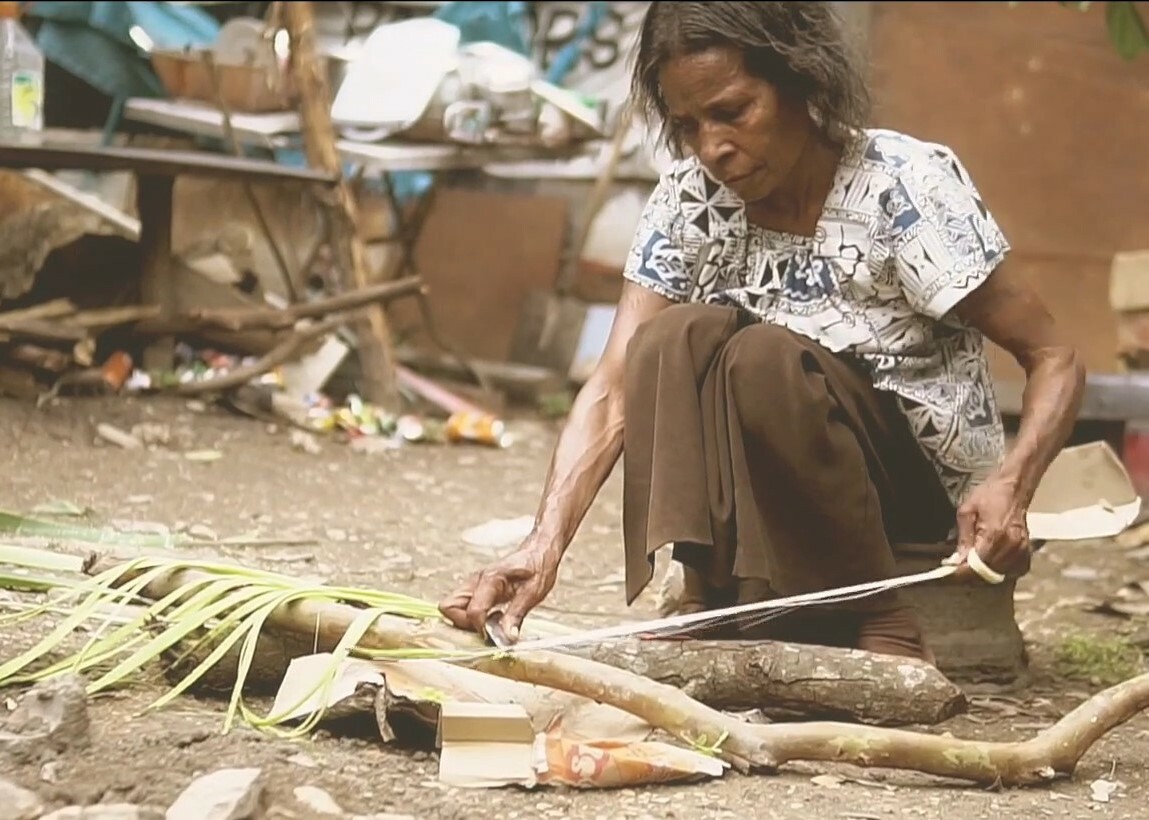
Step 2: Extracting, Dyeing Fiber


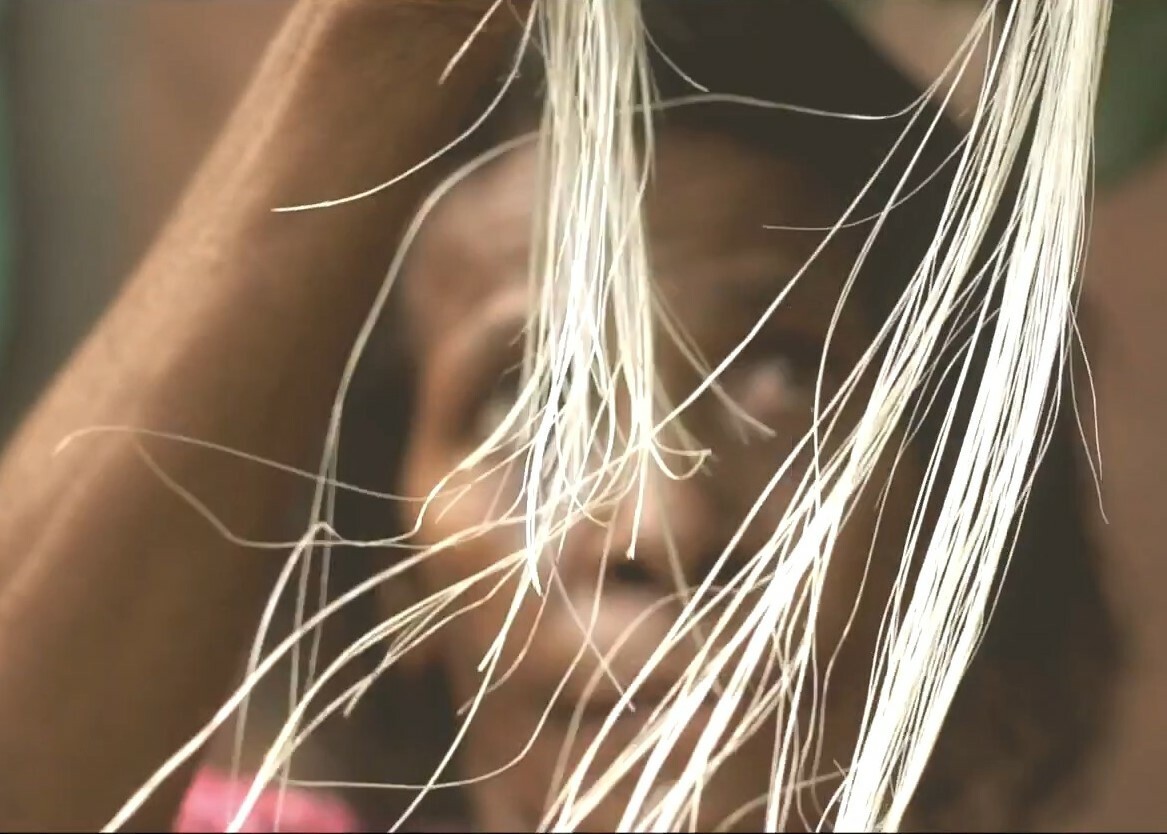
Then use a wooden stick to crush out the juice, and a knife to scrape off the remaining impurities. After the impurities are removed, one of the sisal fibers can be pulled out to tie the raw materials into a bundle that will be washed in water and exposed to the sun to dry. It takes half to a whole day, and bundles of sisal can be stored after drying. When knitting, the fibers must be slightly dampened with water to prevent those that are too dry from breaking and being damaged while rubbing them.


Figure / Scrape off remaining impurities to obtain fibers

Source / Bilum and Bilas

Figure / The fiber obtained needs to be dried for half a day to a day

Source / Bilum and Bilas

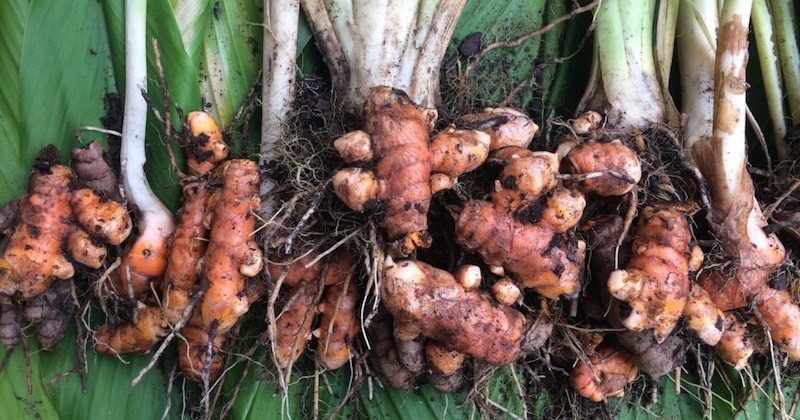
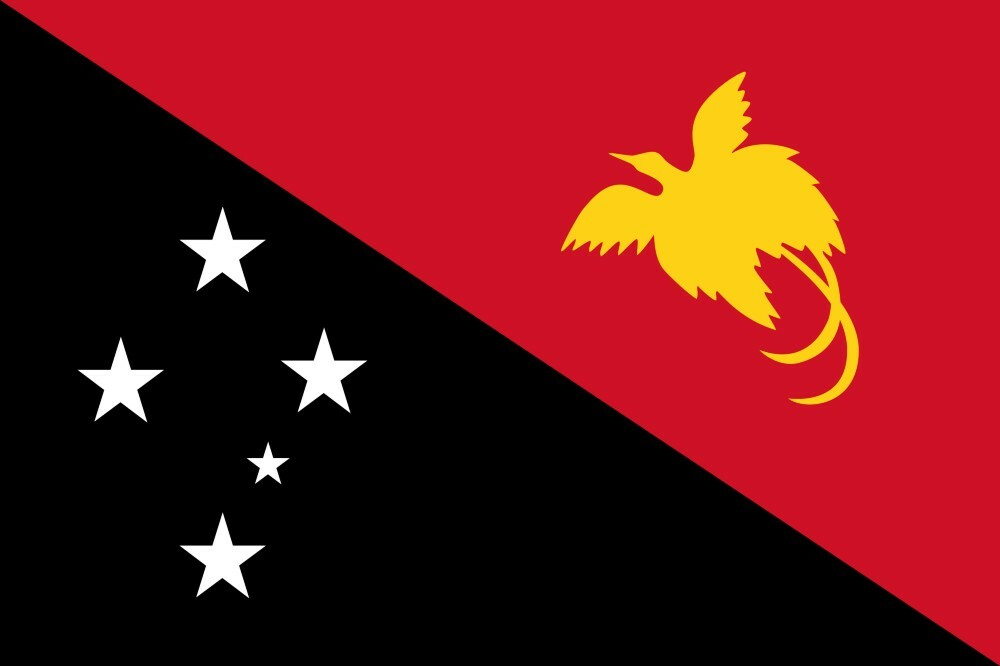
In addition to the original colors of plants, natural dyes are also used to dye fibers. The most common four colors are "black, white, yellow and red", which are the colors of the Papua New Guinea flag and their most important four primary colors.

Figuren / Turmeric, the most common yellow pigment, is also used to make hula in Papua New Guinea

Source / Juicing for Health

Figure / Papua New Guinea flag

Source / Wikipedia


Figure / Complex totem

Source / Philippe Peltier Mission

Step 3: Weaving the Bilen Bag


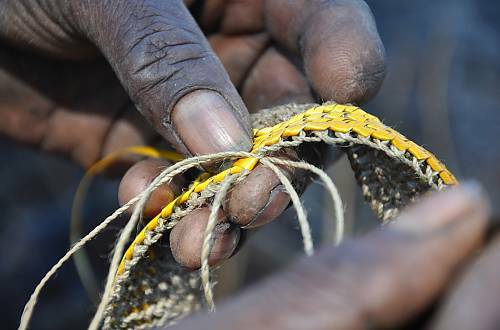
First, they take two or three thin fibers, roll them with the palm of their hand on the upper thigh to form a thin thread, and twist the two threads again into two strands. Fine needles are then used to weave through the thread, twisting the thread in a stitch-like technique, weaving all the grids together in a rhythmic form, creating complex and unique patterns. Traditionally, each tribe and family has its own patterns and designs, which represent their status, beliefs or individuals. If other tribes want to try to weave the same pattern, they must obtain the consent of the original tribe’s chief.

Source / UNESCO


Contemporary Bilum bags

The development of the Bilum bag has not escaped the problems of foreign counterfeiting and loss of traditional skills. But even now, Bilum bags are still used in 25 provinces of Papua New Guinea as daily shopping bags, school bags, and even in some remote towns and villages, Bilum bags are also used as "ballot boxes" for promotion election tools (using objects that are more familiar to local residents as containers for placing ballots is more friendly and may increase voter turnout).


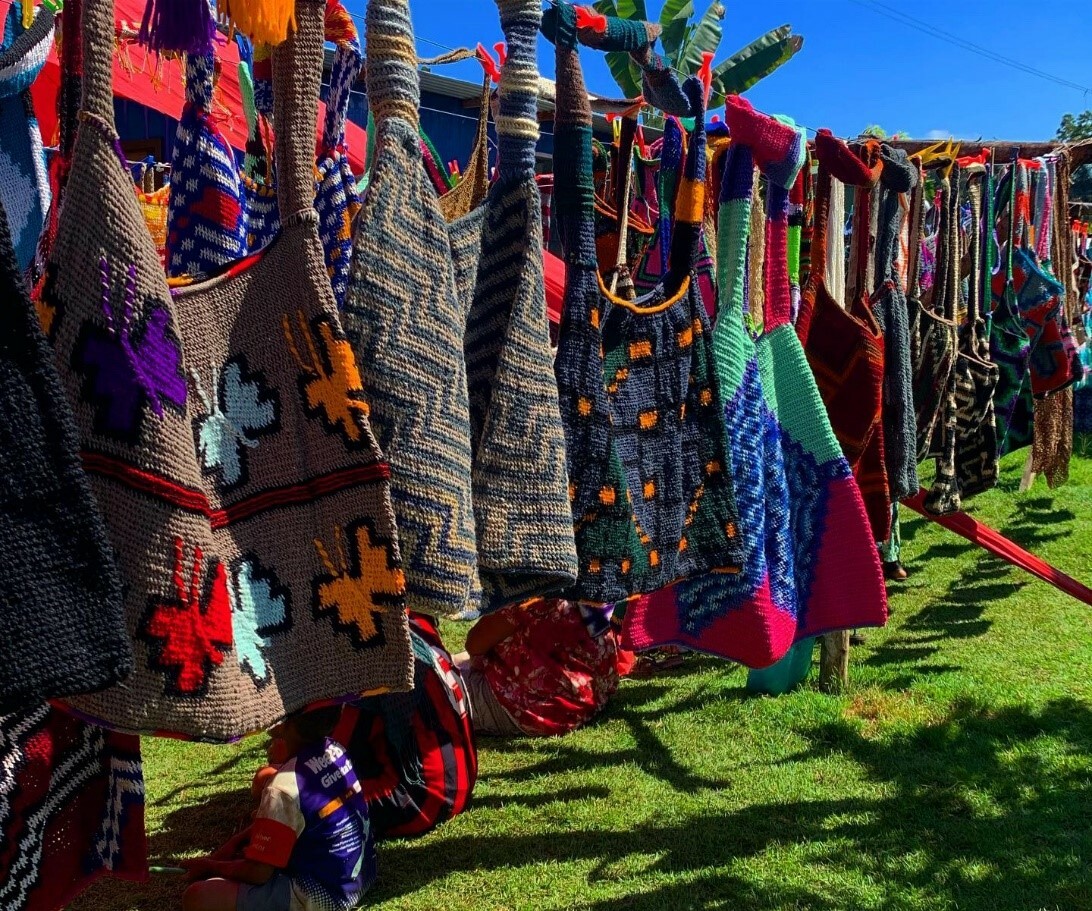
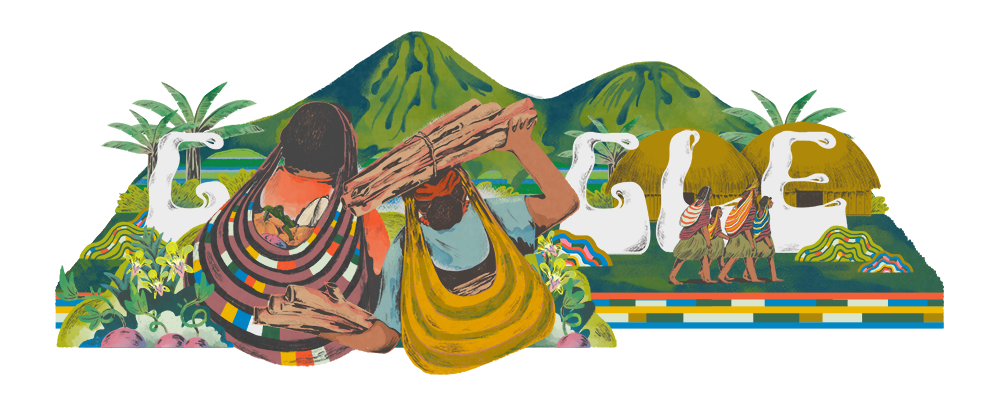
In 2012, UNESCO listed the Bilum bag as an intangible cultural heritage, which made the bag gradually attract more attention and become an important handicraft for local women to assist their households. With the introduction of modernized patterns into Papua New Guinea, the colors of the Bilum bags are becoming richer and richer, incorporating artificial and animal fibers, and styles that are more and more diverse and even represent current affairs in modern society, like the rifle AK47 which reflects the war and violence between tribes and calls for anti-violence.


Today, the younger generation of women have re-invested in the production of Bilum bags and sell them in the market, this not only increases their income but also allows Papua New Guinea's traditional craftsmanship and cultural spirit to be passed on.

Figure / The modern form of the Bilum bag

Source / Casoar

Figure / Google's website image to commemorate Bilum bag

Source / Google

Papua New Quinea|Bilum