{{ 'fb_in_app_browser_popup.desc' | translate }} {{ 'fb_in_app_browser_popup.copy_link' | translate }}
{{ 'in_app_browser_popup.desc' | translate }}
{{ childProduct.title_translations | translateModel }}
{{ getChildVariationShorthand(childProduct.child_variation) }}
{{ getSelectedItemDetail(selectedChildProduct, item).childProductName }} x {{ selectedChildProduct.quantity || 1 }}
{{ getSelectedItemDetail(selectedChildProduct, item).childVariationName }}
Faced with harassment by Spanish colonizers over tax issues, how will the Nicaraguan merchant Güegüense navigate the crisis? The Nicaraguan satirical play El Güegüense, a blend of song, dance, music, comedy, and political critique, is not only a relic from the Spanish colonial era but also a UNESCO-designated "Masterpiece of Oral and Intangible Heritage of Humanity."
Nicaragua has been home to Indigenous peoples since 12,000 BC. It was colonized by Spain in 1524 during the Age of Exploration following Columbus's discovery of the Americas, remaining under Spanish rule for nearly 300 years until achieving independence in the 19th century.
El Güegüense, a satirical play from the Spanish colonial era, has uncertain origins and authorship. Its earliest traces date back to the mid-16th century when Nicaragua was under Spanish rule, a time rife with social inequality, class stratification, resource exploitation, linguistic conflicts, and efforts to alter Indigenous beliefs.
Characters and Plot
The play's title and main character, El Güegüense, derive from the Nicaraguan dialect of Náhuatl, where "huehue" means "old man" or "wise man."
The protagonist, Güegüense, is a merchant who faces difficulties with the Spanish authorities over taxes. Using cleverness and double entendres, he persuades the Spanish governor to marry his daughter to his son, resolving his tax problems. While outwardly compliant with Spanish authority, Güegüense subtly mocks their corruption, undermining colonial power.
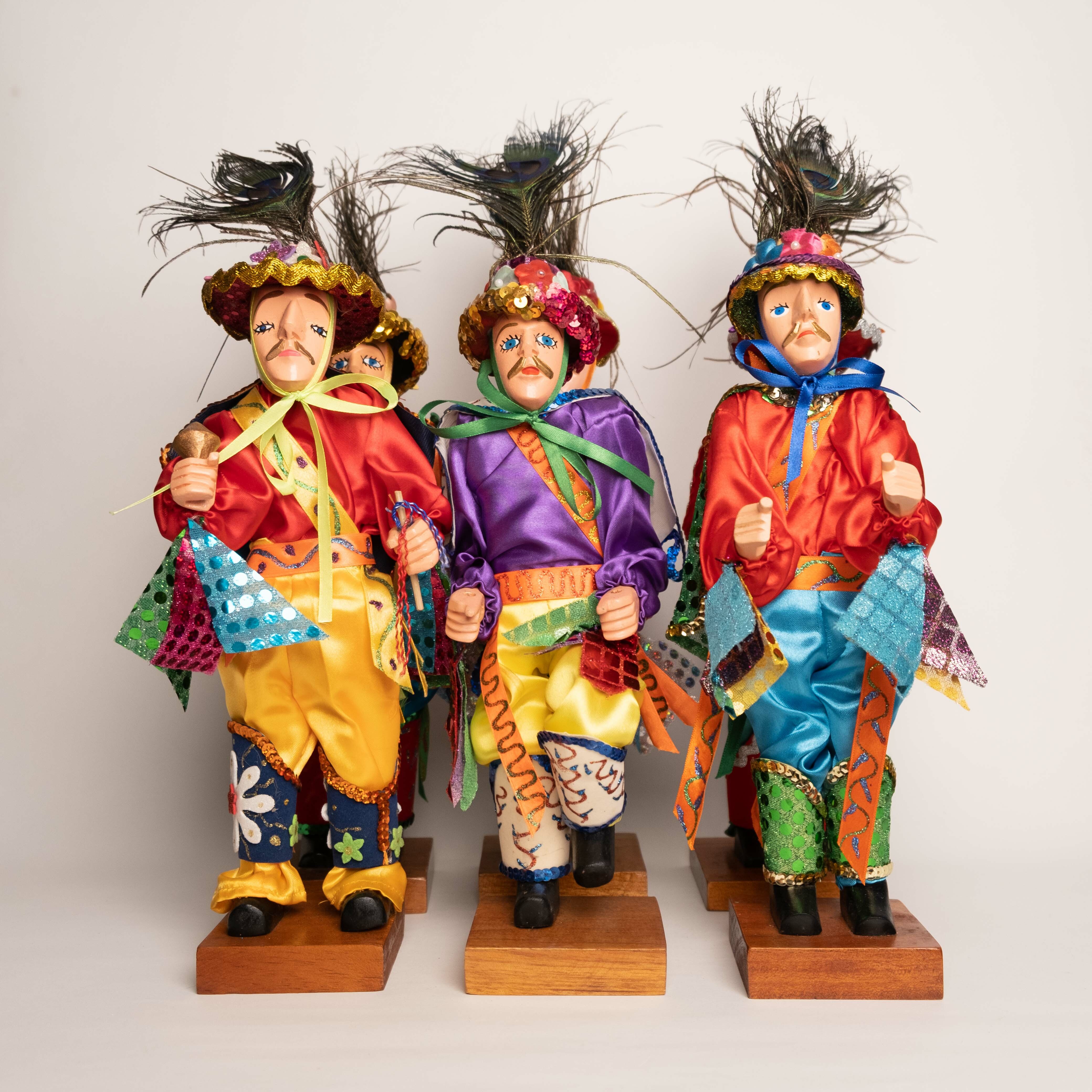
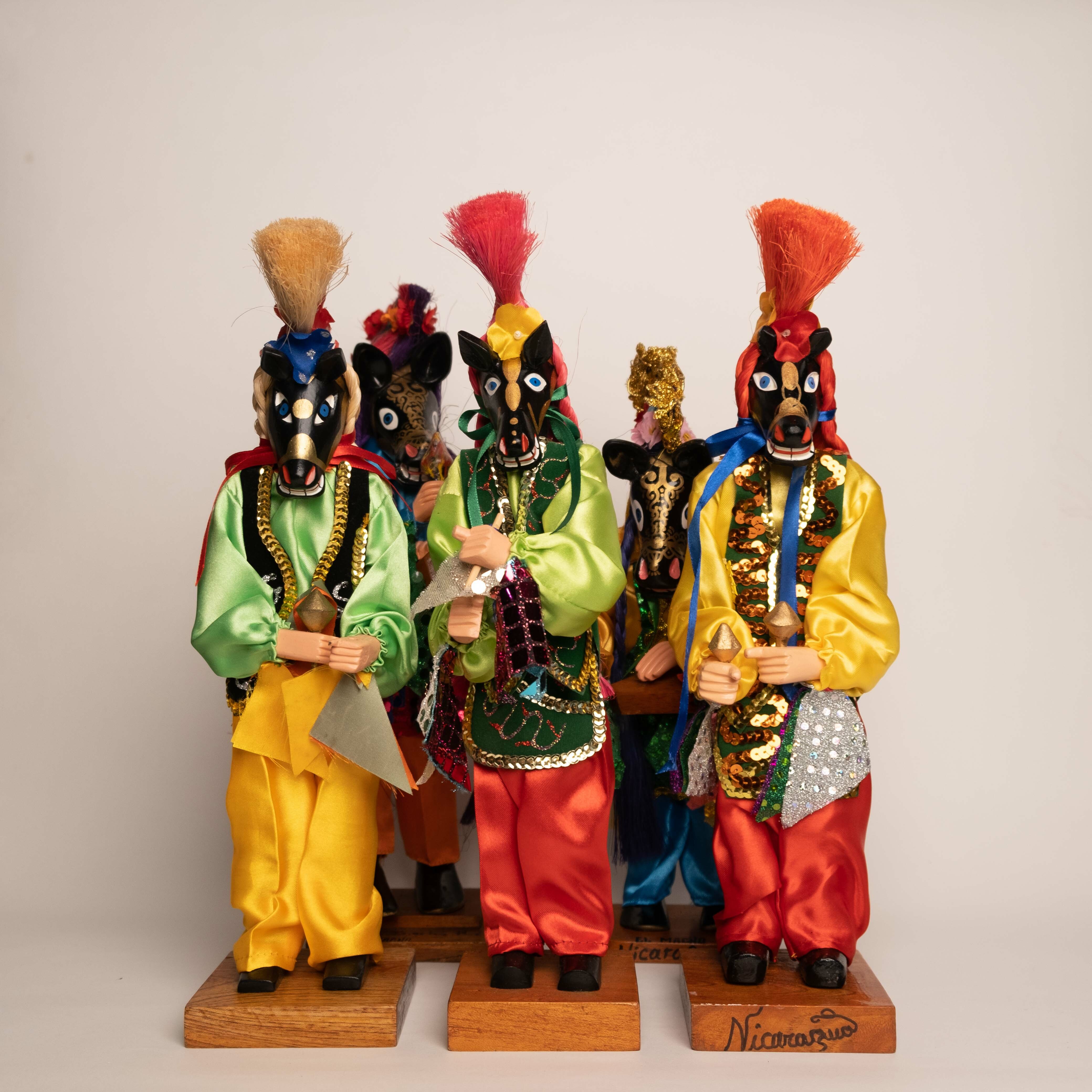
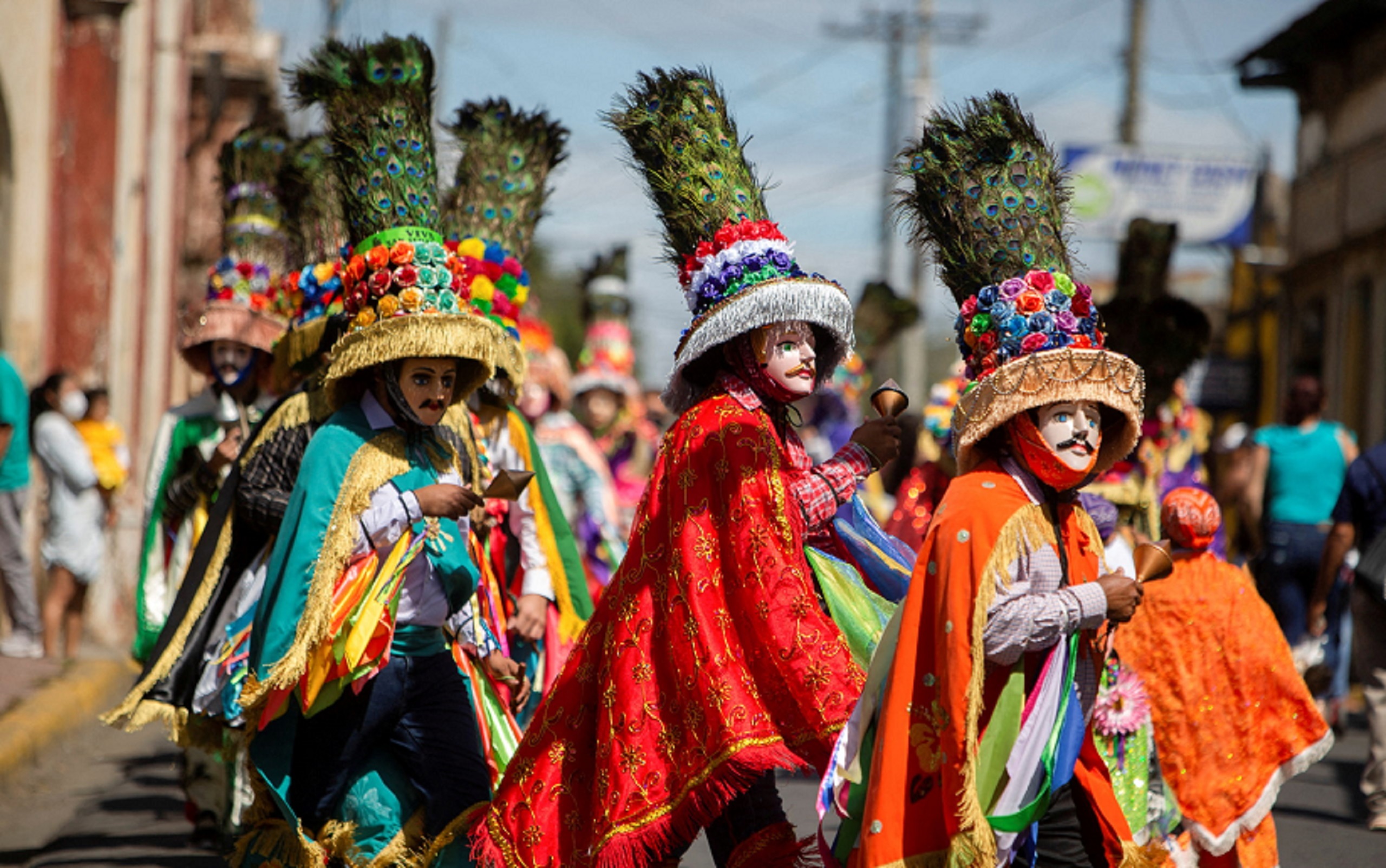
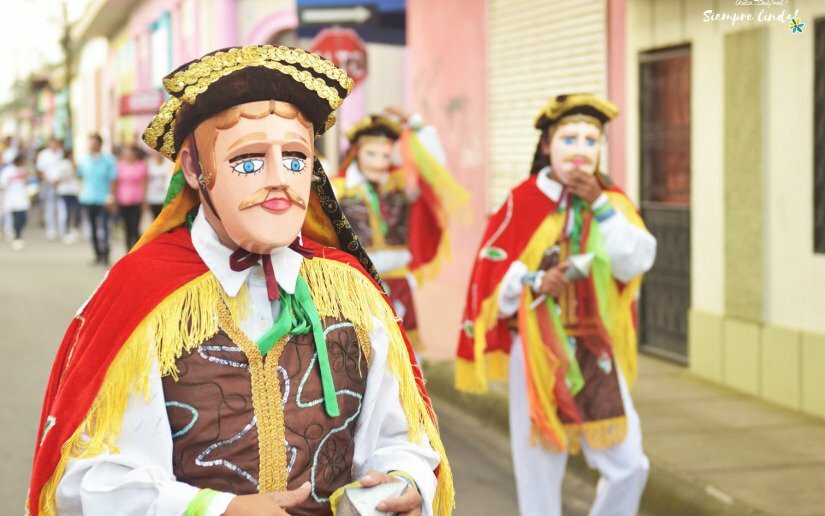
The play combines 314 spoken lines, folk dances, and music, featuring 14 characters: The play incorporates 314 spoken lines, elements of folk dance, and music, featuring a total of 14 characters: the protagonist Güegüense, his eldest son Forcico, and his younger son Ambrosio, along with three Mestizos (Latin people of mixed European and Indigenous ancestry) who wear straw hats with feather decorations, hold metal-tipped hand rattles, and dress simply and modestly; four Spanish government officials—the governor, a messenger, a scribe, and a councilor—dressed in colonial-era hats, clothing, and high stockings; the governor’s silent daughter, Doña Suche Malinche, and two maids; as well as four mule-faced characters carrying heavy loads.
El Güegüense reflects the hardships faced by Nicaraguans during colonial rule, becoming a vehicle for critique and resistance. These struggles are common across Latin America, earning the play widespread acclaim as a reflection of both its author’s sentiments and the collective experiences of South American peoples.
Image/ The protagonist of "El Güegüense" and his two sons, depicted as Mestizos, wearing straw hats decorated with feathers, holding metal-tipped hand rattles, and dressed in simple, modest clothing.
Source/ Reuters
Image/ Spanish characters in "El Güegüense" wearing hats adorned with sequins, costumes, and high stockings, reflecting the style of colonial attire.
Source/ twitter
From Street Performances to Cultural Icon
Initially performed as street theater in Diriamba, Carazo, during the 17th century, El Güegüense was passed down orally for centuries until it was published in 1942. Today, it is a cornerstone of Nicaraguan satire.
Every year, from January 17 to 27, Diriamba celebrates the Feast of Saint Sebastian with street performances of El Güegüense. Typically involving eight dancers, the parade may also include side characters like El Viejo, La Vieja, and El Gigante.
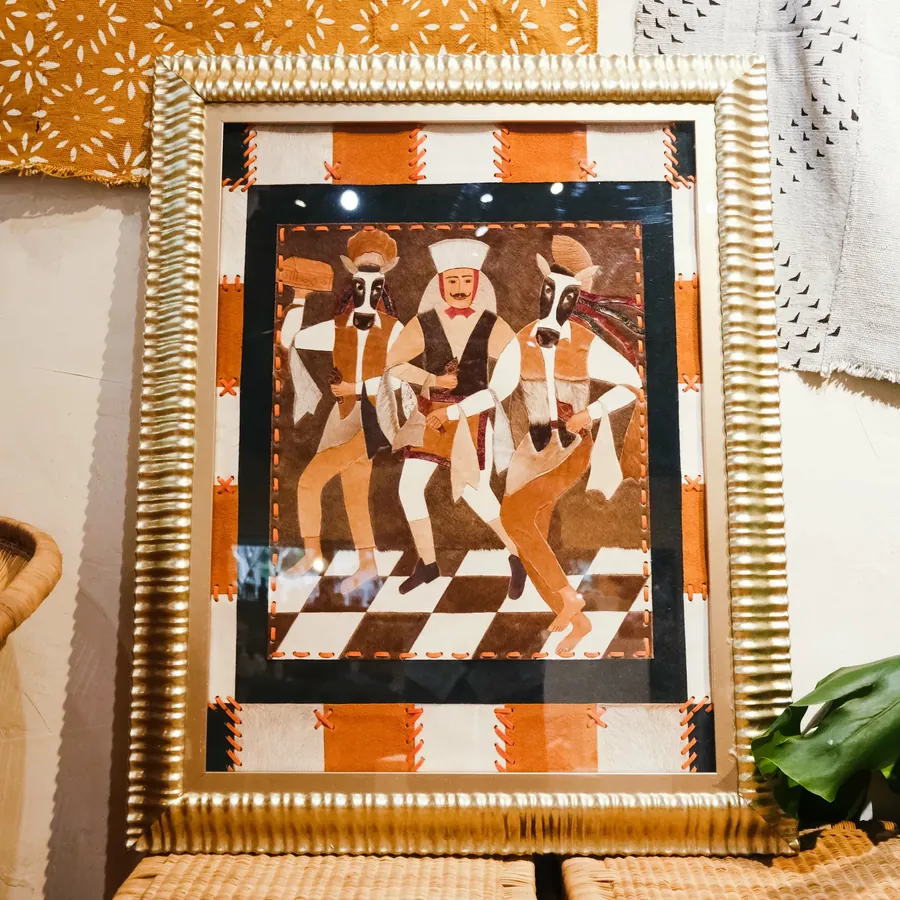
Image/Leather collage art of the satirical play "El Güegüense"
The cultural industries derived from the play
Through its artistic approach, El Güegüense satirizes and exposes the social and political realities of Nicaragua during the colonial period, highlighting the resistance of the colonized people. It is regarded as one of the representative works of Latin American culture and was designated in 2005 by UNESCO as a "Masterpiece of the Oral and Intangible Heritage of Humanity." From its origins as a satirical street play, El Güegüense was later compiled into a written work and has since inspired various industries. For example, cigar companies have adopted El Güegüense as a brand image, associating their products with the cleverness and bravery of the play’s protagonist.
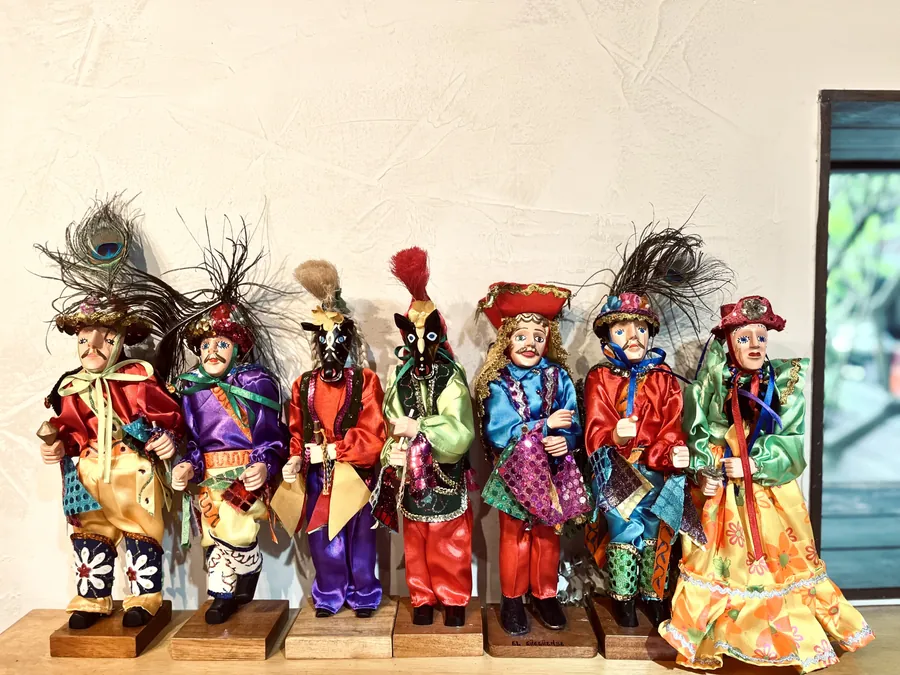
Street performances have also boosted the mask-making industry. The Flores Rojas family has been crafting wooden masks and costumes for El Güegüense for over 30 years. In addition to carving and painting masks, they also create puppets. Their attention to detail, from sculpting the characters to designing costumes, means the puppets take even longer to make than the masks.
Through El Güegüense, Nicaraguans remember their nation's history and are inspired to stay true to their roots, striving to move forward in the best direction, just like the play’s protagonist.