{{ 'fb_in_app_browser_popup.desc' | translate }} {{ 'fb_in_app_browser_popup.copy_link' | translate }}
{{ 'in_app_browser_popup.desc' | translate }}
{{ childProduct.title_translations | translateModel }}
{{ getChildVariationShorthand(childProduct.child_variation) }}
{{ getSelectedItemDetail(selectedChildProduct, item).childProductName }} x {{ selectedChildProduct.quantity || 1 }}
{{ getSelectedItemDetail(selectedChildProduct, item).childVariationName }}
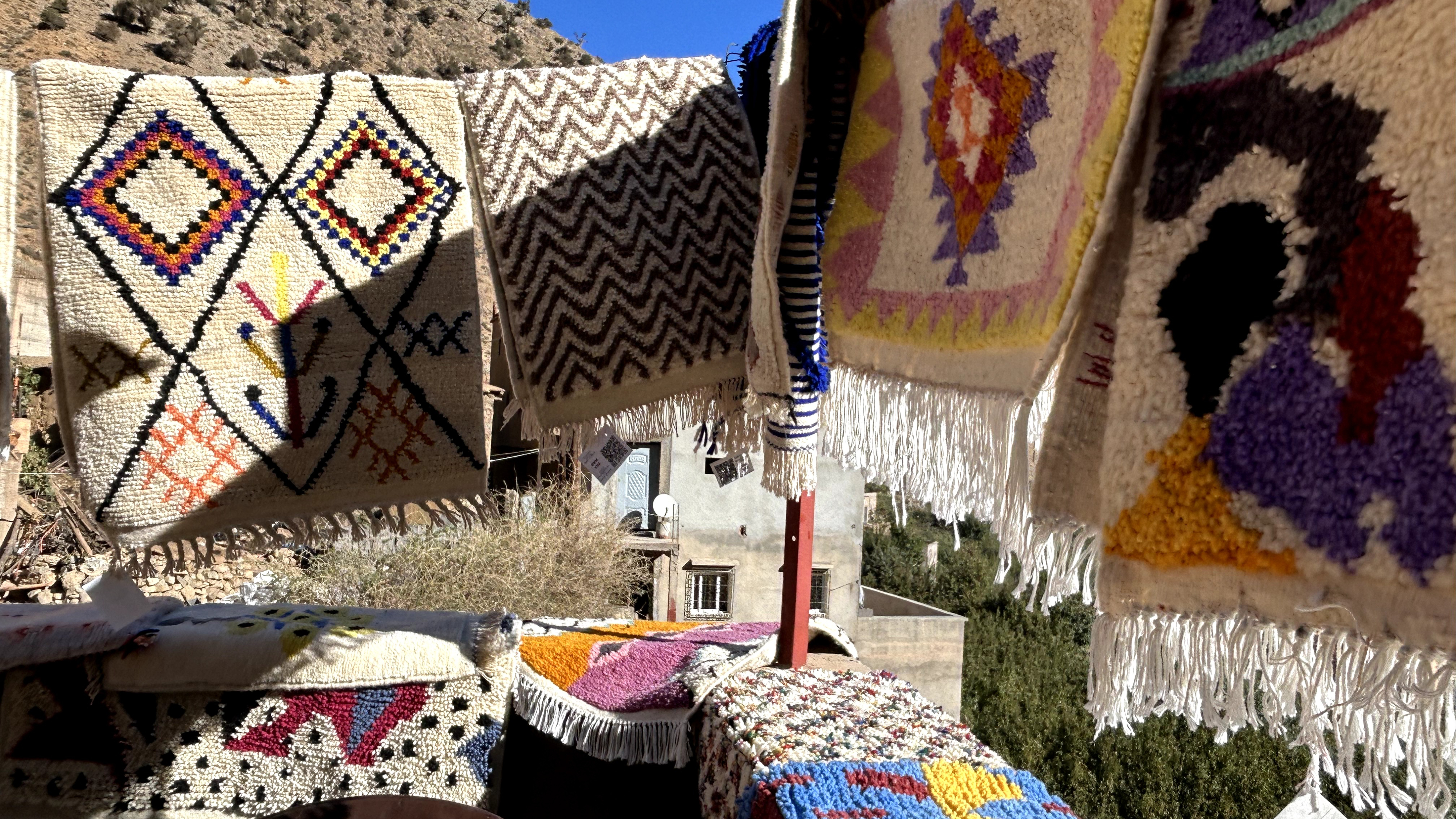
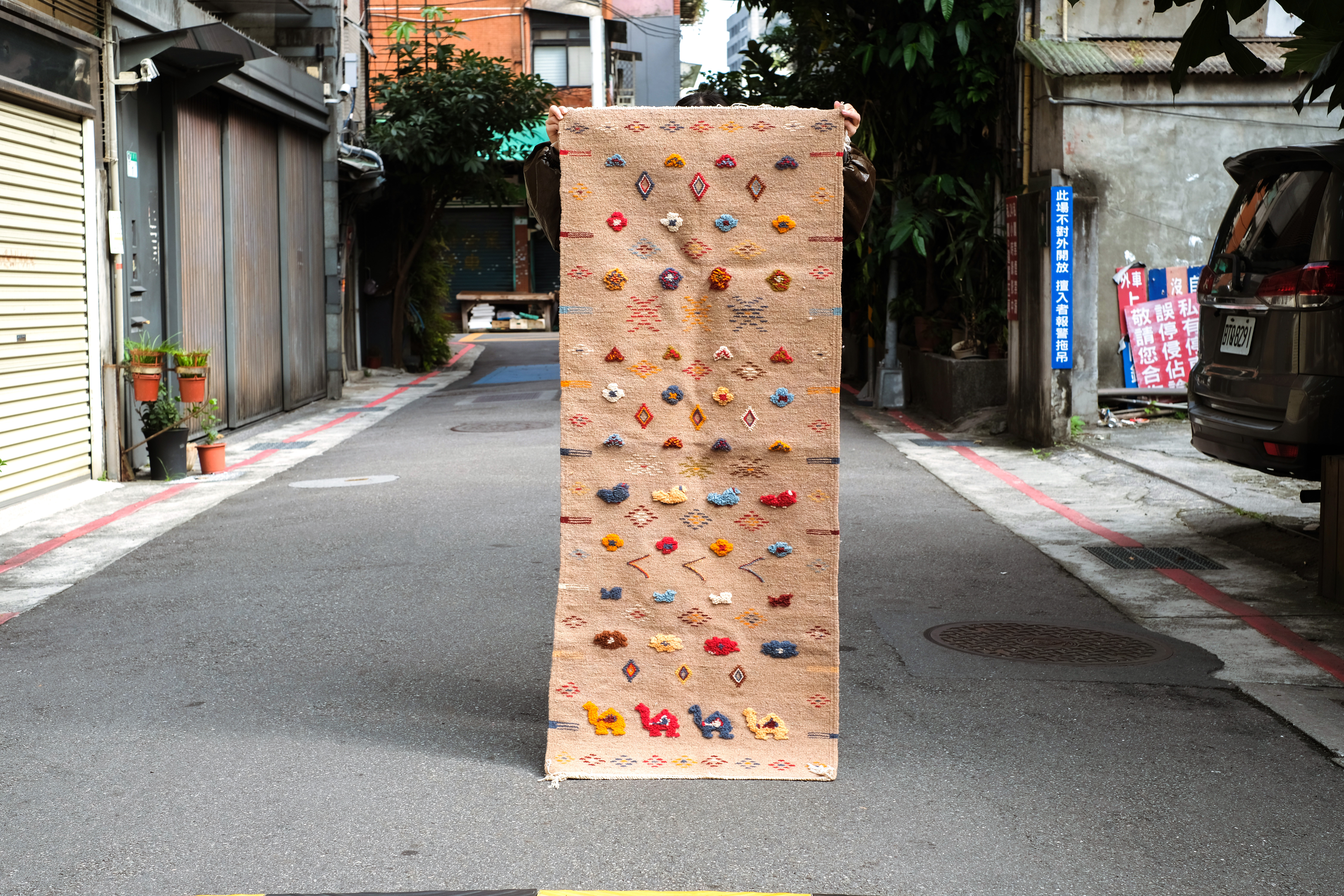
由摩洛哥柏柏民族親手編織的地毯(Berber Rugs),是當地婦女代代相傳的工藝,她們結合阿拉伯民族風情與柏柏傳統圖騰的設計,將自己的故事織進毛毯中,這些簡約風格的毛毯,以掛在牆上或鋪在地上的形式布置家中角落,更從北非席捲歐美,在時尚居家設計蔚為風潮。
Berbers in Al-Maġrib, North Africa
The heat of the sun and dryness formed the Sahara Desert, the world's largest desert, in northern Africa. Amidst the dry sand and dust, Morocco, located in the northwestern part of the Sahara, is known as "a cool land under the scorching sun."
Like the Central Mountains of Taiwan blocking the typhoon from the east, the Atlas Mountains in the north of Africa block the hot air from the desert, keeping the northern part of the mountains humid and comfortable. The region is called "Al-Maġrib", covering modern time Morocco, Algeria, and Tunisia. From the Al-Maġrib area to the Western Sahara Desert, there is a group of ancient inhabitants and traditional nomads called "Berbers".
The Berbers are very proud of their culture and consciously preserve their traditions to a considerable extent. Their houses are mostly cave dwellings. They build them from mud, or dig holes in the mounds of the plateau, and live in the caves. Mud caves are warm in winter and cool in summer. Since the local climate is too dry for mosquitoes, screen windows or doors are not required.
The Berbers who insist on a frugal life make everything with their own hands from scratch. They build houses from mud, weave blankets from wool or camel hair, produce flour and bread from wheat, grow dates and olives, and even twist and dye fabric and cotton thread to make clothes. Every home raise cattle, sheep, and dogs. Camels are used as a means of transportation.
The Precious Tradition of leather crafts
The region is well-known for their soft leather, which has hundreds of years of tanning history. The relatively humid climate of Al-Maġrib allows the Berbers to raise cattle, sheep, donkeys, camels and other livestock. In addition to transportation and meat source, the fur and leather from livestock are fully utilized and thus laying a solid foundation for their leather craftsmanship. Leather products can be seen everywhere in the lives of Berbers. Besides the Babouche slippers, leather chairs and stools can also be found in their living rooms.
柏柏地毯的編織工序
柏柏族的性別分工明確:男人負責務農及照顧綿羊、山羊和牛等牲畜,帶孩子、打理家務及從事手工藝則是女性的工作,忙碌家務一整天後,柏柏婦女才會在家中或去工坊繼續編織地毯。
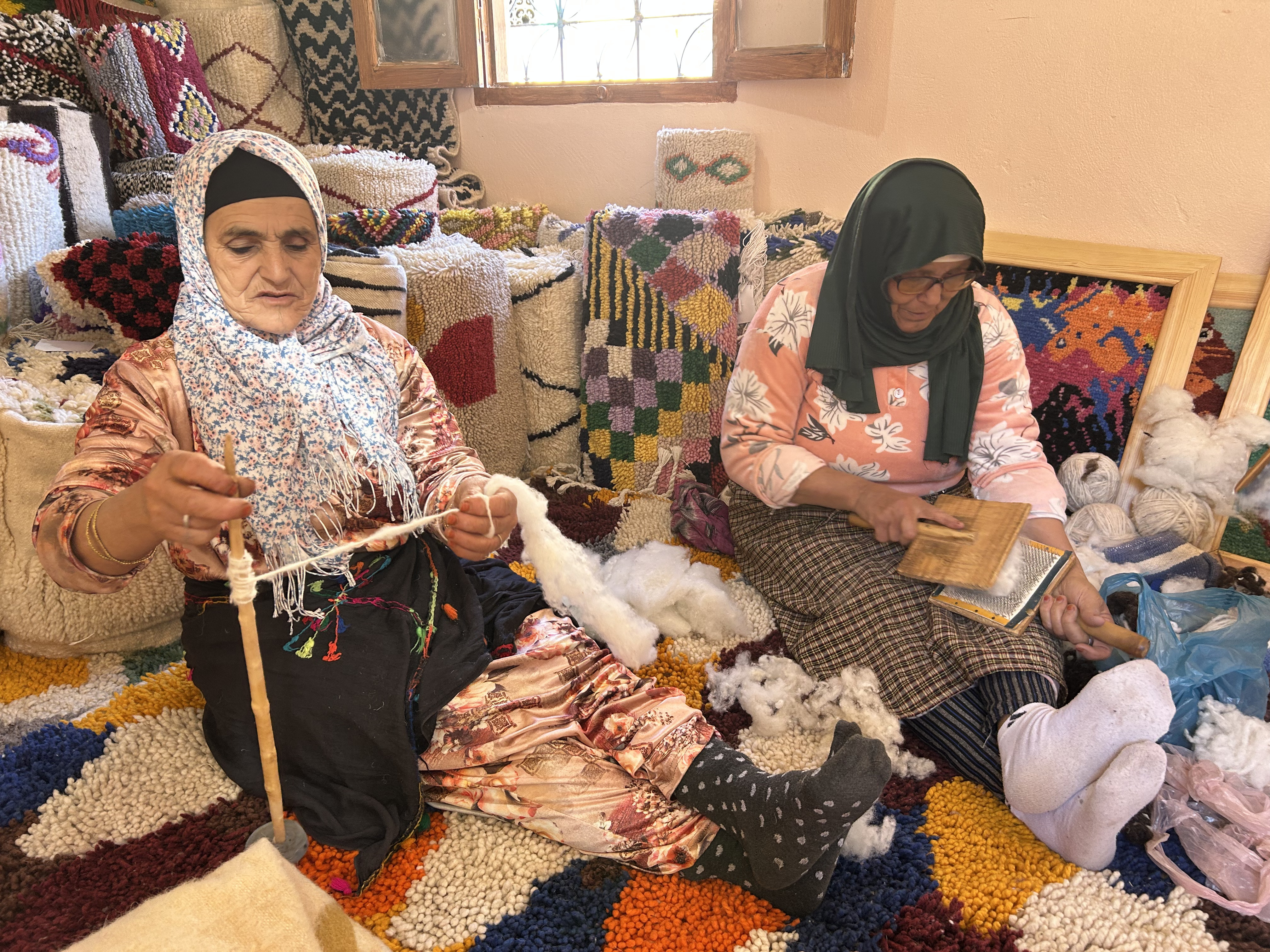
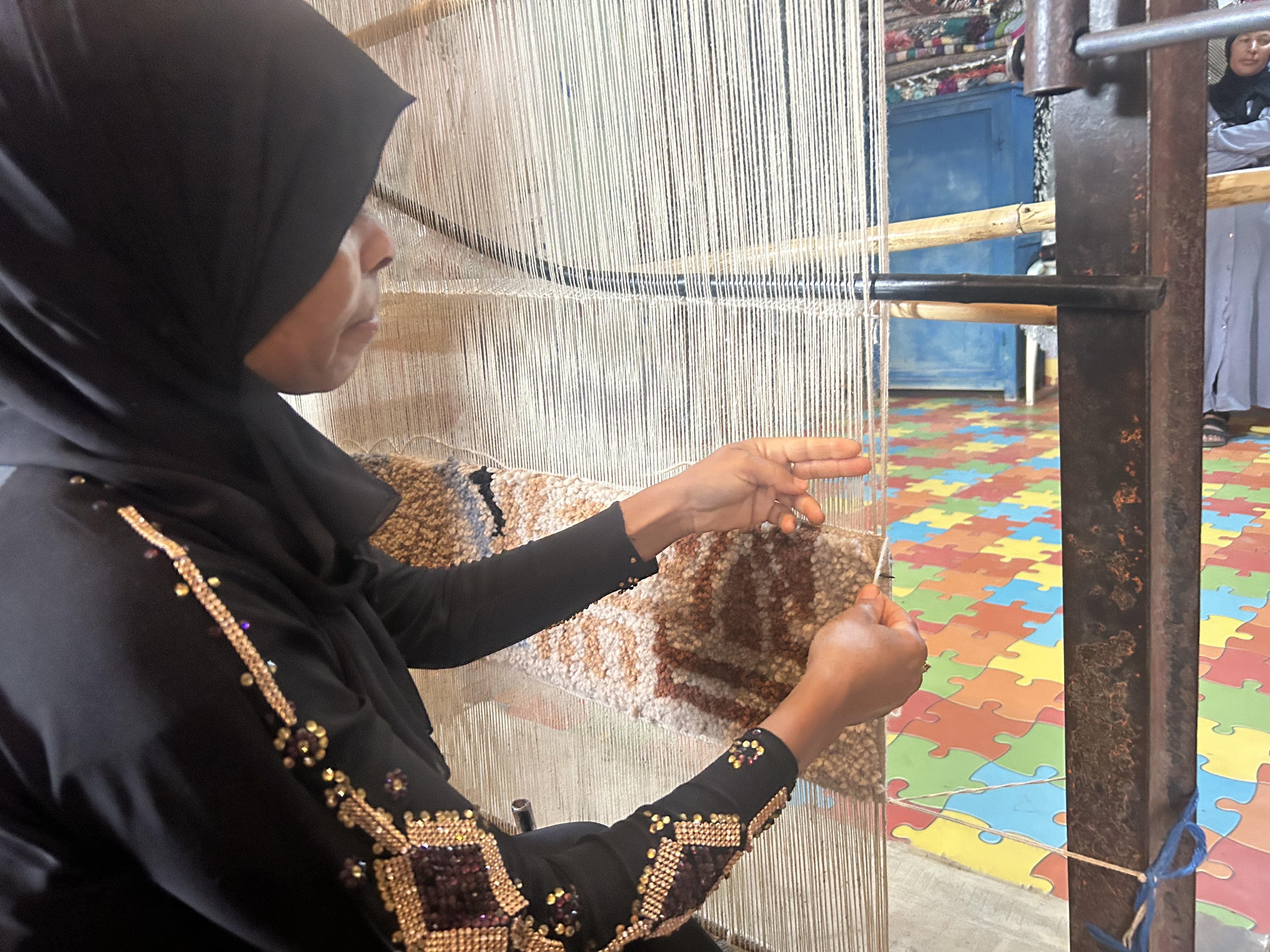
柏柏地毯是由懸掛木製紡織機垂直緯線上的無數個結累積而成。每天織女會將蒐集到的羊毛或駱駝毛用毛刷梳順後,整理成不同粗細的毛線球。
圖/用毛刷梳理羊毛後,用紡錘捲成毛線球
圖/地毯編織過程
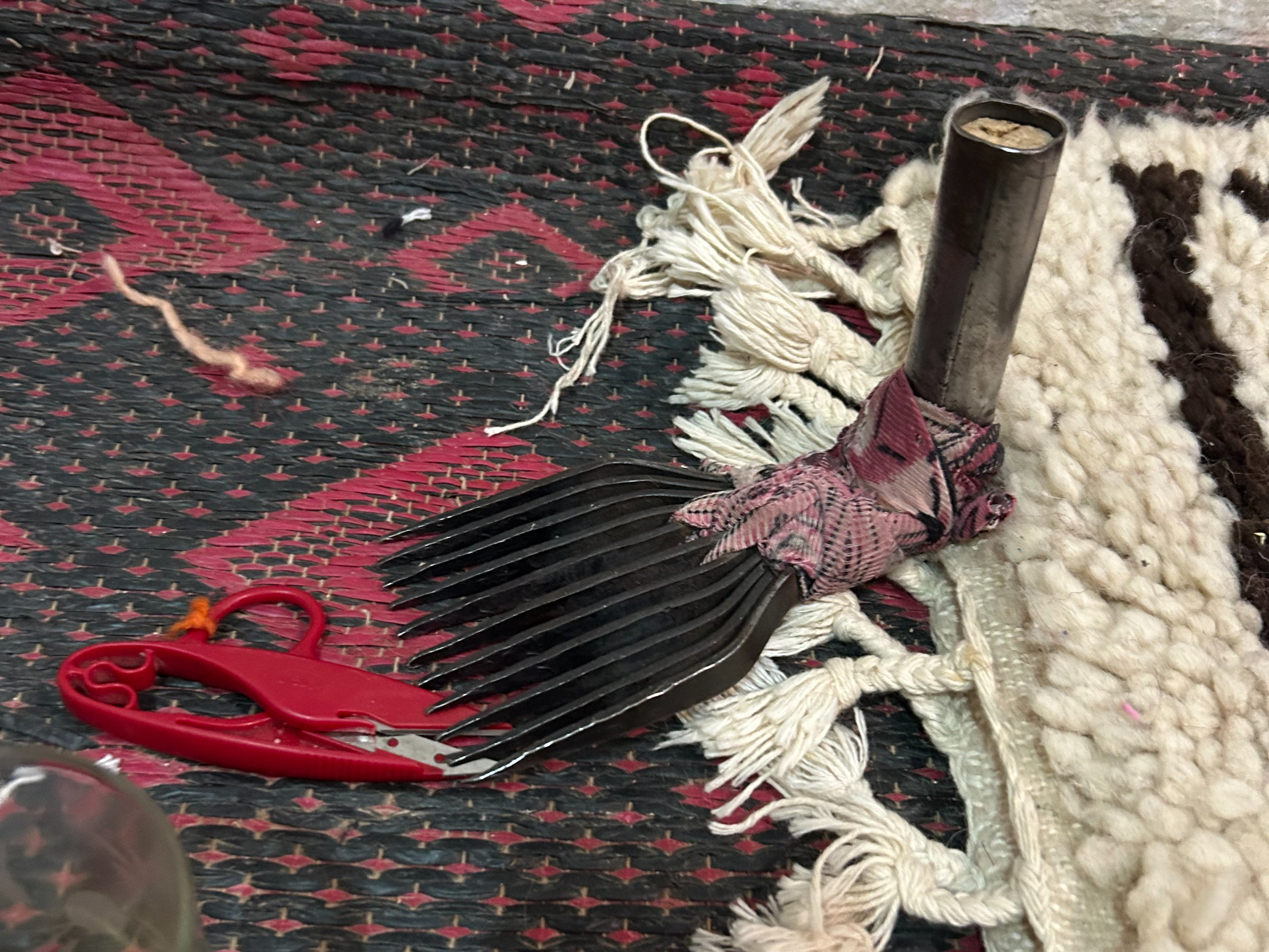
圖/將經緯線壓密的鐵梳Medghas
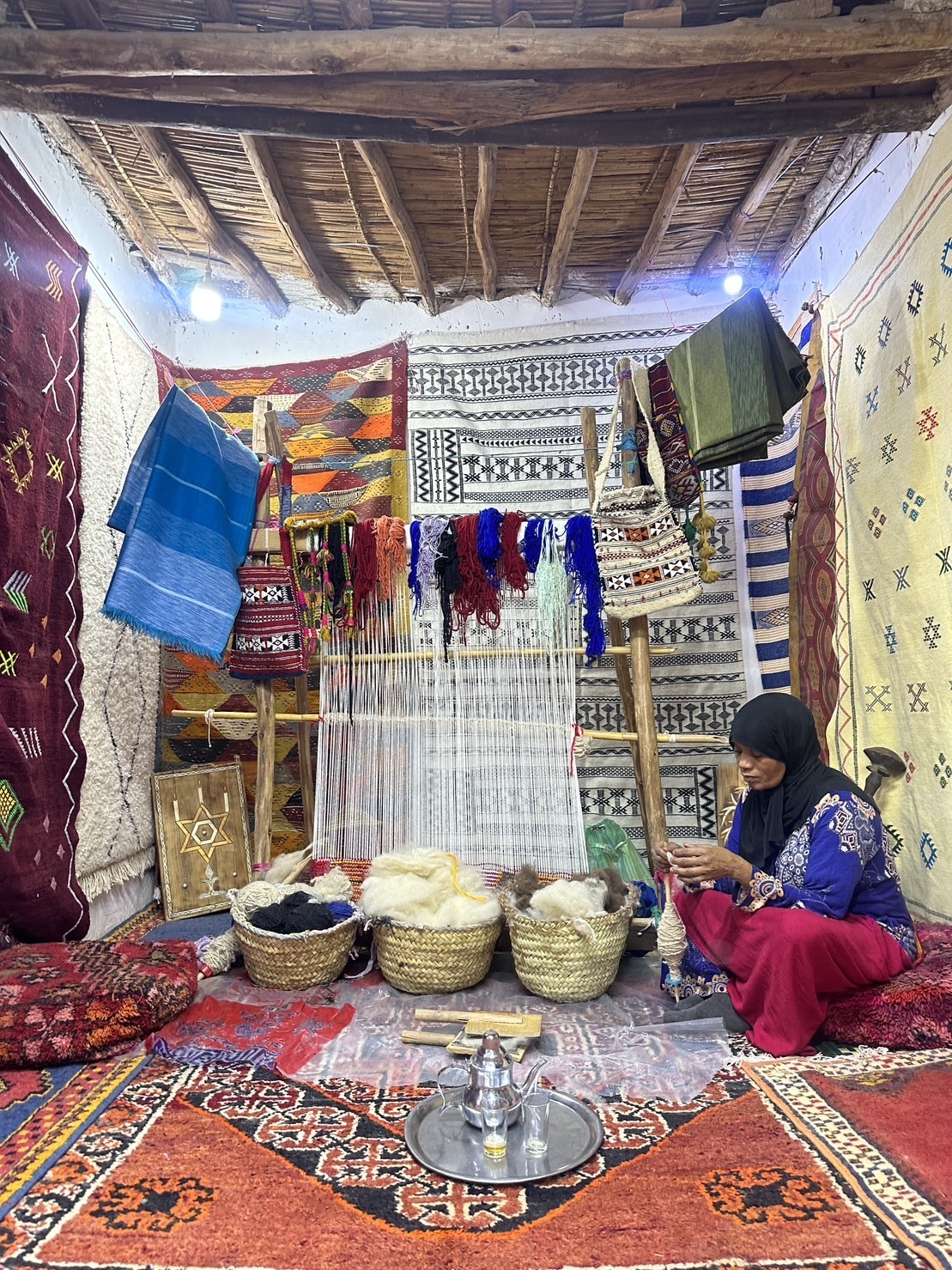
線材足夠織地毯時,婦女便架起編織機,將毛線來回垂直纏繞在織布機上作為「緯線」,接著將毛線來回穿進緯線中,並以名為「Medghas」的專用鐵梳讓經緯線壓得更紮實。
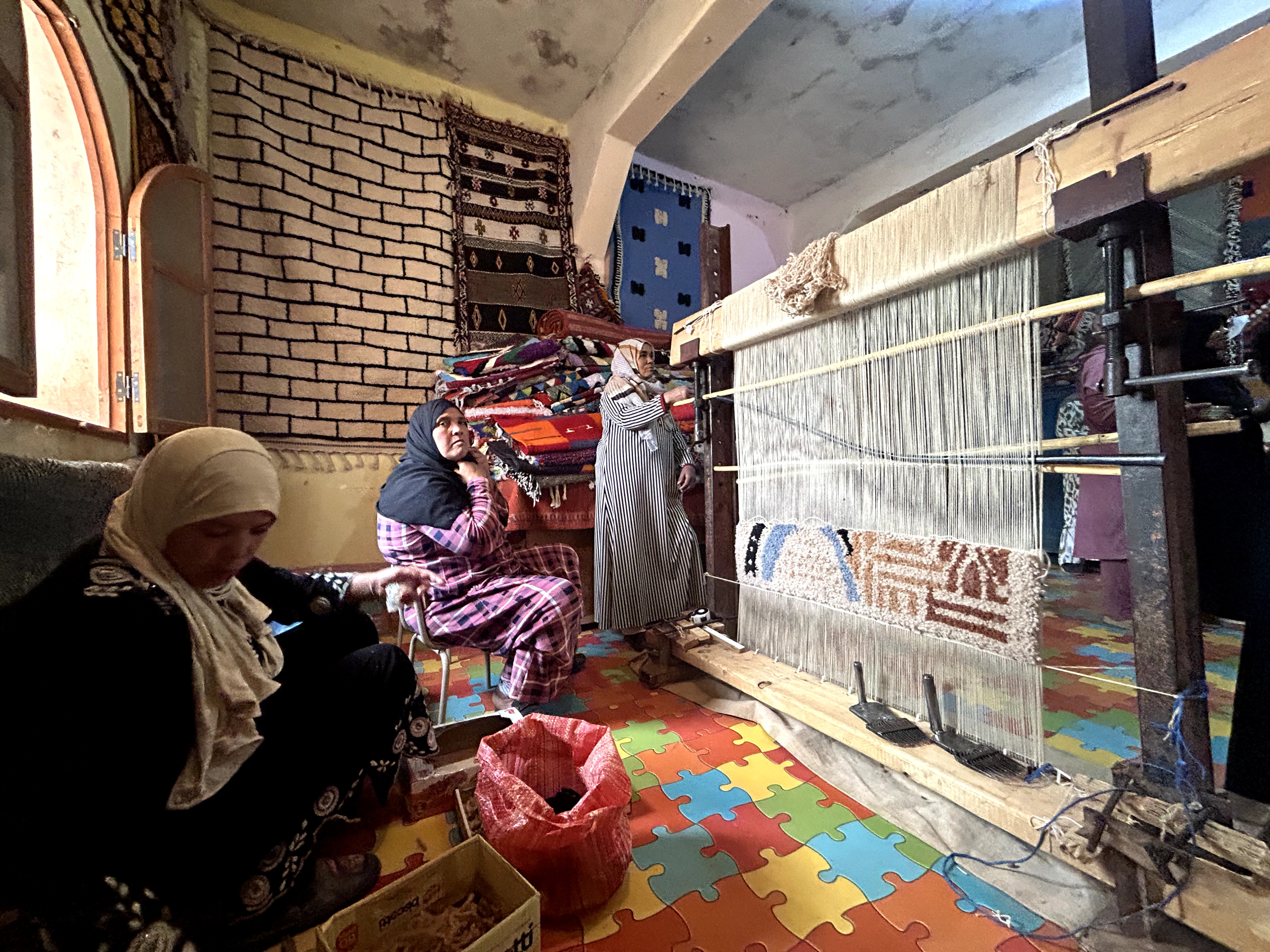
由於每天只能撥空至多兩到三小時編織,小型地毯最快要一週才能完成,大型一點的地毯更會費時好幾個月。
圖/柏柏婦女利用空閒時間編織地毯
拍攝/南南之隅
The Berber baskets
若親自造訪摩洛哥的地毯店,您會發現雖然同樣是柏柏人手工編織的地毯,在厚薄度、選色、圖騰、織法上仍有許多差異。這是因為柏柏人並非單一的民族,且居住範圍很廣,因此他們會以部落的名字將地毯分類。
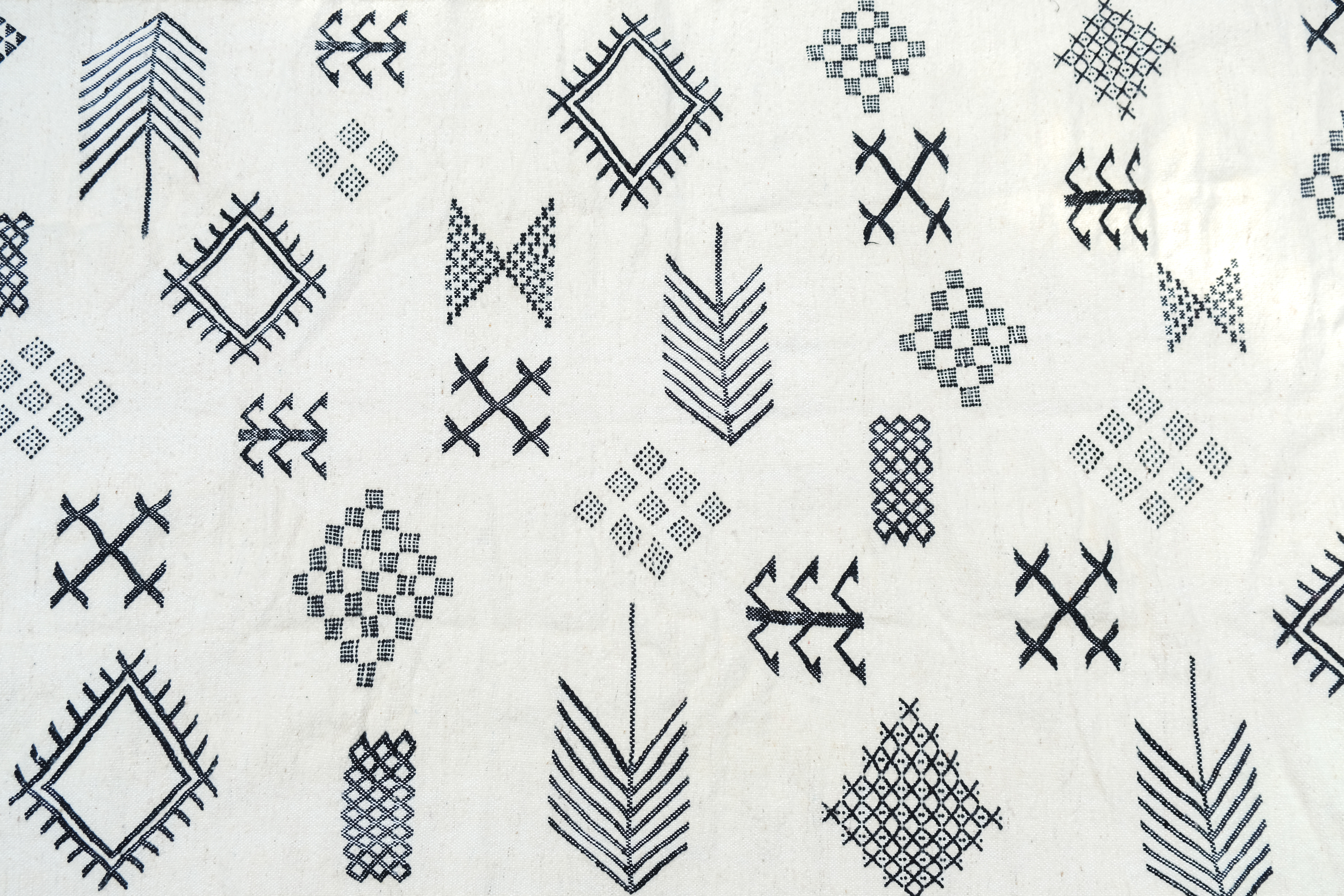
事實上柏柏地毯編織工藝包含多種不同的技法,每種技法都能織出獨具特色的地毯,以下列出代表性技法與圖騰。
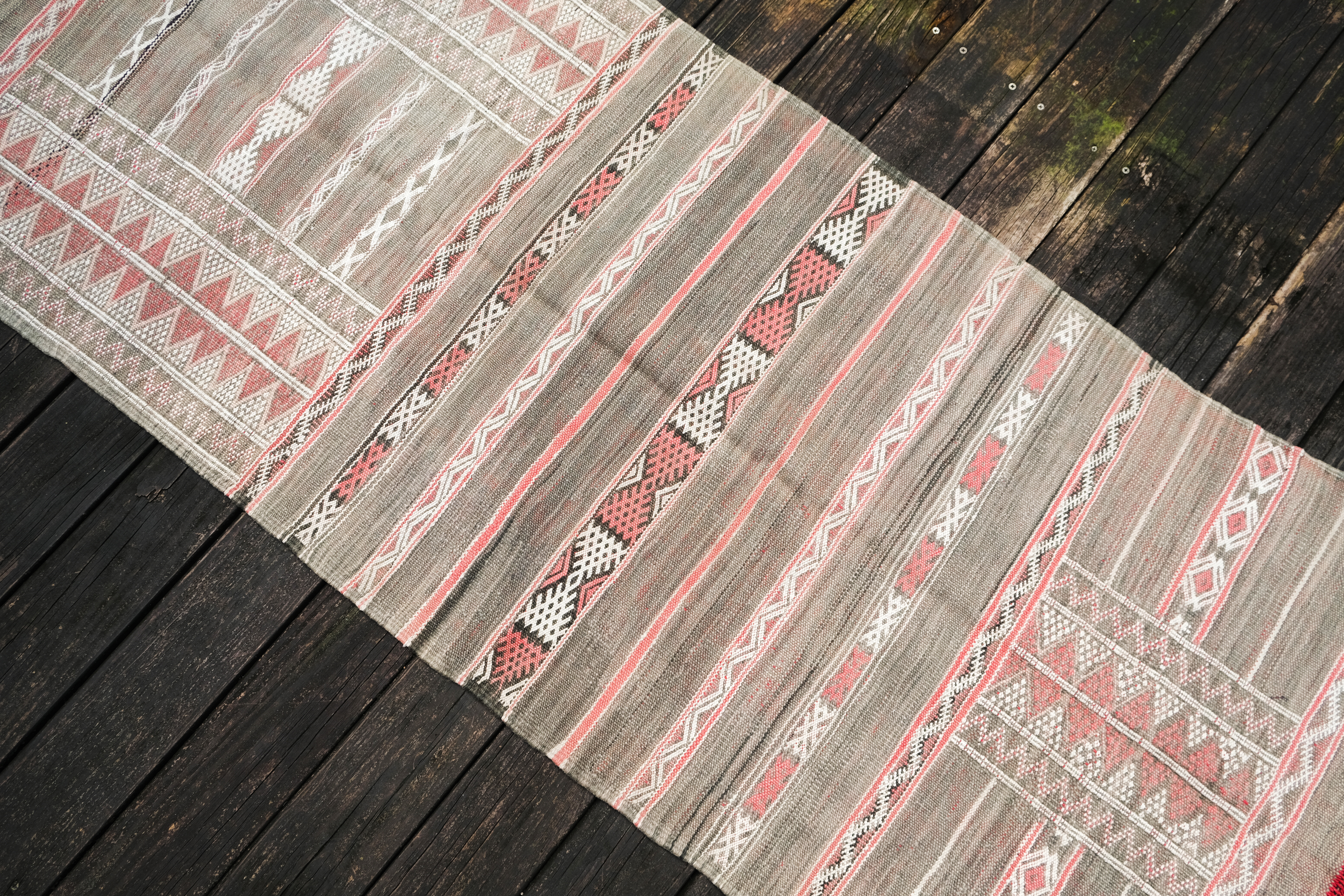
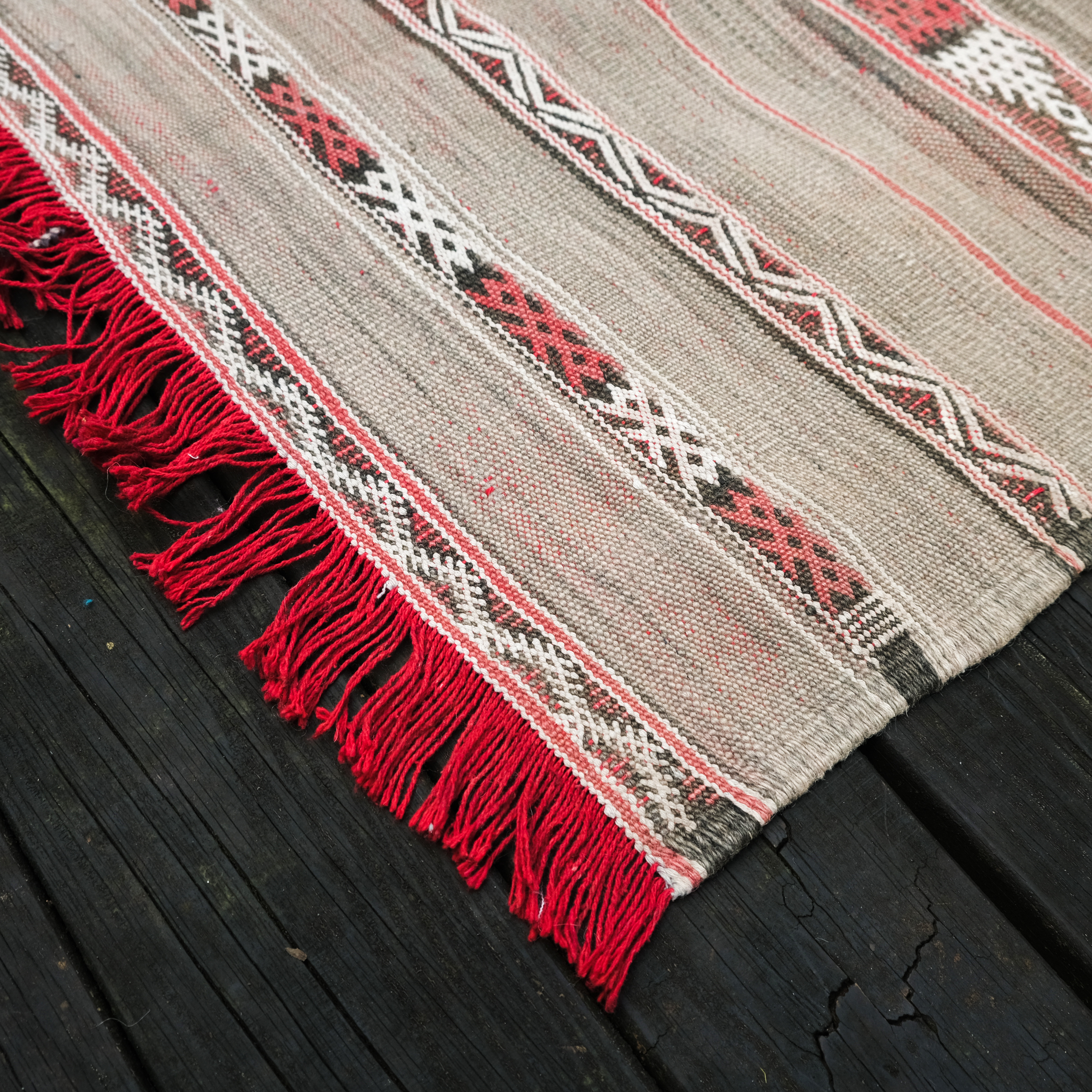
平織 Kilim
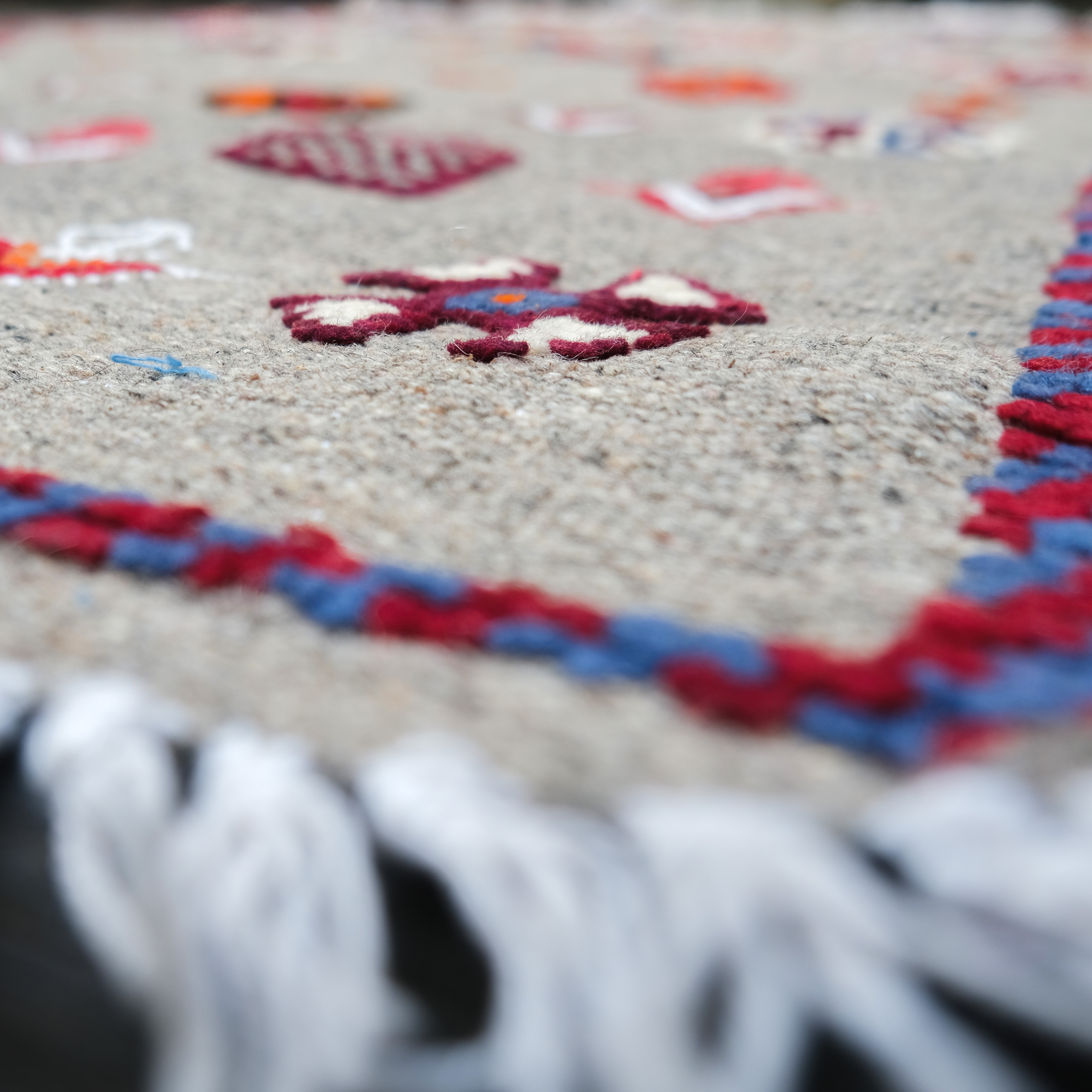
打結 Knotting
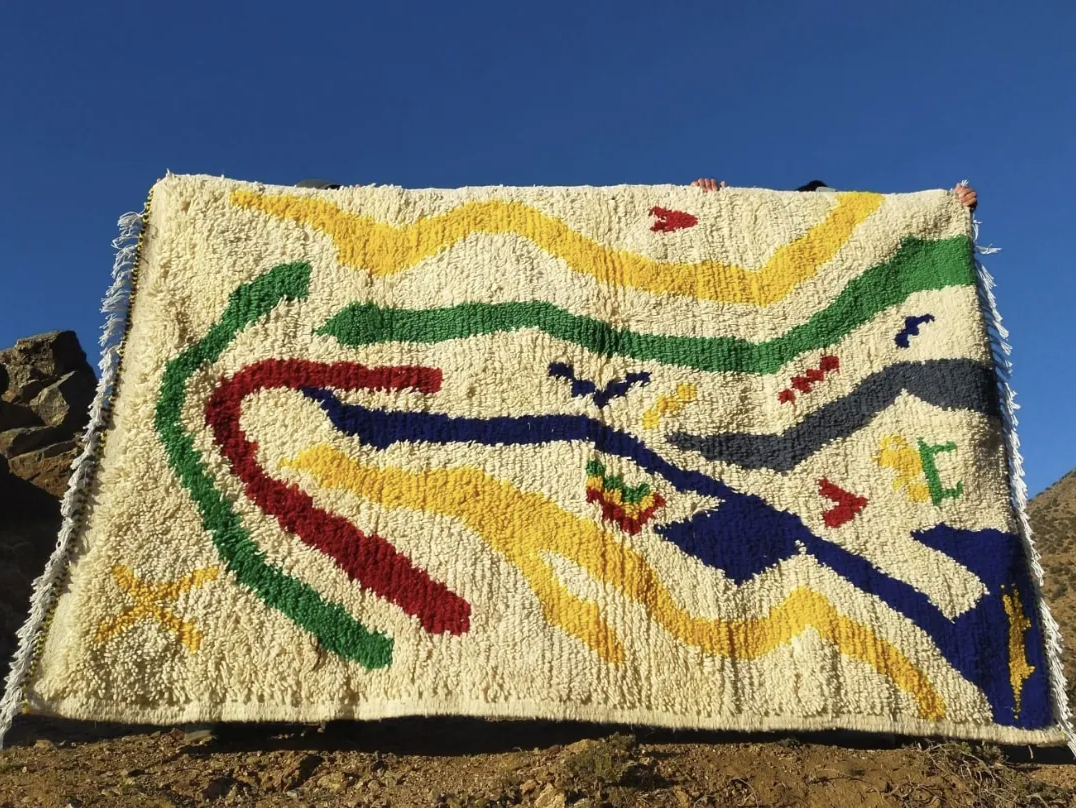
這種傳統技法是透過手工打結來製作質感豐富且經久耐用的地毯,是許多摩洛哥地毯的顯著特徵,它能打造出柔軟厚實的絨面。採用這種技法製作的地毯通常以其抽象的圖案和豐富自然的色彩而聞名。
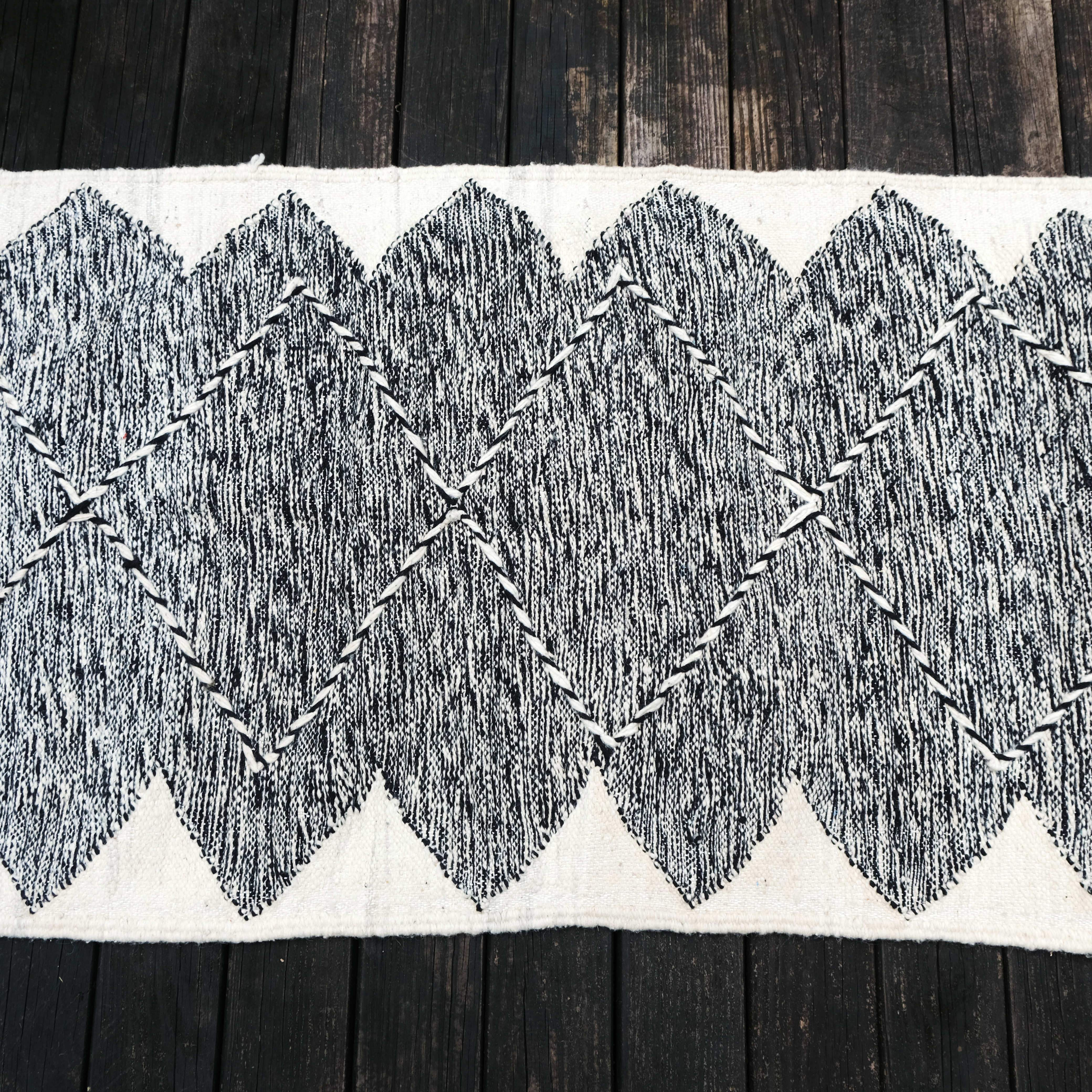
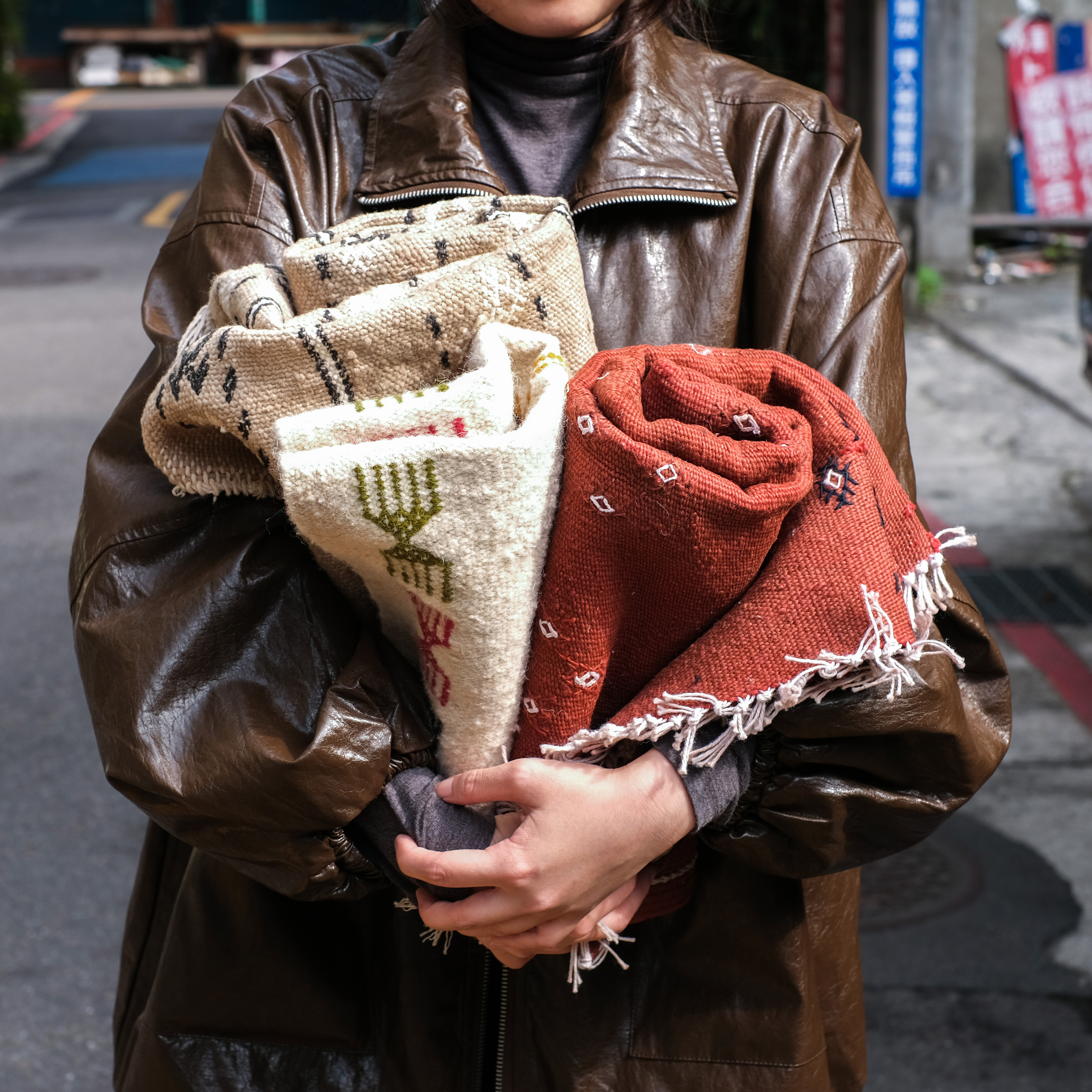
粗菱格紋 Zanafi
承襲黑、白、棕等天然羊毛的色調,搭配素雅的菱格或線條設計,並加上流蘇或刺繡等凸起的元素,以大器簡約的風格,深受當代年輕人及設計師喜愛。