{{ 'fb_in_app_browser_popup.desc' | translate }} {{ 'fb_in_app_browser_popup.copy_link' | translate }}
{{ 'in_app_browser_popup.desc' | translate }}
{{ childProduct.title_translations | translateModel }}
{{ getChildVariationShorthand(childProduct.child_variation) }}
{{ getSelectedItemDetail(selectedChildProduct, item).childProductName }} x {{ selectedChildProduct.quantity || 1 }}
{{ getSelectedItemDetail(selectedChildProduct, item).childVariationName }}
Originating in the Indus River Valley, the ancient civilization of India (3300 BCE–1300 BCE) laid the foundation for the rich cultures of modern-day India and Pakistan. The unique South Asian tradition of hand block printing, known as "Ajrak," is an ancient textile art form passed down since the era of ancient India, with a history spanning approximately 5,000 years.
Representative Attire of the Indus River Valley
Ajrak derives from the Sanskrit term "A-jharat," meaning "does not fade." In Arabic, Ajrak signifies "blue," one of the craft's primary colors. Another interpretation suggests that Ajrak originates from the Persian words ajar/ajor (meaning "brick") and -ak (meaning "small"), referring to the block printing technique used to create patterns on cotton fabrics.
Block printing is a traditional craft of the Indus River Valley. Despite the political and cultural divide between India and Pakistan since 1947, this shared heritage thrives in Pakistan's Sindh province and India's Kutch district.
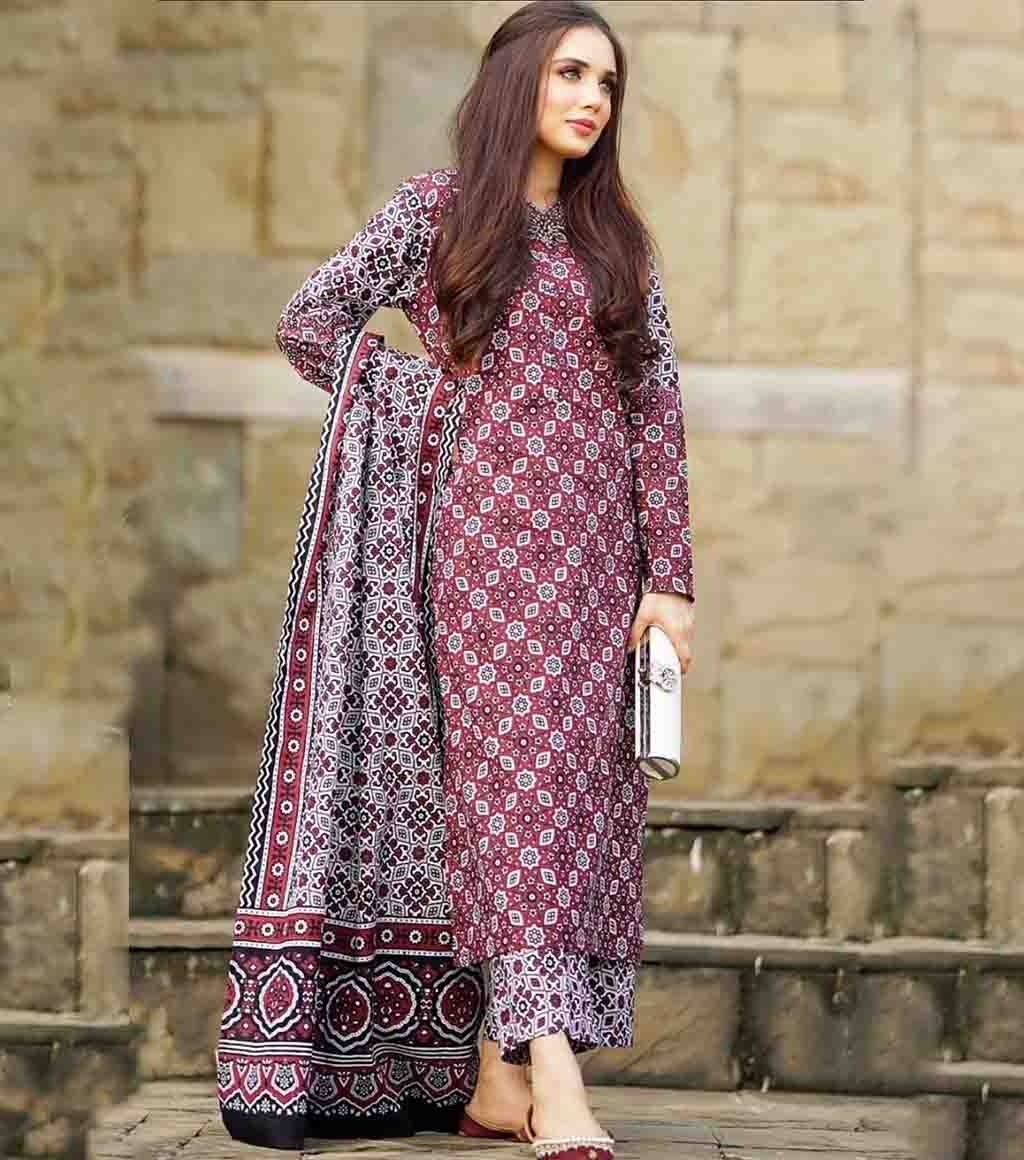
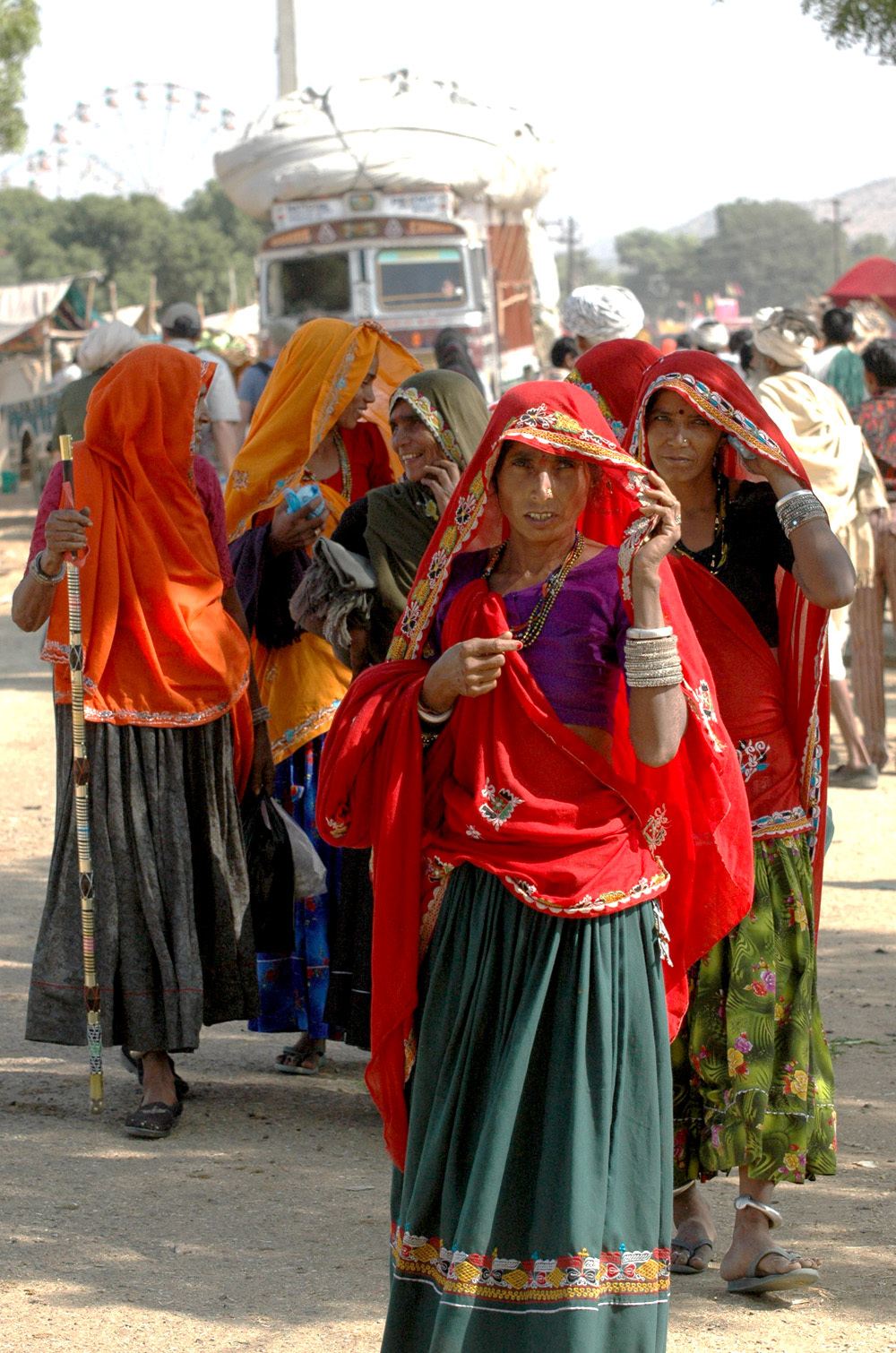
For the Sindhi people of Pakistan, block-printed fabrics are ubiquitous across cities, villages, and nomadic settlements. Men wear them as turbans, belts, or draped over their shoulders, while women use them as dupattas (long scarves) or shalwars (loose trousers). Sometimes, the fabric even serves as makeshift swings or hammocks for children. Ajrak garments are worn at weddings, cultural events, or gifted as tokens of hospitality and respect.
Image/ Block printing is an important traditional attire in Sindh, Pakistan.
Source/ affordable.pk
Cotton and Block Printing: A Historical Connection
The Indus River Valley was one of the first regions to cultivate and use cotton. As early as 5000–4000 BCE, its inhabitants used cotton (Gossypium arboreum) to make clothing. By the first century CE, Arab merchants introduced cotton textiles to the Mediterranean.
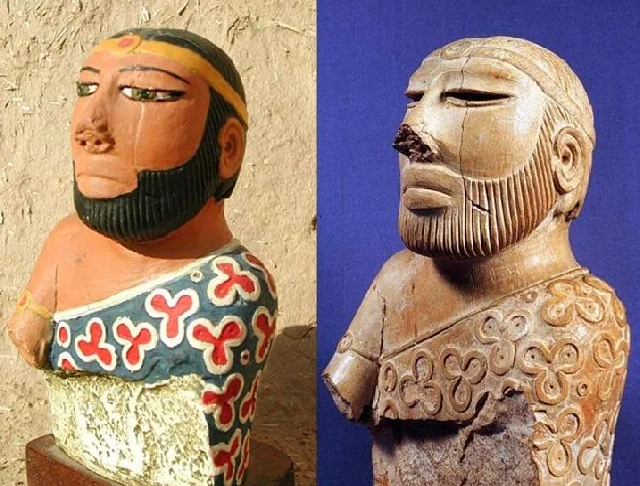
Block printing itself dates back to 2500 BCE. The half-length sculpture of the "Priest-King," unearthed in Sindh's Mohenjo-daro and housed in Pakistan's National Museum, features a single-shouldered garment believed to be block-printed. The garment's clover-like pattern, known as "Kakkar," is a totemic symbol also found in Mesopotamia and ancient Egypt.
Block printing originated in Sindh and flourished in India's Kutch district during the 16th century. British interest led to its export through the East India Company, bringing it to the Western world. Over time, the craft evolved from its original blue, red, black, and white palette into more varied designs and colors.
Image/ The clothing of the Priest-King is believed to be block-printed.
Source/ reddit
The 21 Steps of Ajrak Craftsmanship
Our collaborator, Noorjehan Bilgrami, the founder of the Pakistani Ajrak workshop and a renowned authority on Ajrak craft, published a book in 1990 titled Sindh Jo Ajrak, which delves into the intricate art of Ajrak-making. The book mentions that carving a single wooden printing block can take five artisans up to three days to complete. Creating a single Ajrak garment may involve as many as twenty people and requires the completion of 21 distinct steps.
Washing and Steaming Cotton
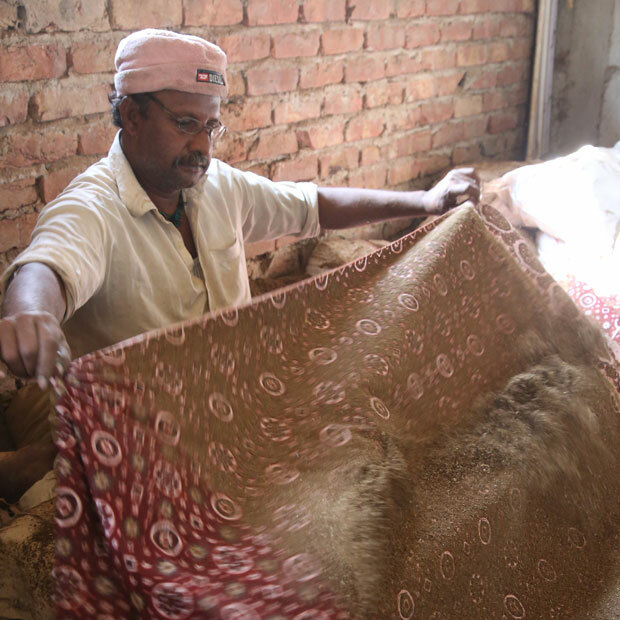
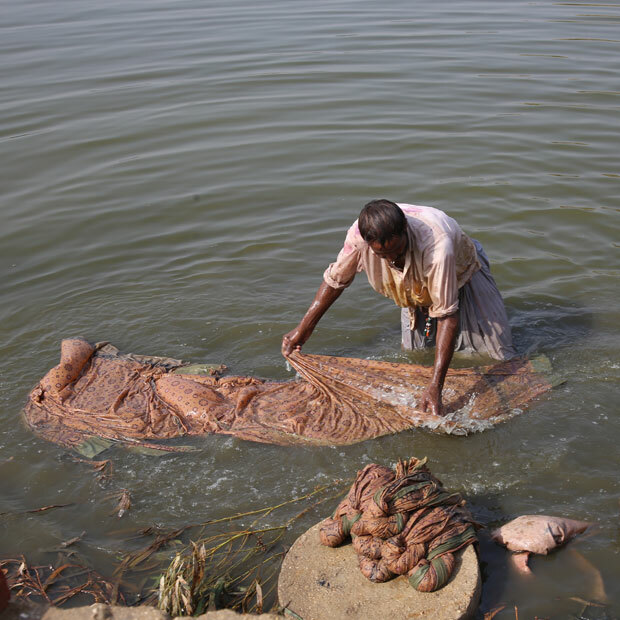
Cotton fabric is cut into small sections and washed in a river. The damp cloth is rolled and placed atop a copper container, heated for about 36 hours to soften the fibers and open their pores for impurity removal.
Soaking
Traditionally, a solution called Saaj—made from camel dung, mustard oil, and soda water—softens and bleaches the fabric, enhancing its dye absorption.
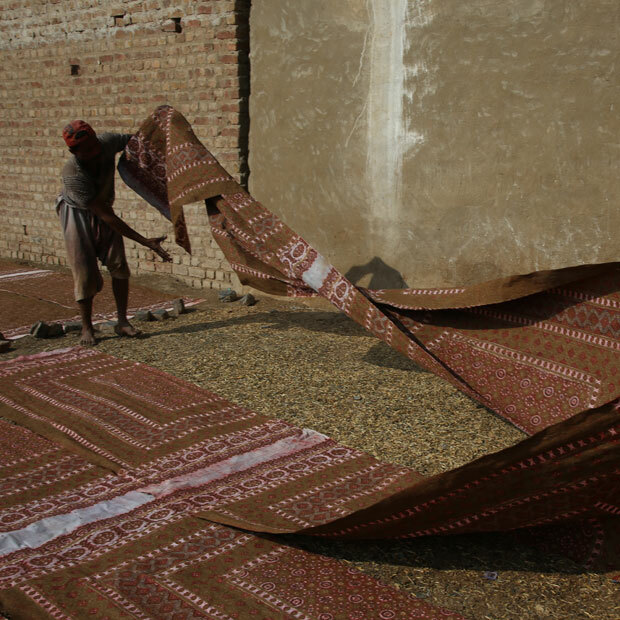
The cloth is soaked in this liquid, sealed, and left to ferment for 5–10 days before being sun-dried. This process is repeated three times, followed by a pre-dyeing soak to remove any lingering impurities.
Block Printing
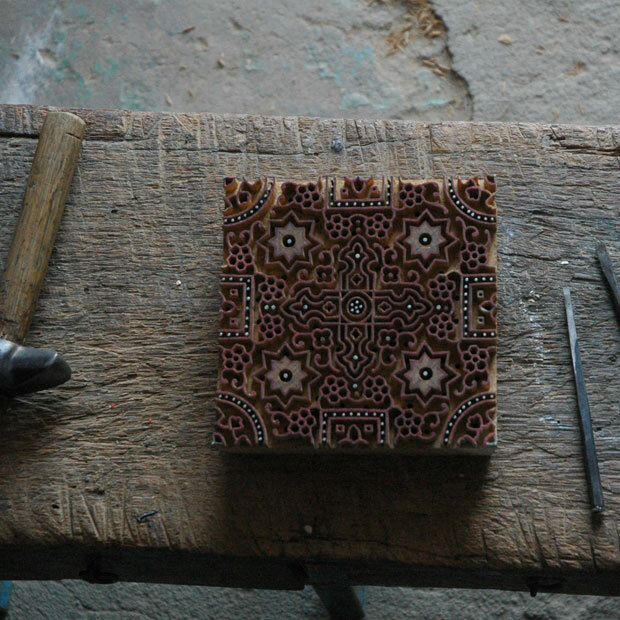
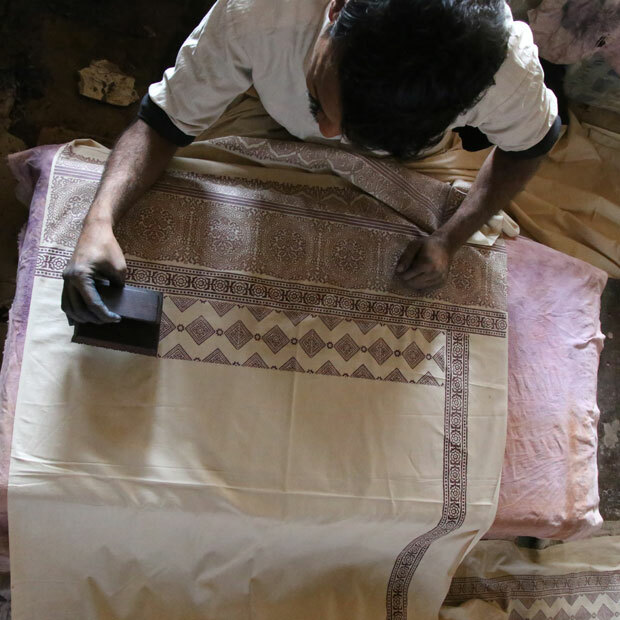
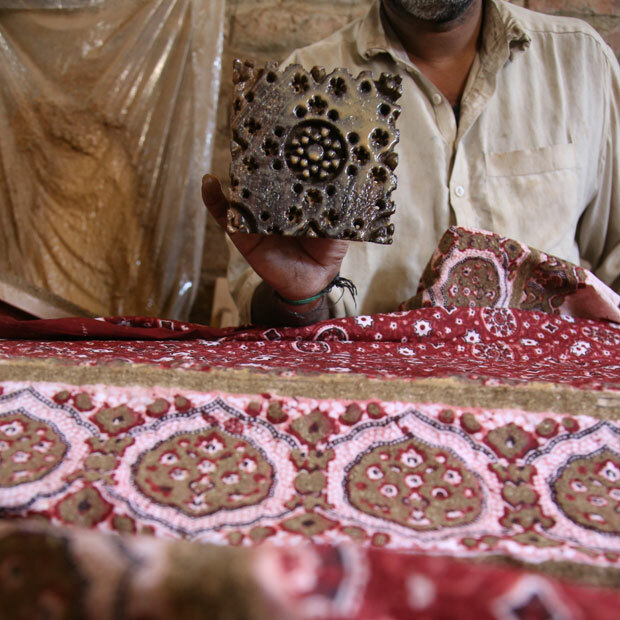
Sindhi artisans carve printing blocks from Vachellia nilotica wood. These paired blocks produce mirrored designs. A skilled artisan can print 10–12 lengths of fabric daily, but each color requires a separate block, necessitating multiple printings for multi-colored patterns.
Source/ KOEH
Source/ KOEH
Source/ KOEH
Source/ KOEH
Preventing Fading with Cow Dung
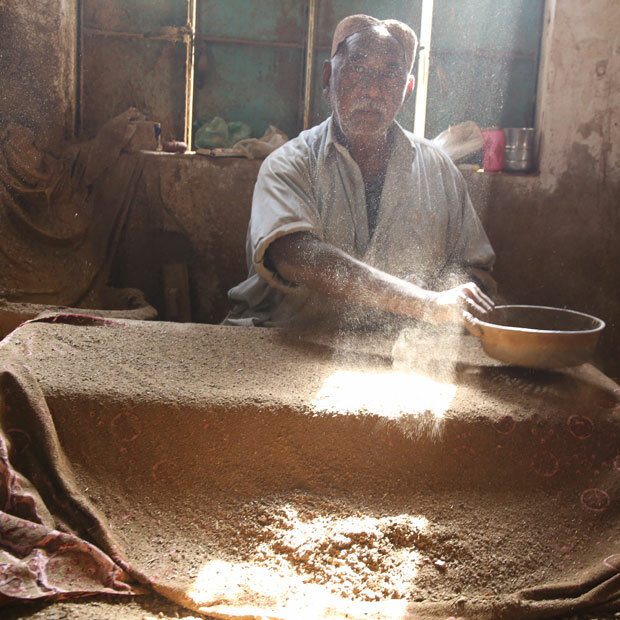
Traditional methods involve sprinkling sieved and dried cow dung over the printed areas to protect the patterns from smudging or fading. This technique serves as a natural resist in the dyeing process.
Source/ KOEH
Dyeing the Fabric
The dyeing process begins in a large copper vat using madder root for a deep red color. Under heat, artisans laboriously lift and submerge the fabric repeatedly for several hours until the desired shade is achieved. The fabric is then dyed with indigo. At dawn the following morning, the dyed fabric is taken to the river for soaking and rinsing. Through repeated cycles of dyeing, sun-drying, and washing, the Ajrak patterns become increasingly vivid and distinct.
Source/ KOEH
Source/ KOEH
Source/ KOEH
Designs and Symbolism
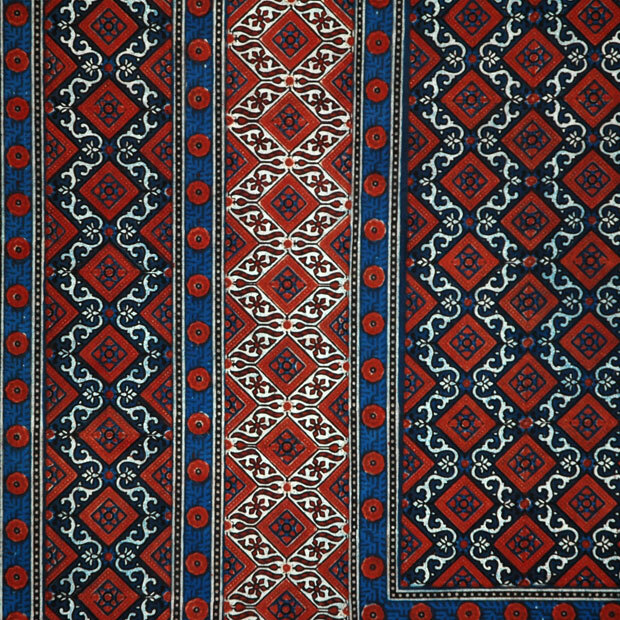
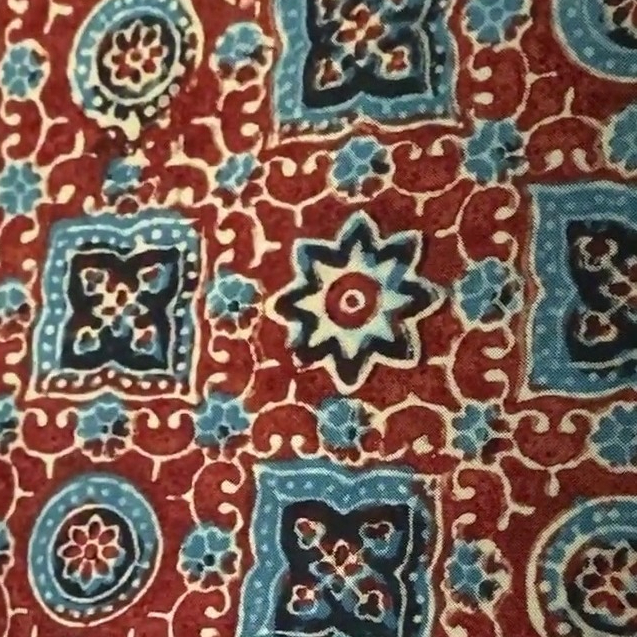
Image/ Traditional styles feature deep red and indigo as the primary colors
Source/ KOEL
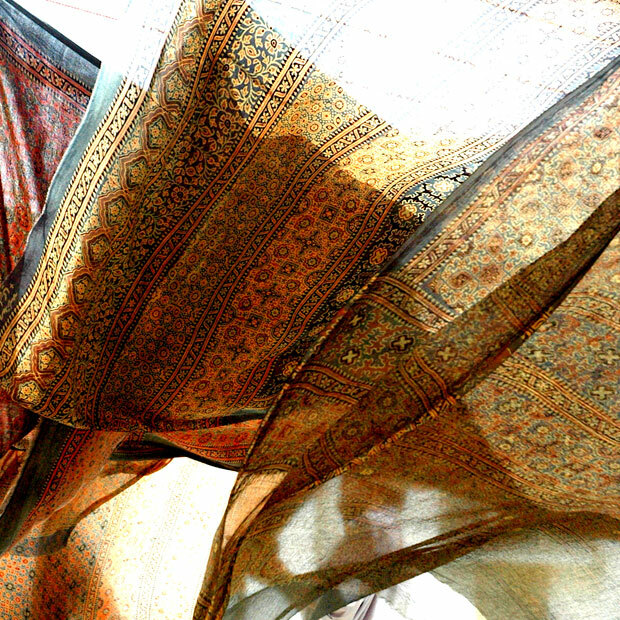
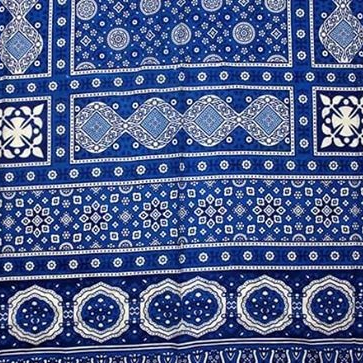
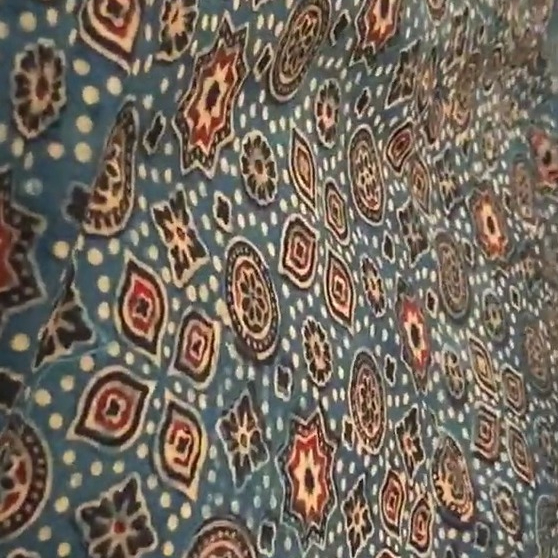
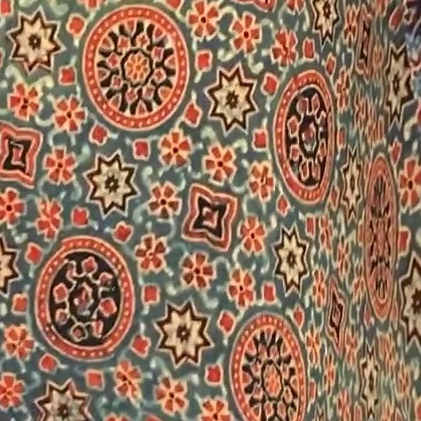
Traditional Ajrak fabrics, typically 3–5 meters long, prominently feature deep red and indigo, with accents of white and black. These colors symbolize the sky: blue for day, red for dusk, black for night, and white for stars. The Saraiki people of Pakistan developed a variation called "Sajarak," which uses blue as the primary color.
Image/ The Saraki people’s Sajarak.
Source/ WIKI
Patterns known as "Jaal", resembling kaleidoscopic designs, are rich in variation and inspired by nature and everyday objects. These motifs are named in the local Kutchi and Sindhi languages and adhere to Islamic cultural principles, avoiding depictions of human or animal forms. When the print appears only on one side of the fabric, it is called Ekpuri, while double-sided prints are referred to as Bipuri.
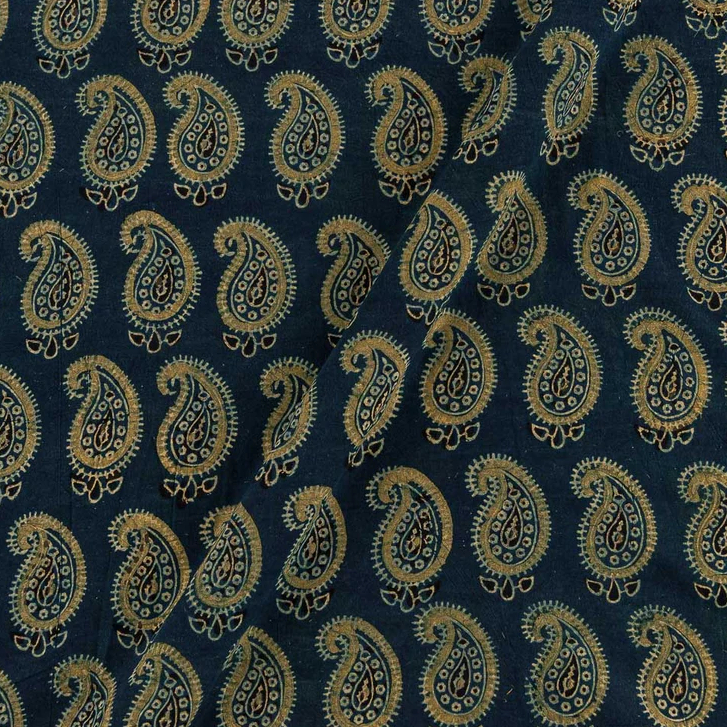
Patterns such as Kakker (cloud), Morpeech (peacock feather), and Paisley (abstract motif) are inspired by nature and daily life. Following Islamic cultural norms, designs avoid human or animal figures. (Source of the following patterns: theloomstudiolifestyle)
Image/ Kakker (Cloud patterns)
Image/ Keri Mohar (Stamped designs)
Image/ Kharekh (Dried dates)
Image/ Paisley (Abstract shapes)
Image/ Manek (Gemstone motif)
Image/ Riyal (Coin designs)
Traditional vs. Modern Techniques
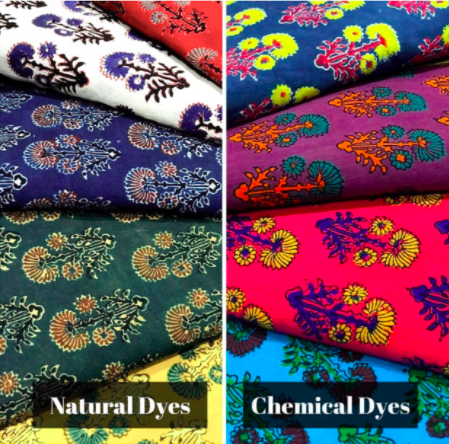
Traditional block printing relies entirely on natural dyes, including plant-based and mineral dyes. While many workshops have transitioned to chemical dyes and screen printing in recent years, KOEH remains committed to using precious natural indigo and madder for its dyeing process. This dedication is also a marker of authenticity and quality. While prints made with chemical dyes may appear more vibrant initially, they are prone to fading over time, a problem traditional block prints do not face.
Image/ The color difference between natural and chemical dyes.
Source/ wiki
Staying True to Nature and Heritage: KOEH
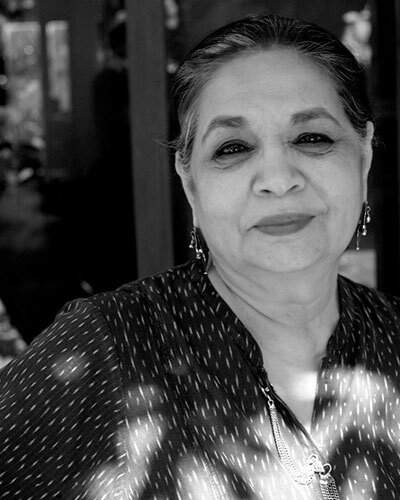
KOEH, a block printing brand based in the Sindh province of Pakistan, was founded by Noorjehan Bilgrami, who is now 74 years old. Born in India, Bilgrami encountered the intricate craft of block printing in Karachi, Sindh, 40 years ago and was immediately captivated. She began learning the craft from artisans and has worked to promote it through exhibitions, documentaries, and publications.
In 2009, she established KOEH with a core philosophy of staying "true to nature." The brand designs contemporary block-printed garments, integrating this traditional craft into everyday life. Beyond block printing, KOEH also produces apparel made from natural materials, blending tradition with modern aesthetics.
Image/ KOEH brand founder Noorjehan Bilgrami.
Source/karachiartdirectory.com
Traditional Pakistani Block-Printed Clothes
Tops: Kurta, Kurti, and Tunic
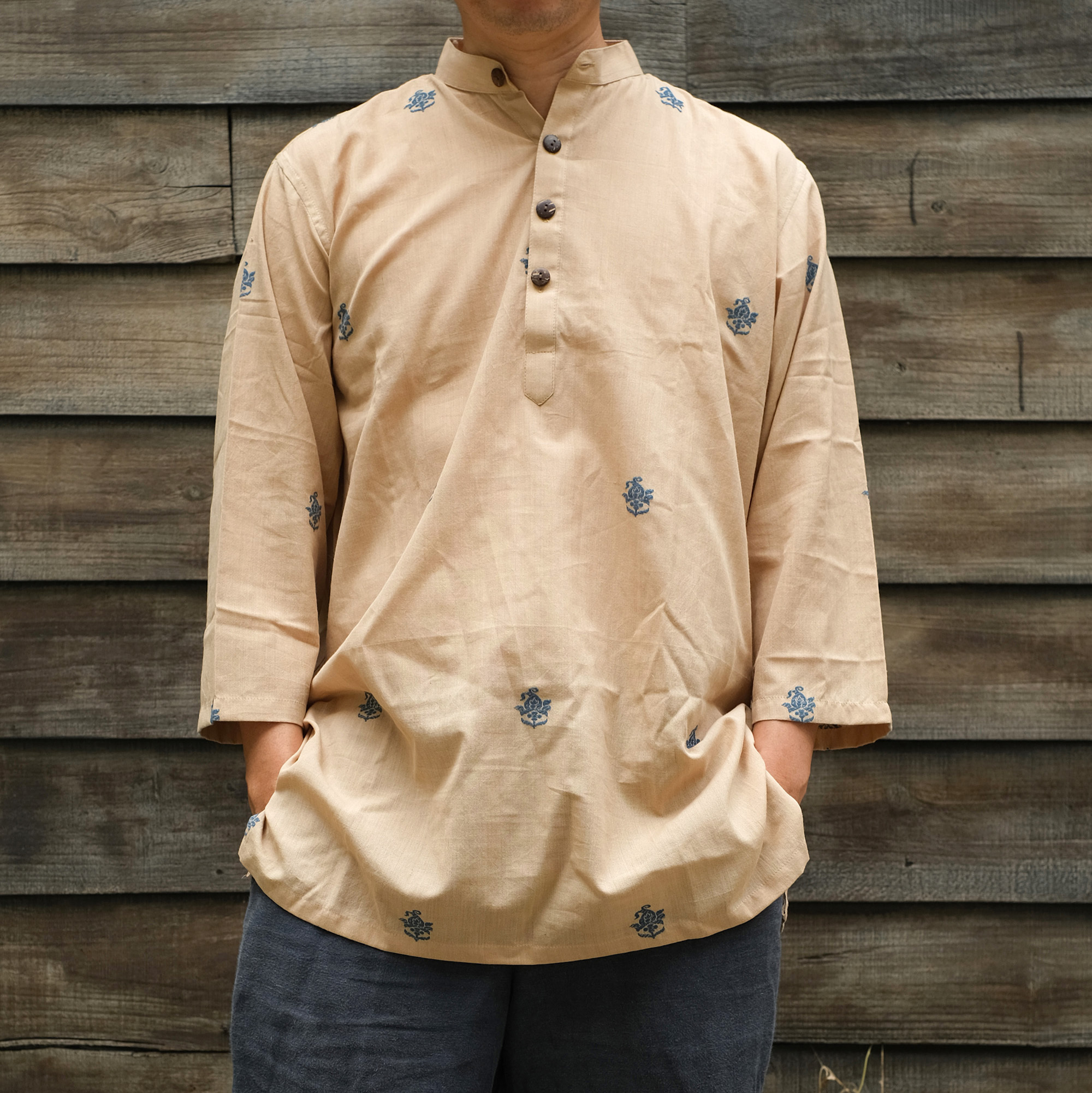
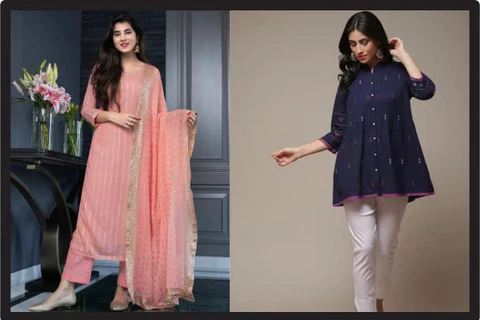
The Kurta and Kurti are traditional South Asian garments, characterized by their loose-fitting design with joined side panels, making them suitable for both men and women. However, there are slight differences between the two: the Kurta typically extends to the knees or calves, giving it a flowing appearance, while the Kurti is shorter, with a length ending above the hips or waist, and is often paired with pants.
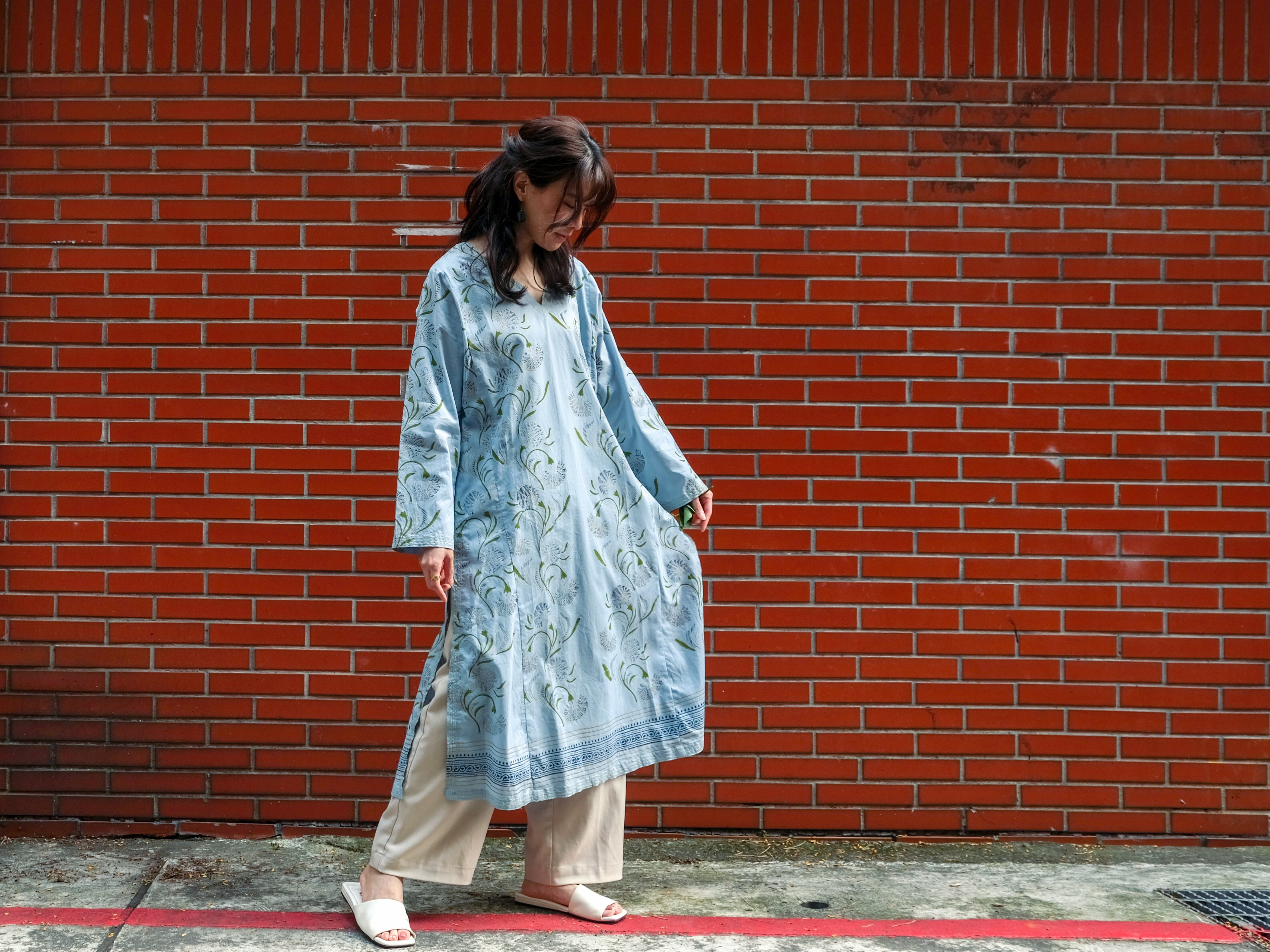
Tunic: A fitted, waist-cinching garment that generally reaches the knees. With a straight-cut design and no side panels, it resembles a long shirt.
Image/ Length difference between Kurta (left) and Kurti (right)
Source/ shauryasanadhya.com
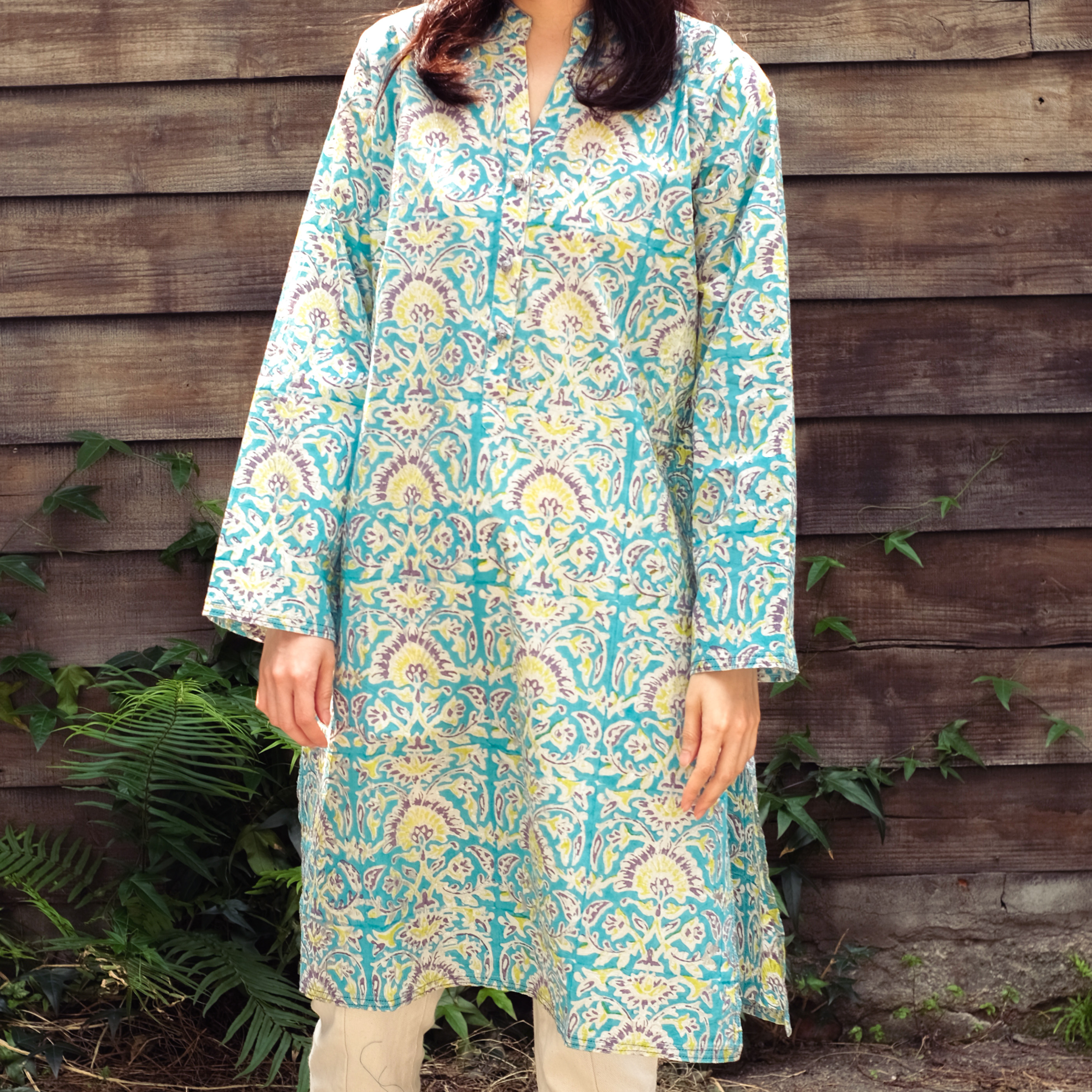
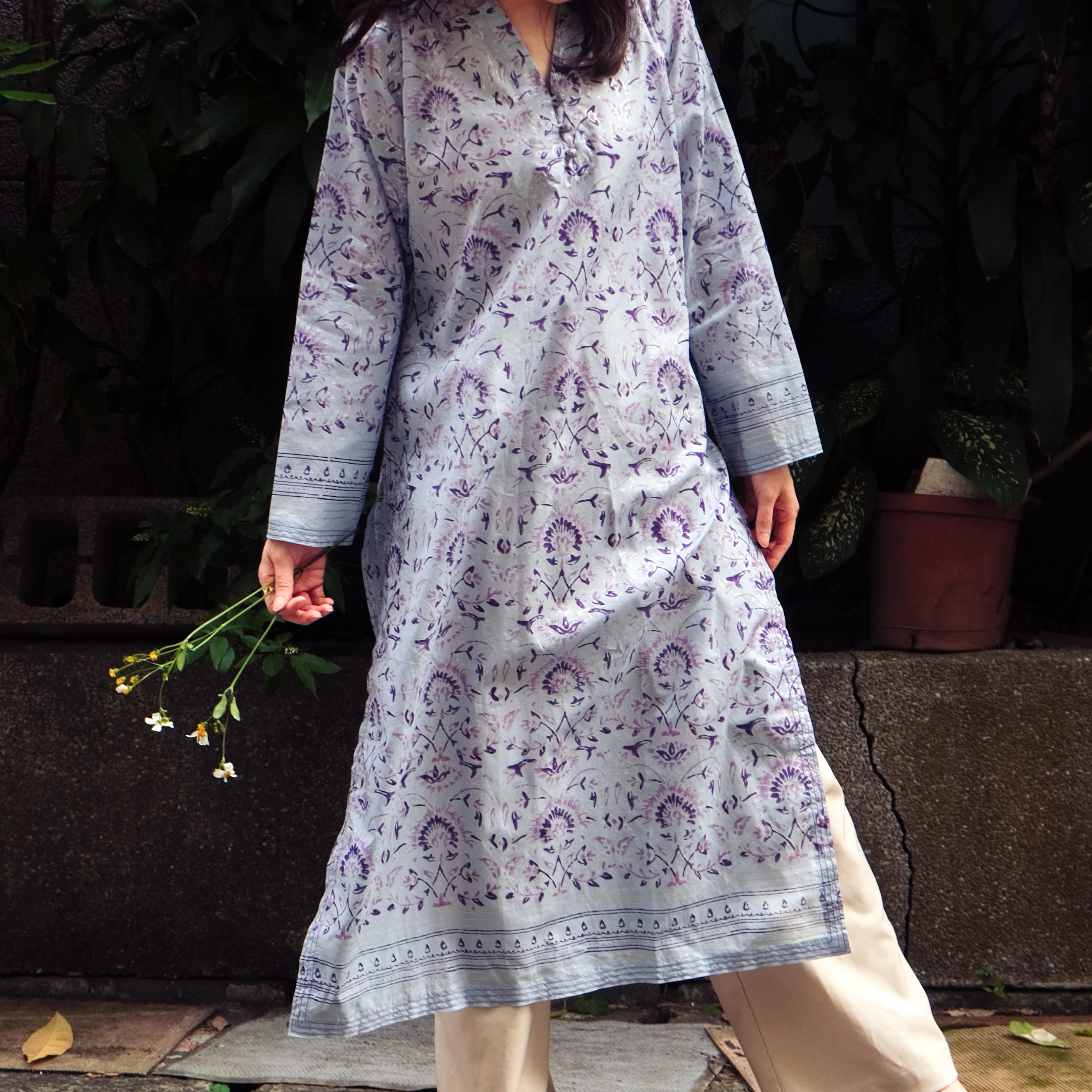
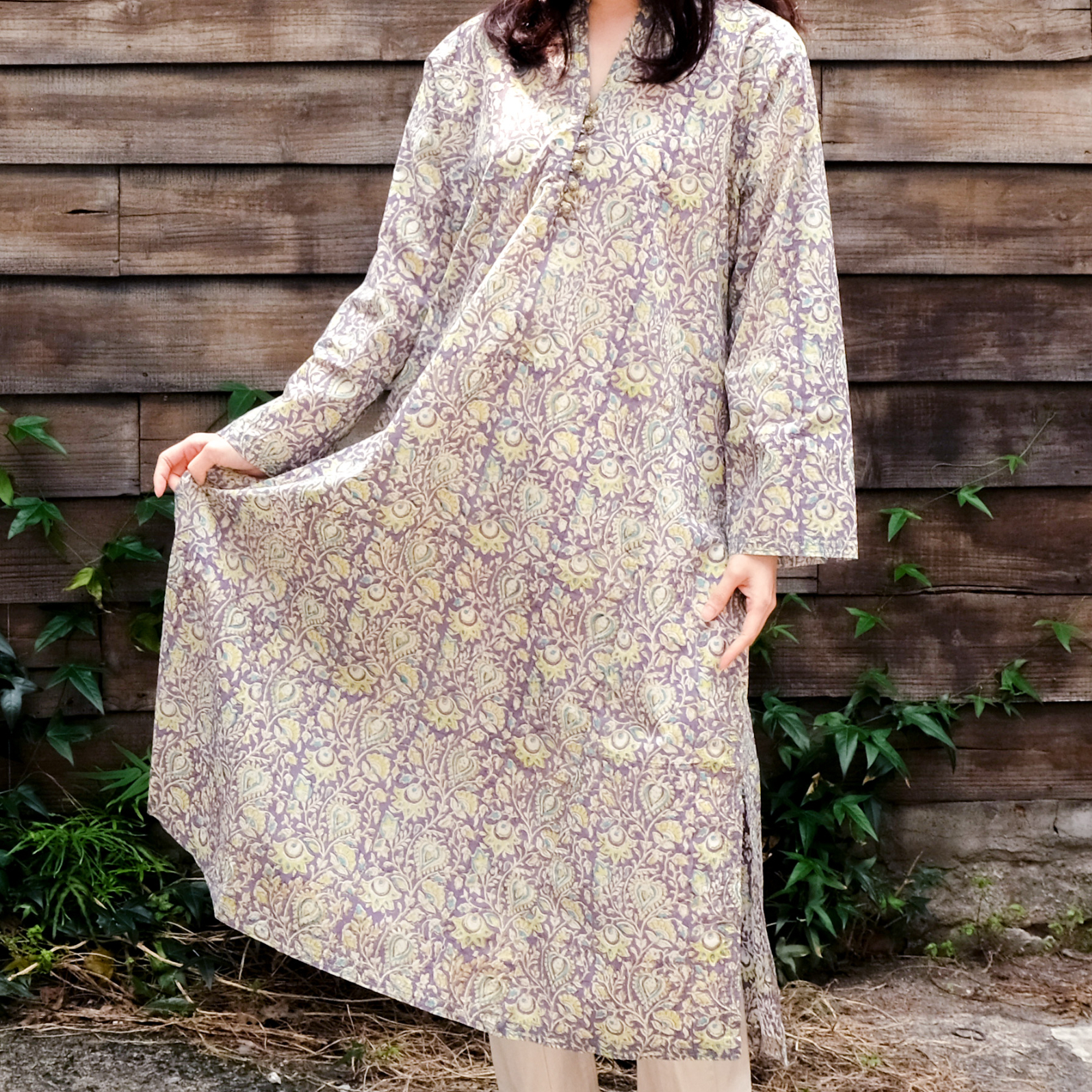
Image/ Kurta
Source/ SouSou Corner
Image/ Kurti
Source/ SouSou Corner
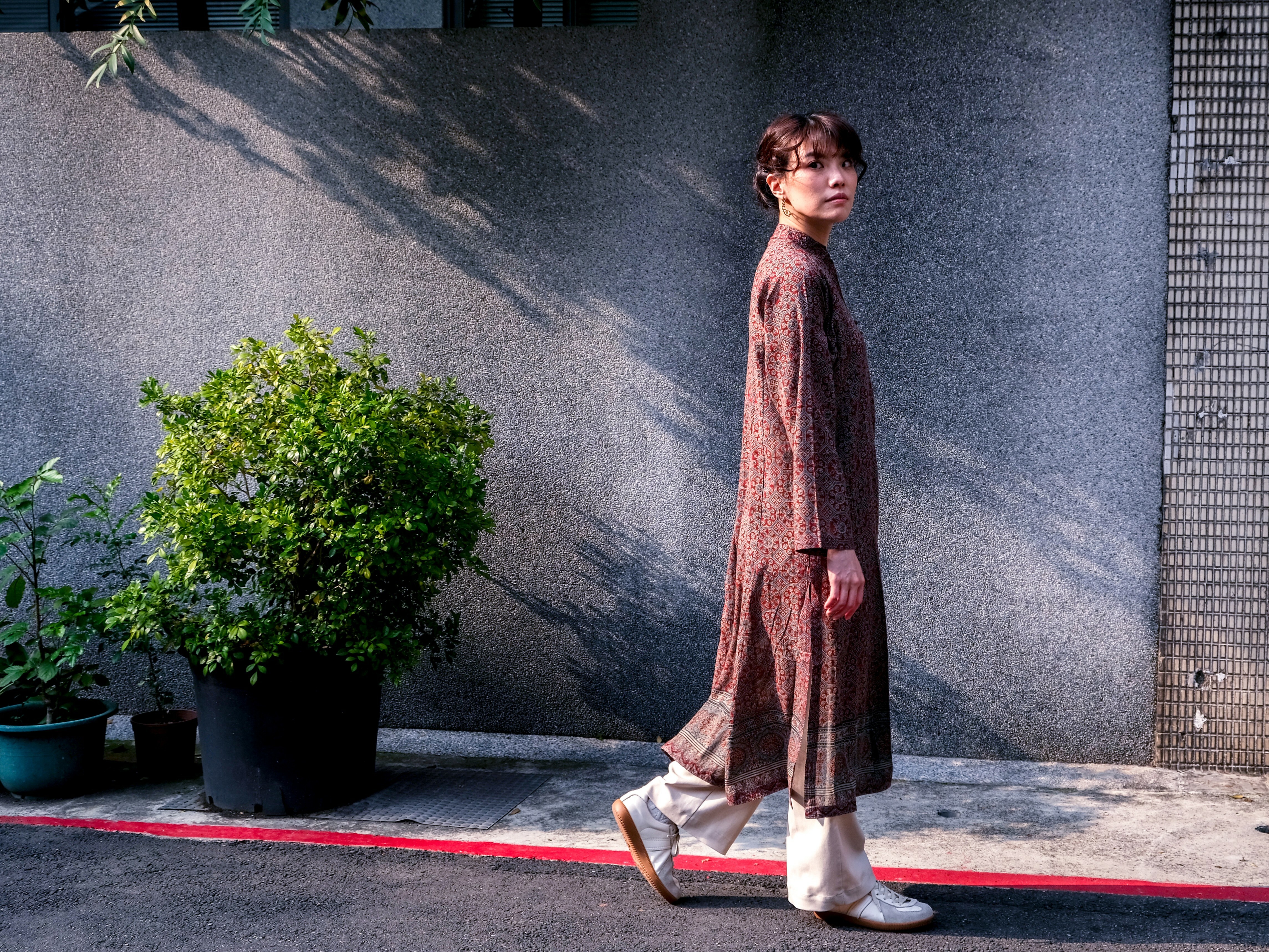
圖/Tunic
來源/南南之隅
圖/Kameez
來源/南南之隅
Shawl: Dupatta
Women wearing Kurtas often pair them with a Shawl, known as a Dupatta, to cover their chest. Traditionally, married women also use the Dupatta as a head covering in temples or in the presence of elders.
The ways of draping a Dupatta have evolved over time. Traditionally, it was draped over the left shoulder and tucked into the waistband on the opposite side. Modern variations include draping it over both shoulders or letting it flow elegantly around the waist and arms. Dupattas are typically lightweight and long, offering ease of movement and versatility.
Image/ Various ways to style a Dupatta
Source/ Wiki
Bottoms: Shalwar/Salwar
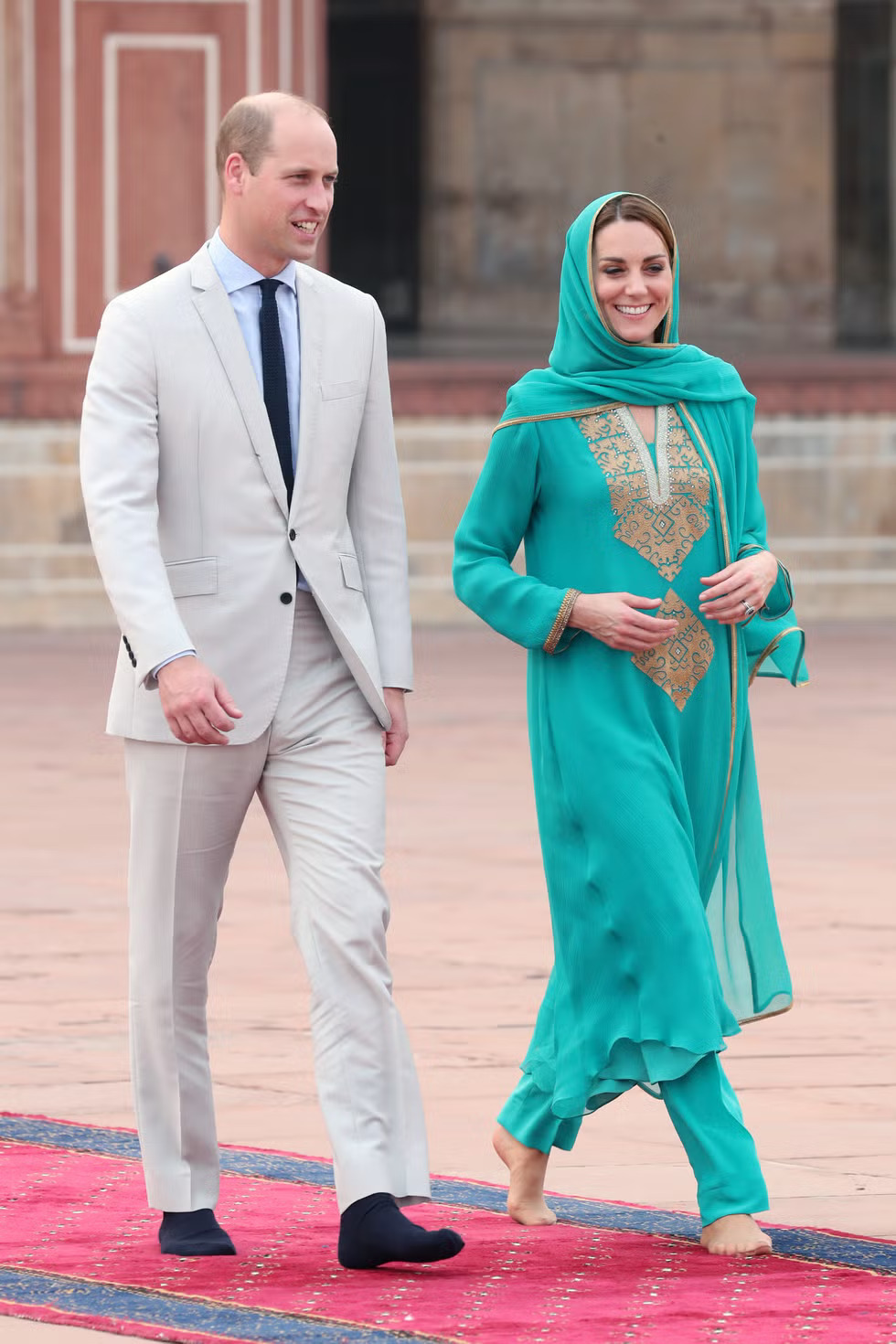
These wide, loose-fitting trousers resemble lantern pants or harem pants. When paired with a long top and a Dupatta, the outfit is called Shalwar Kameez, also known as the “Punjabi suit”. It is one of the most widespread traditional outfits in the Indus Valley region. Even the Duchess of Cambridge, Kate Middleton, has been seen wearing this attire during her visit to Pakistan.
Image/ Kate Middleton once appeared wearing a Punjabi suit
Source/ GETTY IMAGES
Pakistan|Ajrak