{{ 'fb_in_app_browser_popup.desc' | translate }} {{ 'fb_in_app_browser_popup.copy_link' | translate }}

{{ 'in_app_browser_popup.desc' | translate }}

Your Shopping Cart is empty.
{{ (item.variation.media ? item.variation.media.alt_translations : item.product.cover_media.alt_translations) | translateModel }} {{ (item.variation.media
                    ? item.variation.media.alt_translations
                    : item.product.cover_media.alt_translations) | translateModel
                }}
{{ 'product.bundled_products.label' | translate }}
{{ 'product.bundle_group_products.label' | translate }}
{{ 'product.buyandget.label' | translate }}
{{ 'product.gift.label' | translate }}
{{ 'product.addon_products.label' | translate }}
{{item.product.title_translations|translateModel}}
{{ field.name_translations | translateModel }}
  • {{ childProduct.title_translations | translateModel }}

    {{ getChildVariationShorthand(childProduct.child_variation) }}

{{ 'product.set.open_variation' | translate }}
  • {{ getSelectedItemDetail(selectedChildProduct, item).childProductName }} x {{ selectedChildProduct.quantity || 1 }}

    {{ getSelectedItemDetail(selectedChildProduct, item).childVariationName }}

{{item.variation.name}}
{{item.quantity}}x {{ item.unit_point }} Point
{{addonItem.product.cover_media.alt_translations | translateModel}}
{{ 'product.addon_products.label' | translate }}
{{addonItem.product.title_translations|translateModel}}
{{addonItem.quantity}}x {{ mainConfig.merchantData.base_currency.alternate_symbol + "0" }}
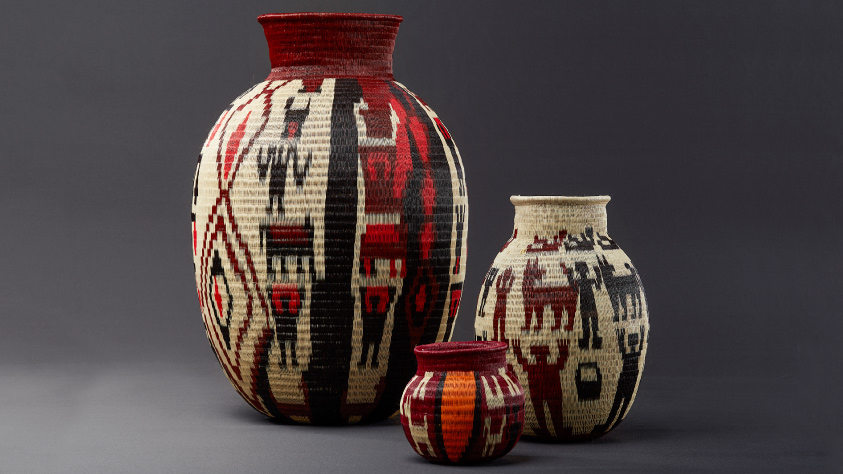
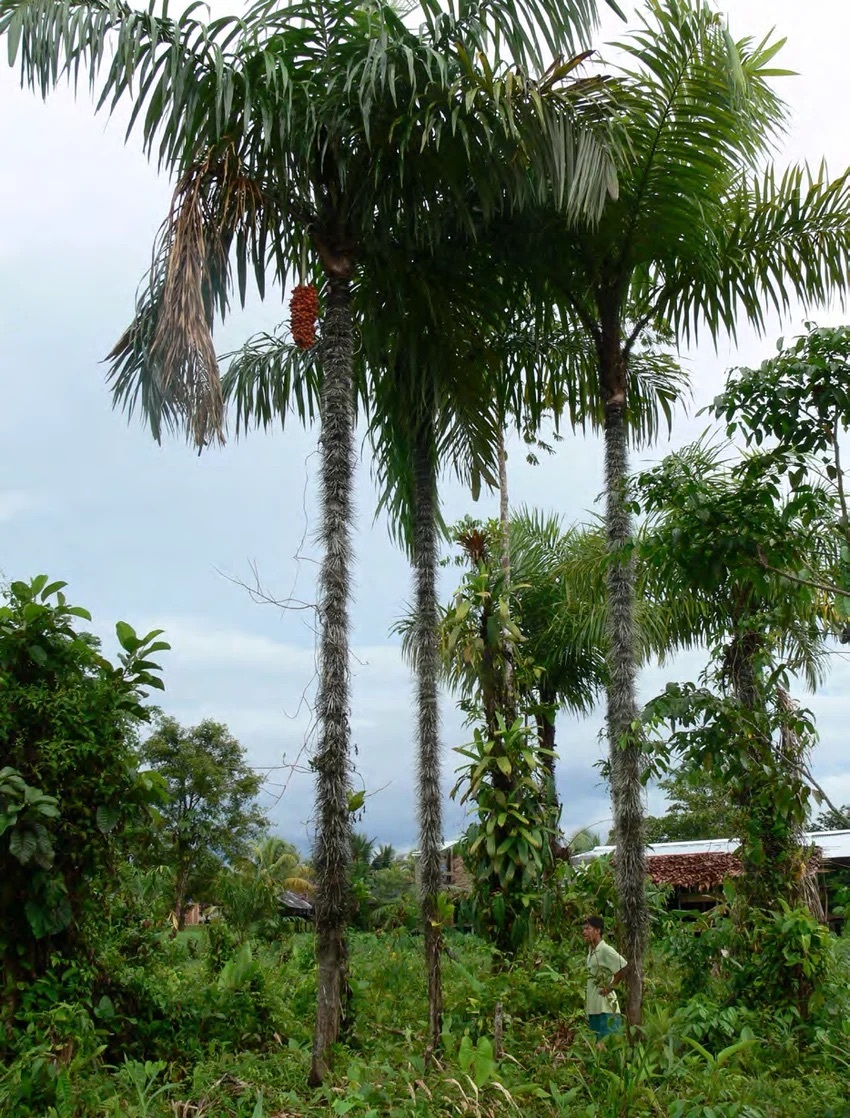
Along Colombia's Pacific coast grows the native Werregue palm (Astrocaryum standleyanum), a tree that can reach up to 20 meters in height with a trunk densely covered in sharp thorns. Using the young leaf fibers of the Werregue, Indigenous Wounaan artisans employ a distinctive coiled technique to craft durable baskets, vases, and bangles interwoven with copper wire—bringing the refined indigenous craftsmanship of Colombia to life.

Resisting Uprooting Through Weaving

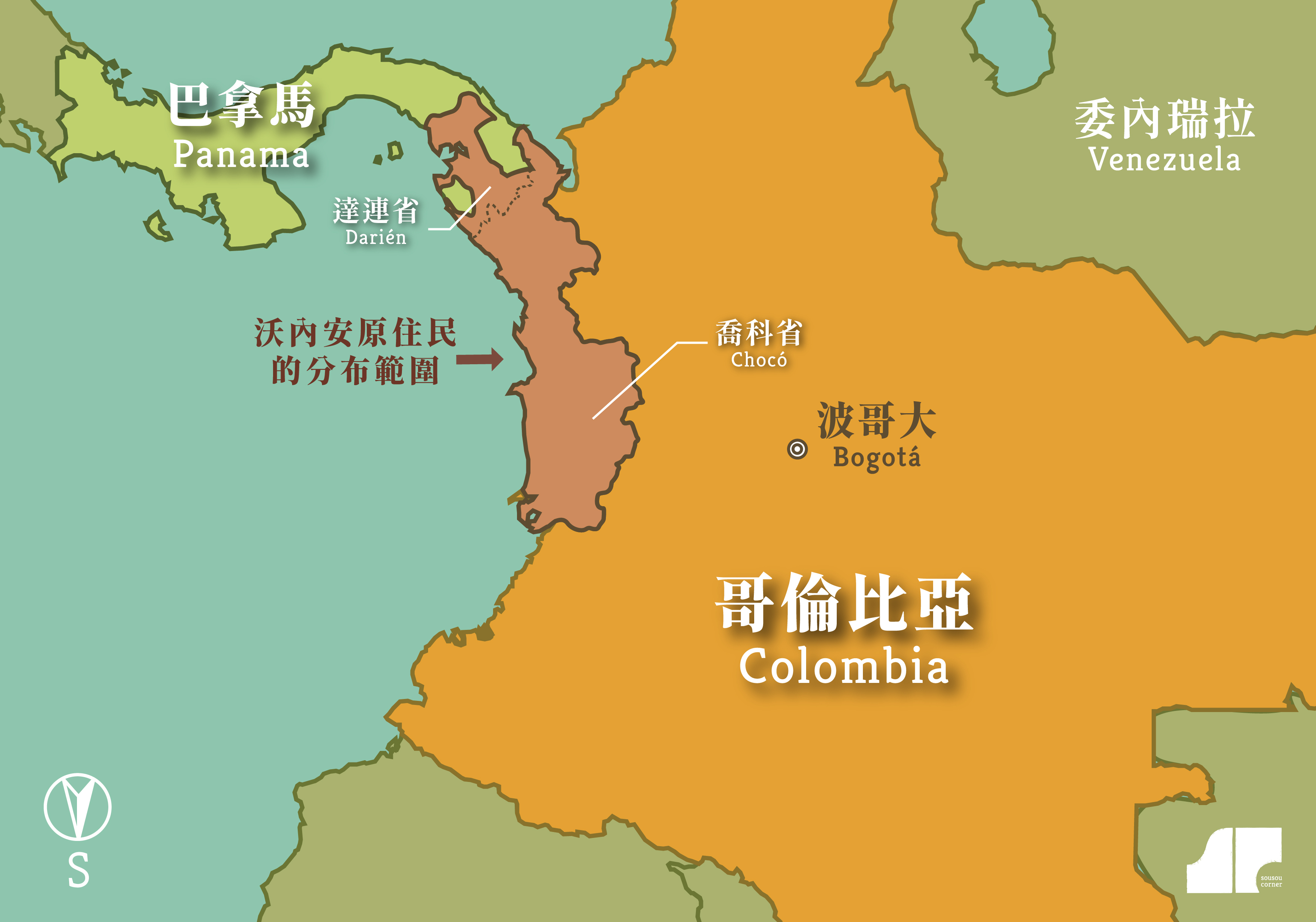
The Wounaan are a semi-nomadic Indigenous people of Central and South America, residing from the Darién Province in southeastern Panama to the Chocó Department along Colombia’s northwestern coast. Yet sharing the same cultural roots,their paths diverged into two distinct fates under modern national borders.


In Colombia, territories inhabited by the Wounaan have long been contested by illegal armed groups, including guerrilla forces and paramilitaries. This ongoing conflict has forcibly displaced many community members to urban centers such as Bogotá. Today, the Wounaan people are recognized by Colombia's Constitutional Court as an Indigenous group facing an imminent risk of cultural and physical extinction.

Map / Distribution of the Wounaan People
Credit / Sousouconer

Displaced in Colombia, the Wounaan people resist the fate of being uprooted through their weaving. For centuries, they have transformed the tender leaf fibers of the Werregue palm into mats and utility containers.


Werregue vessels woven by the Wounaan are exceptionally durable. The distinctive coiled technique produces weaves so dense and tight that they are completely watertight, traditionally serving the Wounaan as vessels for carrying water.


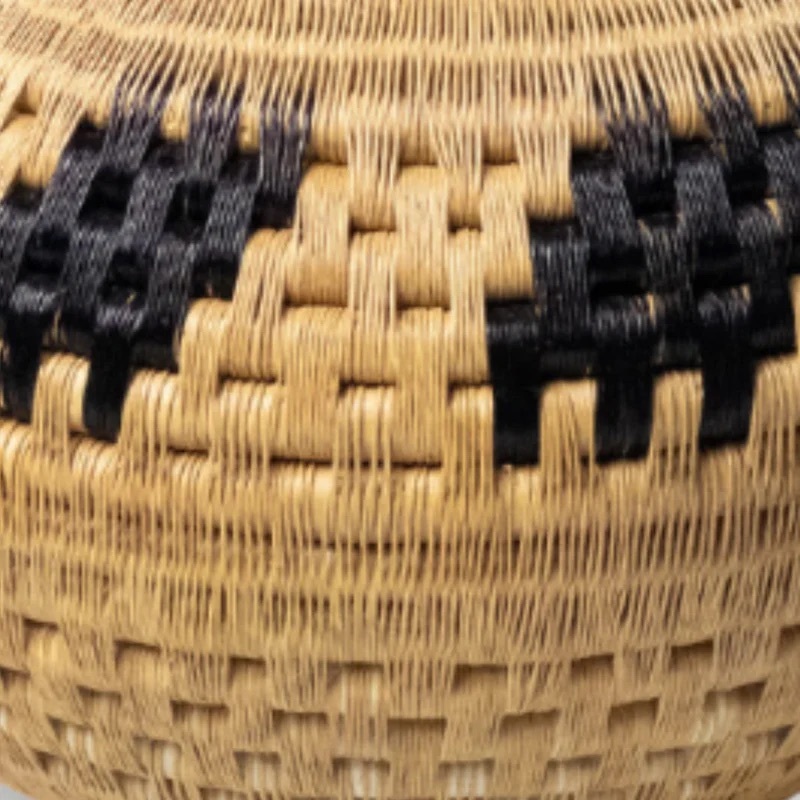
Early Werregue pieces were predominantly black and white, drawing visual inspiration from pre-Columbian Wounaan body painting traditions. As artisans developed natural plant-dyeing techniques, vibrant tropical rainforest motifs began to emerge—depicting blossoms, hummingbirds, butterflies, and parrots.

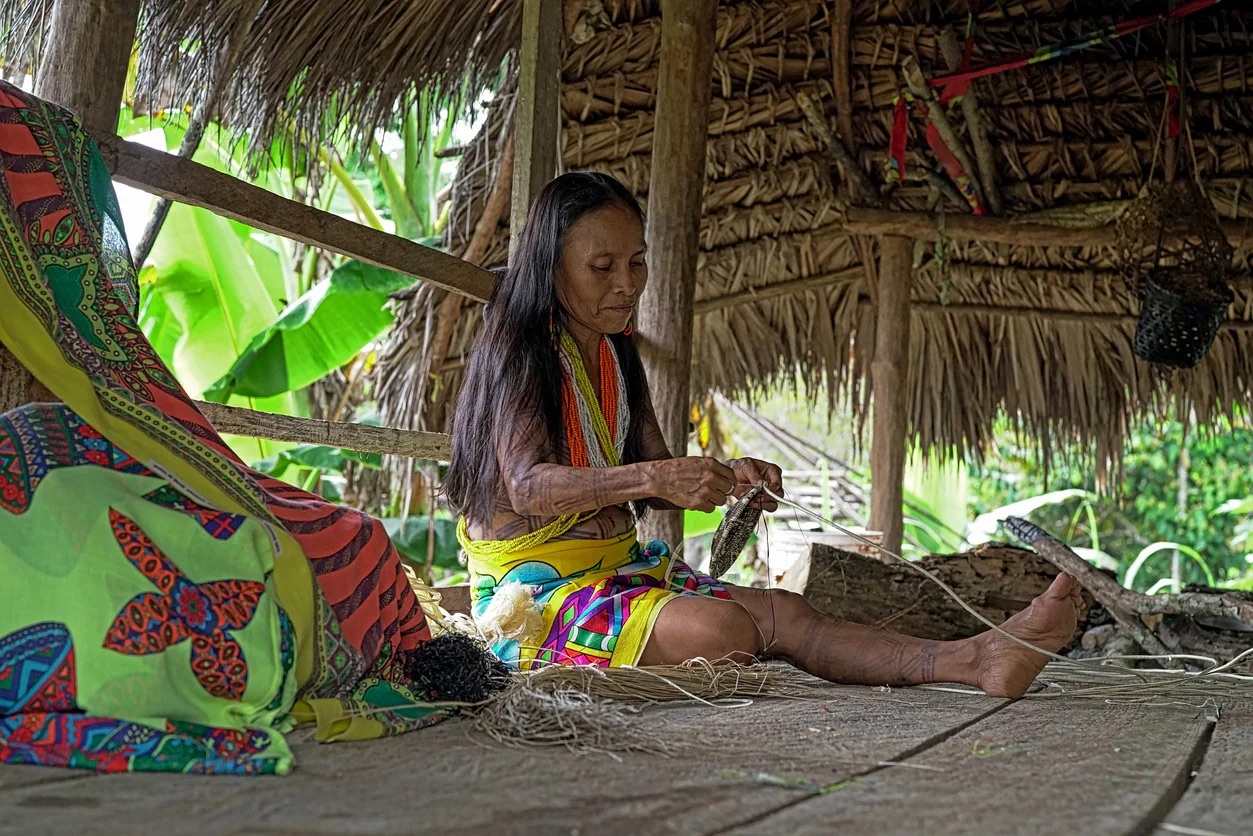
Image / A Wounaan artisan at work
Source / Ncasalatina

Fiber Harvesting and Processing

1. Harvesting

The Werregue palm thrives in the coastal rainforests and mangrove swamps of the Chocó Department. Traditionally, tribal men use machetes to cut down the young palm shoots from the treetops. Fiber harvesting is regarded as a sacred process,traditionally carried out during the new moon; harvesting at other times is believed to result in brittle fibers and uneven color. Because the trunk and petioles of the Werregue are densely covered in long, needle-sharp thorns, manual harvesting is exceptionally difficult and perilous.

2. Processing

Once the long, flexible young leaves are harvested, they undergo peeling, stripping, and drying processes before they are ready for dyeing.

3. Dyeing

Natural Werregue fiber is off-white. All other colors are derived from local native plants: red from achiote (Bixa orellana), black from the jagua fruit (Genipa americana), and yellow from wild turmeric.

Image / The Werregue palm, harvesting, and weaving process
Source / Nestor Garcia

Watertight Weaving Techniques

Wounaan artisans employ a distinctive coiled technique, using fine palm threads to skillfully wrap around a central point known as the "belly button" (ombligo). Each concentric circle binds closely to the next, creating a refined coiled structure.


The weaving of Werregue begins at this central knot. Artisans first use stronger, thicker natural fibers to form the core structural coil, and then use a needle threaded with fine, dyed palm fibers to tightly bind and stitch the coils together. The specific method used to bind and join these coils defines the overall structure and feel of the piece. Wounaan artisans primarily rely on three weaving techniques, each giving the final object its unique texture and visual character.

Basket Weave

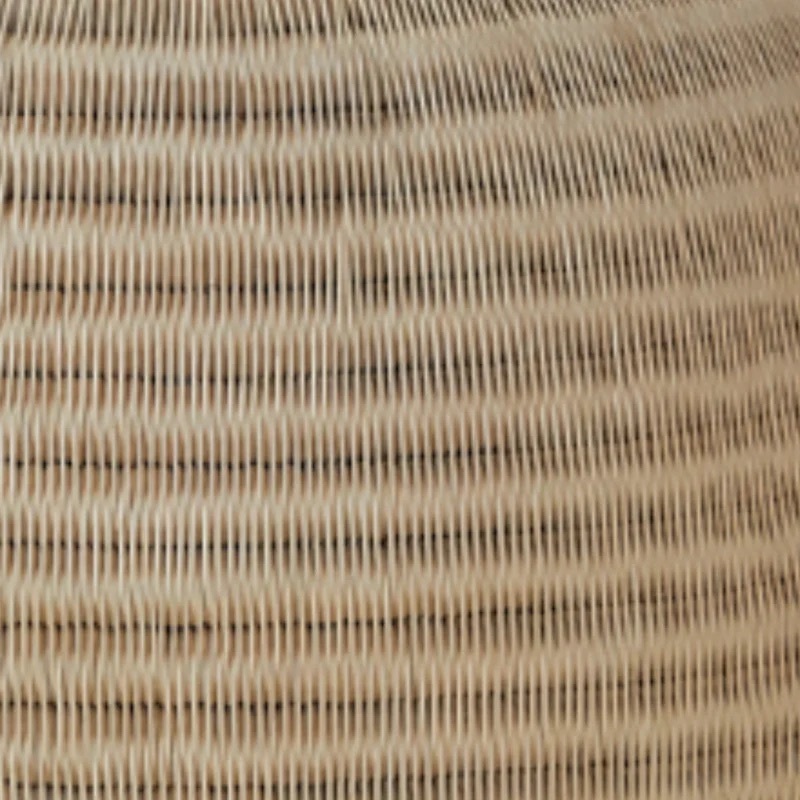
The most meticulous and time-consuming technique. By tightly binding the core fiber so that no gap remains between stitches, containers crafted with this weave achieve a completely watertight finish.

Closed Weave

By binding three rounds of the core fiber within each stitch, this technique creates a visual texture reminiscent of traditional woven baskets.

Open Weave

To achieve an openwork effect, artisans intentionally leave gaps between stitches, allowing the underlying structural core fiber to subtly show through.

The Evolution of Werregue Weaving

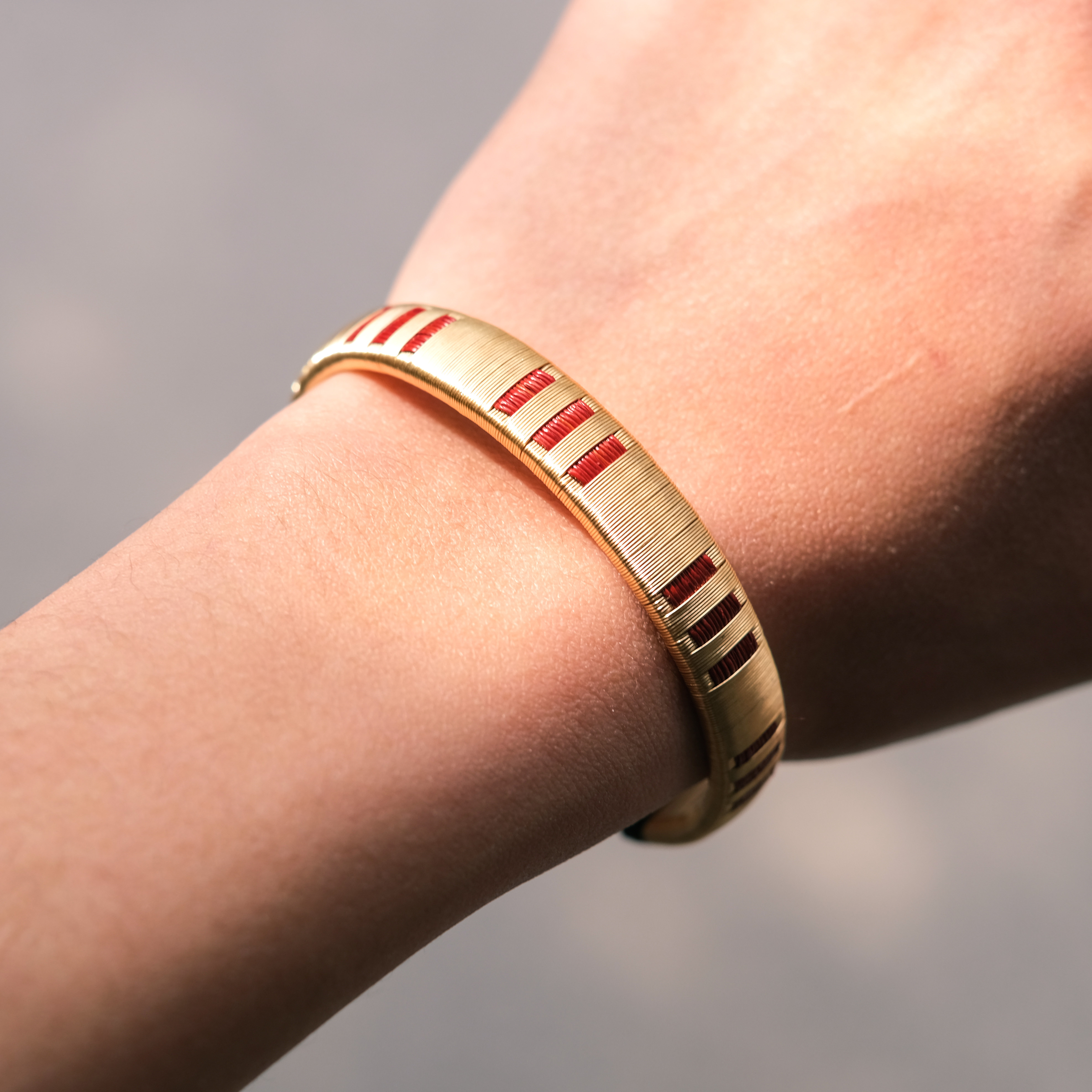
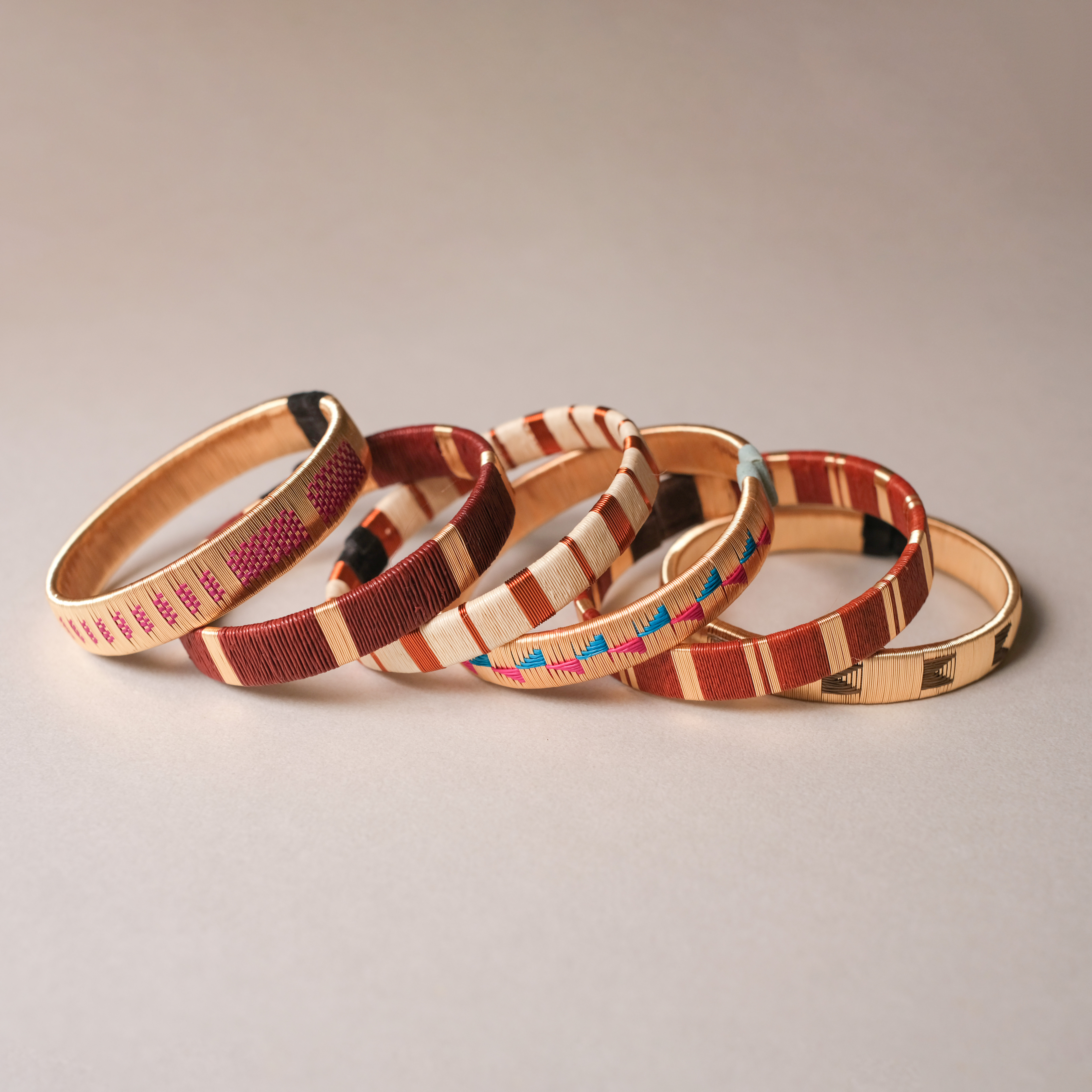
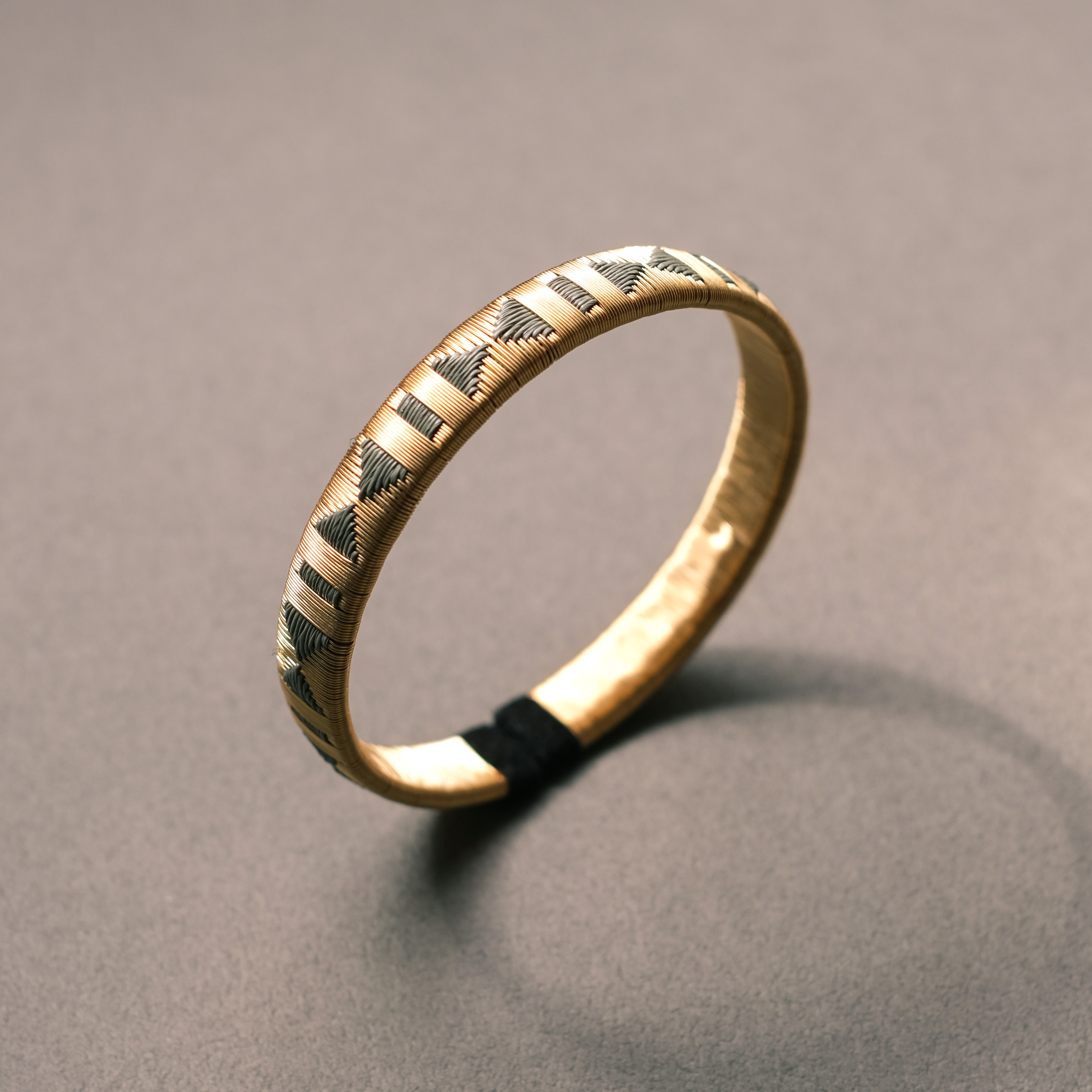
In recent years, Wounaan people displaced from Chocó to Bogotá due to armed conflict have combined Werregue with copper—a material readily accessible in the city. Today, approximately 30% to 40% of Colombian Werregue textiles incorporate woven copper wire, introducing a distinct metallic luster and texture.


The Colombian craft brand AALUNA has further transformed Werregue weaving into everyday wearable accessories.Created through a collaboration between Colombian designers and displaced Wounaan women living in the capital, these Werregue palm fiber bangles accented with pure copper convey a refined, elegant tactile quality—showcasing the ongoing evolution and transformation of Werregue craftsmanship.

Colombia|Werregue Weaving