{{ 'fb_in_app_browser_popup.desc' | translate }} {{ 'fb_in_app_browser_popup.copy_link' | translate }}

{{ 'in_app_browser_popup.desc' | translate }}

Your Shopping Cart is empty.
{{ (item.variation.media ? item.variation.media.alt_translations : item.product.cover_media.alt_translations) | translateModel }} {{ (item.variation.media
                    ? item.variation.media.alt_translations
                    : item.product.cover_media.alt_translations) | translateModel
                }}
{{ 'product.bundled_products.label' | translate }}
{{ 'product.bundle_group_products.label' | translate }}
{{ 'product.buyandget.label' | translate }}
{{ 'product.gift.label' | translate }}
{{ 'product.addon_products.label' | translate }}
{{item.product.title_translations|translateModel}}
{{ field.name_translations | translateModel }}
  • {{ childProduct.title_translations | translateModel }}

    {{ getChildVariationShorthand(childProduct.child_variation) }}

{{ 'product.set.open_variation' | translate }}
  • {{ getSelectedItemDetail(selectedChildProduct, item).childProductName }} x {{ selectedChildProduct.quantity || 1 }}

    {{ getSelectedItemDetail(selectedChildProduct, item).childVariationName }}

{{item.variation.name}}
{{item.quantity}}x NT$0 {{ item.unit_point }} Point
{{addonItem.product.cover_media.alt_translations | translateModel}}
{{ 'product.addon_products.label' | translate }}
{{addonItem.product.title_translations|translateModel}}
{{addonItem.quantity}}x {{ mainConfig.merchantData.base_currency.alternate_symbol + "0" }}
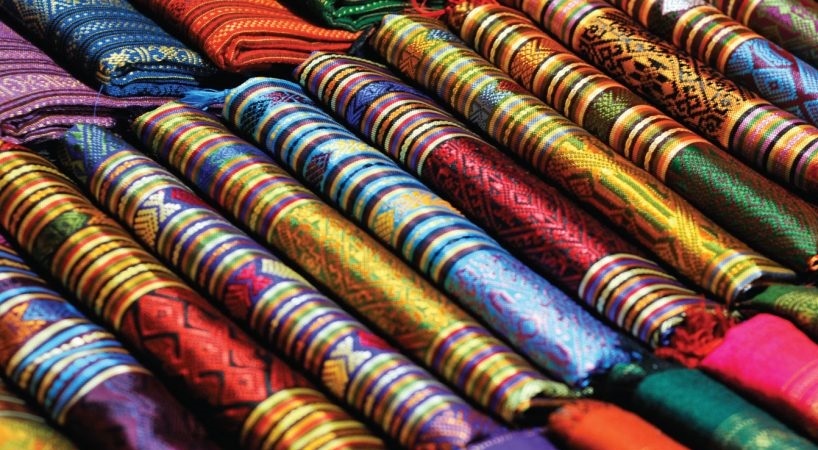
源自泰國、已有上千年歷史的手工泰絲,有別於中印絲綢的豔麗、義大利絲綢的典雅,以天然的紋理、協調的配色獨樹一幟。

獨樹一幟的泰國手工絲綢


儘管中國絲綢在古代具有名氣,不過到了近代,泰國絲綢在布料織品領域、甚至在時尚界卻是不遑多讓。泰絲以其鮮明的配色、貼近當代藝術的元素,帶給絲綢完全不一樣的質感。

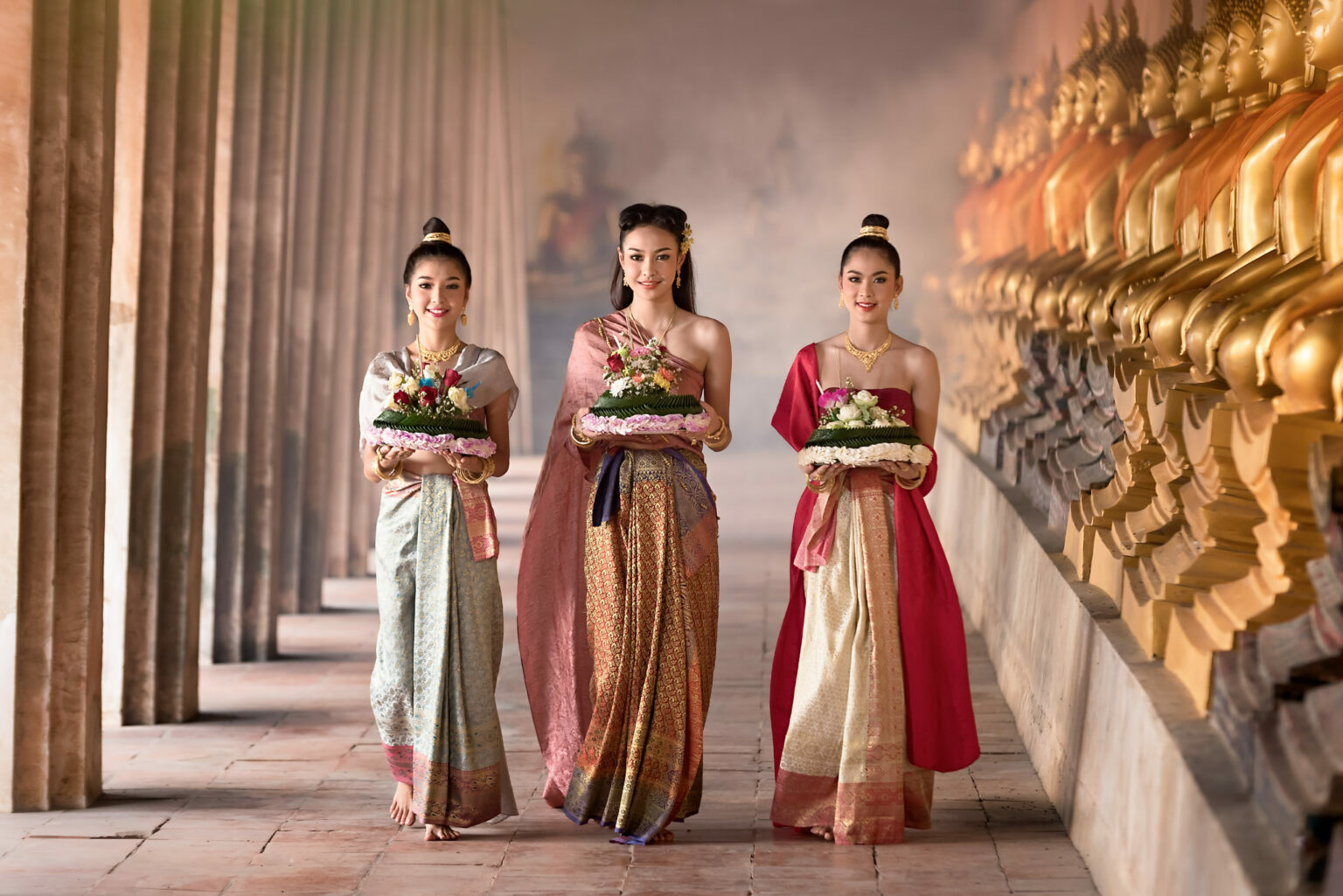
圖/許多泰國傳統服飾皆由泰絲製成,如裹裙布 Panung

來源/EXO Travel

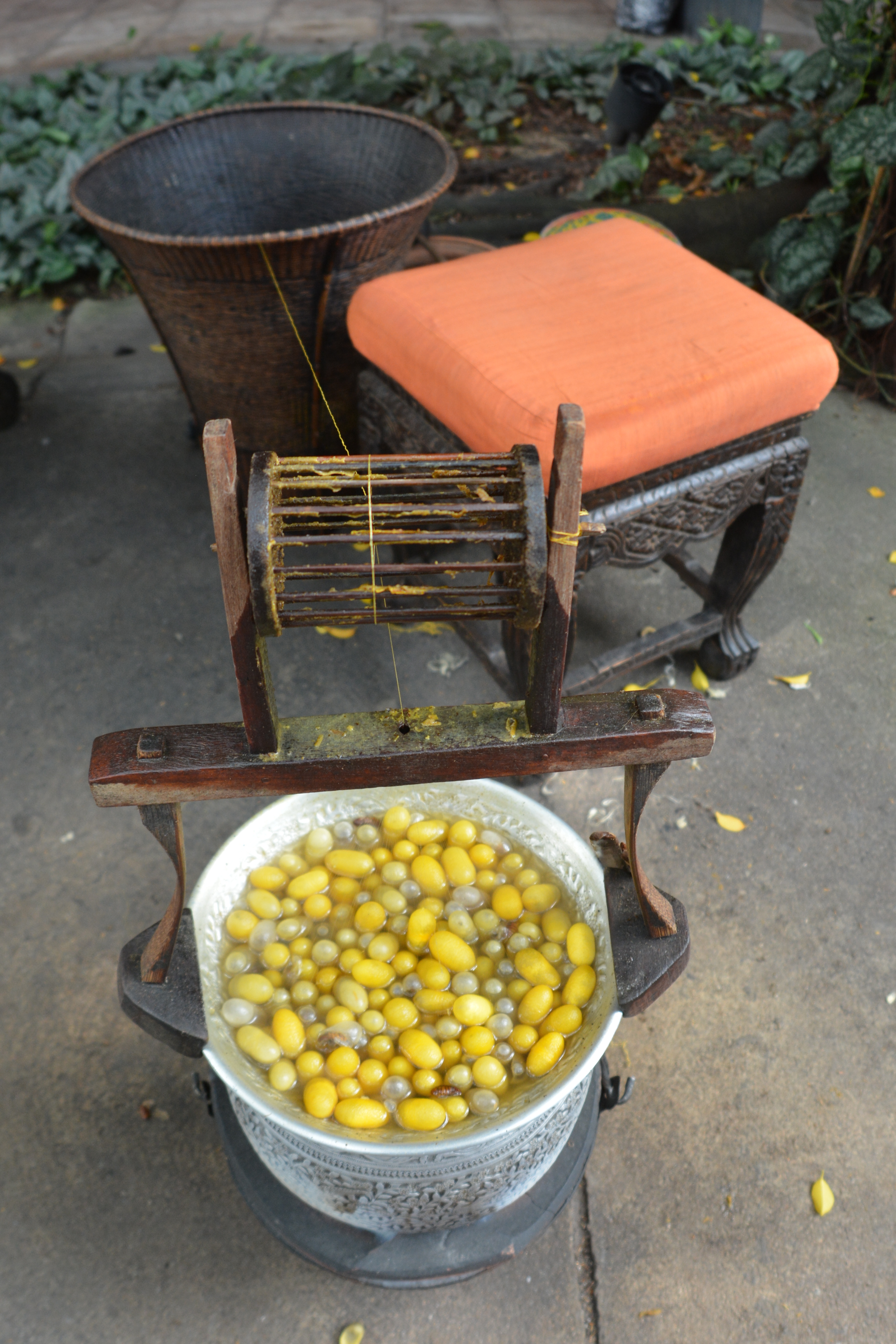
泰絲以蠶繭為原料,泰國蠶農主要飼養 Samia ricini 跟Bombyx mori 兩種蠶來生產絲綢,可再分成桑蠶絲(mulberry silk)、野蠶絲(wild silk)、柞蠶絲(tussah silk)三種。最常見的桑蠶絲以 Bombyx mori 的蠶繭製作,具有特殊光澤跟柔軟質地;野生蠶繭製成的野絲,因為產量稀少而十足昂貴;柞蠶絲的質地跟色澤則較天然粗獷。


經過抽絲、染色及編織等環節製成的泰絲,除了用來製作傳統裹裙布 Panung 和褲裝絆尾幔 Chong kraben 等泰國服飾,還會用來製作掛毯、掛飾和墊子等裝飾品,深受外國買家喜愛。

從貴族專屬到外銷商品


絲綢發源於西元前兩千多年的中國跟印度,在貿易跟文化交流的過程中傳入其他亞洲地區。泰絲的歷史可追溯至13世紀建立的素可泰王國(Kingdom of Sukhothai),第一個提到泰絲的大城王國編年史(The Royal Chronicles of Ayutthaya),便指出貴族皇室會將泰絲用於服裝等用途。


素可泰王國的絲綢以柔軟耐用打響名號,隨著王國不斷壯大,泰絲的生產跟貿易也日漸發展,16世紀大城王國併吞素可泰王國,成為主要的貿易中心,織工跟染絲工使用植物、昆蟲和礦物質製成天然染料,為泰絲染上豐富的色彩,成為泰國外銷歐亞的重要商品。

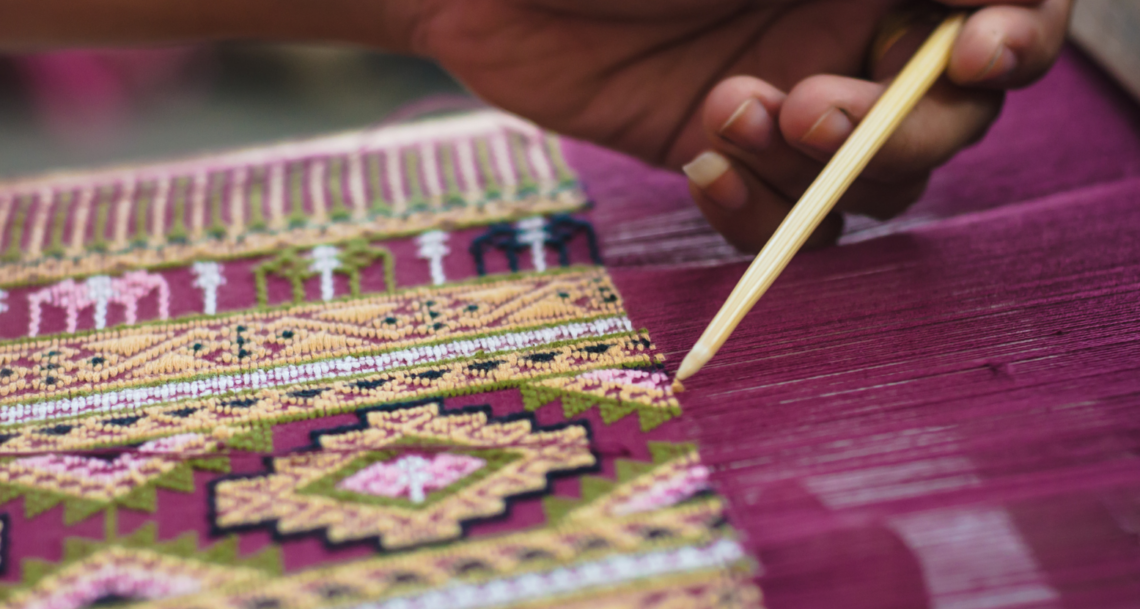
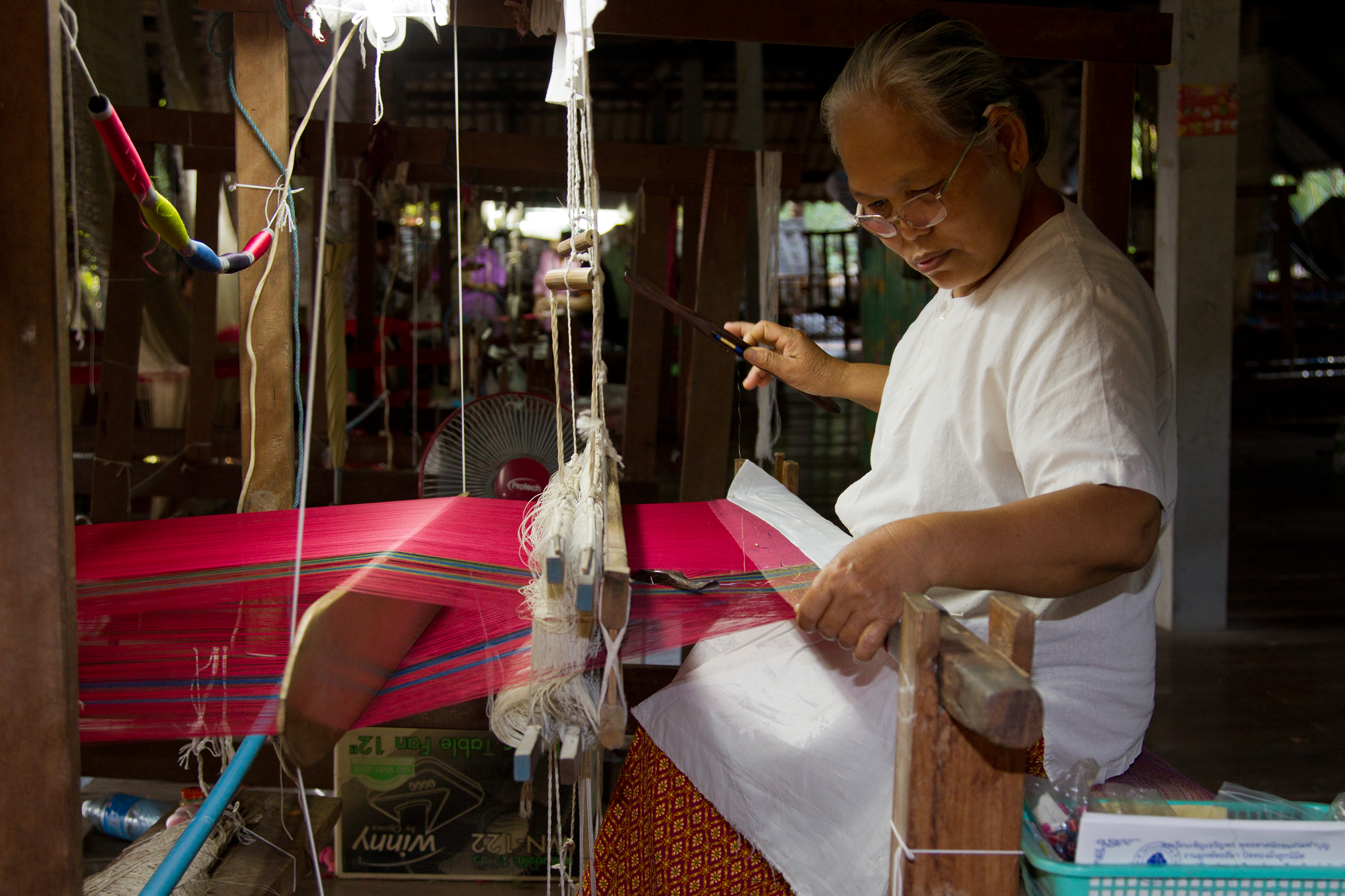
圖/透過傳統織布機,將經線與緯線編織成泰絲布料

來源/EXO Travel

泰絲的製作工序

Rogan painting was brought to India from Persia in the 18th century. The castor oil used comes from the castor beans that grow in large quantities in the local area. Someone in the family is responsible for boiling the castor seeds or castor oil for 12 hours, and cooling it slightly after that; repeating the heating and cooling process for the next four to five days. Because the hot oil can catch fire and expand if one is not careful, only a few members of the Bedi family are competent for this job; which is considered a very fine division of labor. The importance of castor oil to Rogan paintings is also fully revealed in the name, since in Persian “Rogan” means "oil".


When the oil is finished, other members of the family use color to dye the transparent castor oil on a slate and pass it to the painter. The painter will use the temperature of the palm to slightly heat the agglomerated castor oil, and then use an iron rod to draw the castor oil into thin lines and paint on the cloth.


The Bedi family in Nirona Village is the only Muslim art family in the world that inherited Rogan paintings (FootLoose Dev)

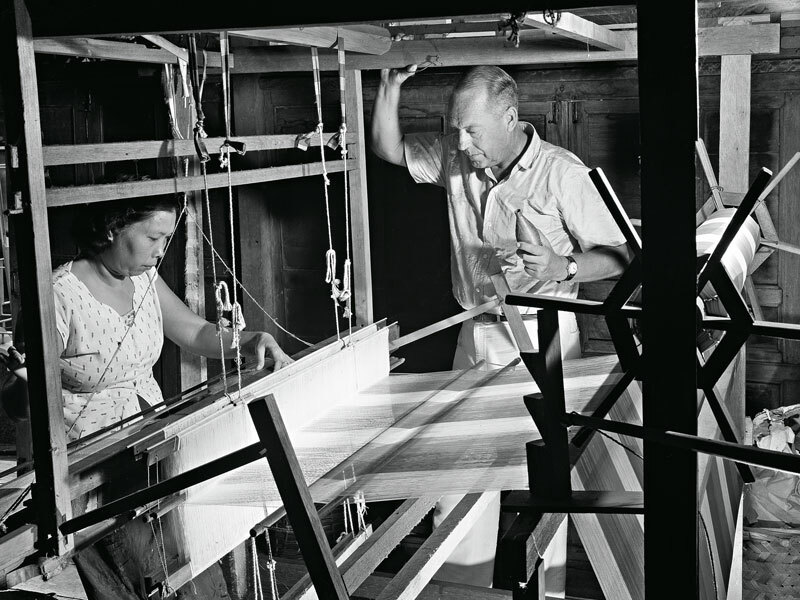
圖/泰絲的織布過程

來源/Wiki

讓泰絲登上國際舞台的「泰絲大王」


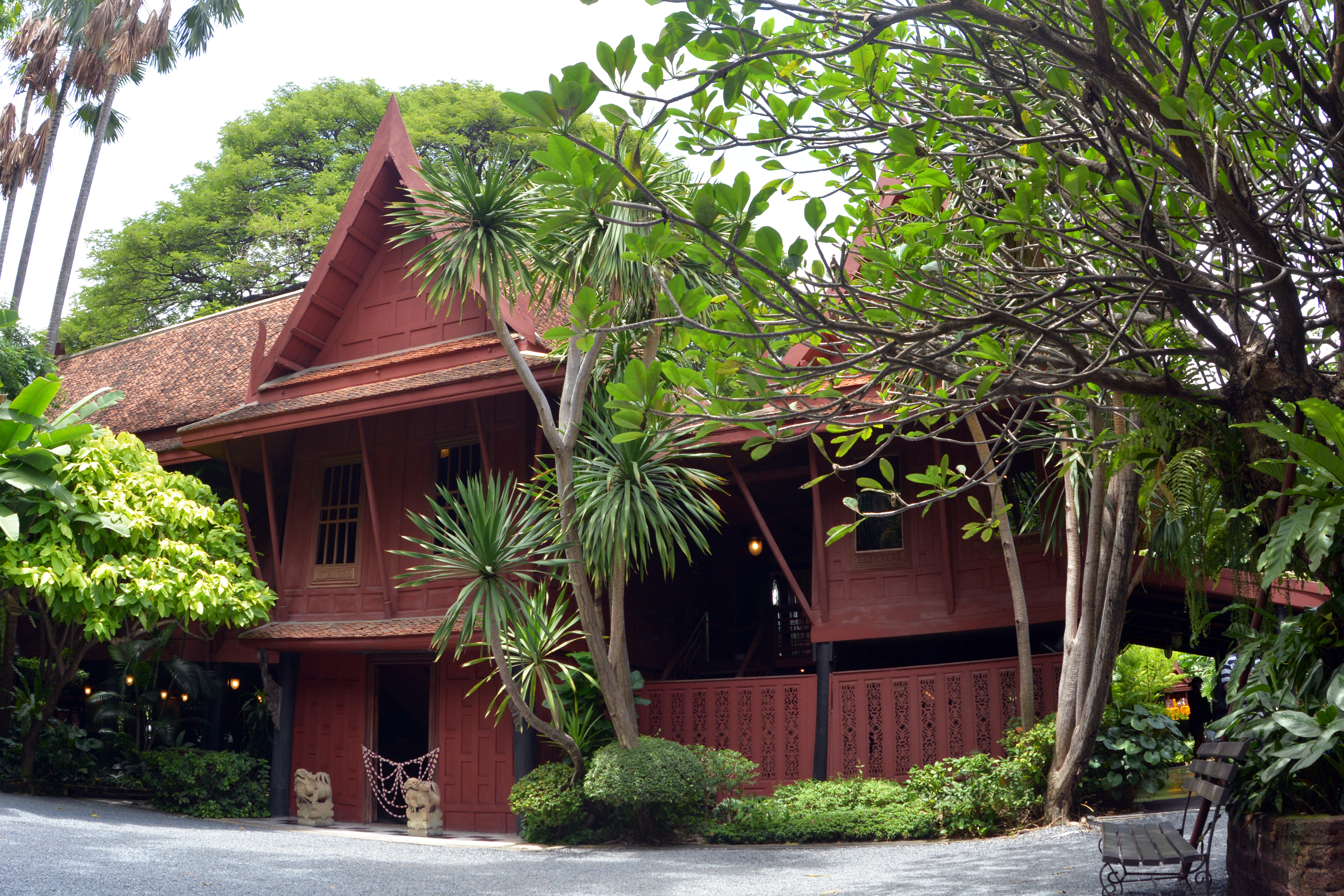
19至20世紀初,機器製作技術及化學染料的引入,加上泰國宮廷更喜歡購買中國進口的絲綢,使得泰絲面臨挑戰。二次世界大戰後,一位定居曼谷的美國建築師 Jim Thompson,將泰絲發揚光大,被後世稱為「泰絲大王」。


1906年 Jim Thompson在美國出生,爸爸是紡織工廠製造商,媽媽是著名聯邦將軍的女兒。二次世界大戰後,本為建築師的Jim Thompson以美國情報員的身分調派泰國曼谷,一到泰國就對純樸的鄉村及手工編織的絲綢深深著迷。


Rogan paintings exhibit a high degree of symmetry (FootLoose Dev)

Because of the epidemic, the Bedi family developed a face mask drawn by Rogan (Vanshika Gupta // 30 Stades)

The fabrics created with Rogan paintings were originally used on gorgeous costumes and decorations worn for Indian celebrations and weddings. However, due to industrialization and the replacement of manpower by machines, the Rogan painters in Nirona Village gradually turned to other industries, and now this art is in danger of disappearing.


Abdul Gafur Kahtri, the painter who made the Bedi family famous, has received numerous awards and one of his works was even presented to former US President Barack Obama. In the 1980s, seeing the decline of Rogan paintings, he rushed to Mumbai to engage in other industries, and it wasn't until the elders of the family persuaded him to go back and inherit this handcraft, that was about to disappear from the world, that he vowed to take over this art and tried to promote the Rogan paintings to the whole world.

The door of Rogan painting was not open to women at first, but since 2010, Abdul has been teaching more than 300 local women this art, one after another, hoping to pass on this handcraft to the next generations. 


Due to the closure of the borders because of the epidemic, tourists could not visit the Nirona Village to buy Rogan painted clothes. The Bedi family also was not able to open related workshops, causing them to be unable to pay salaries in the short term. They continued to employ female painters outside the family, but they still had to work hard to develop new products, hoping to survive the crisis and continue with the life of Rogan paintings.

儘管因為創辦人離奇失蹤使得泰絲品牌更具傳奇性,但整體泰絲工藝卻也因此更被世人所看見,泰國越來越多不同品牌與工坊持續以蠶絲作為創作,泰絲發展出各式各樣的服飾、家飾品,成為泰國工藝文化的象徵。

Southern Craft|India Rogan Art Indian Rogan Painting Craft