{{ 'fb_in_app_browser_popup.desc' | translate }} {{ 'fb_in_app_browser_popup.copy_link' | translate }}
{{ 'in_app_browser_popup.desc' | translate }}
{{ childProduct.title_translations | translateModel }}
{{ getChildVariationShorthand(childProduct.child_variation) }}
{{ getSelectedItemDetail(selectedChildProduct, item).childProductName }} x {{ selectedChildProduct.quantity || 1 }}
{{ getSelectedItemDetail(selectedChildProduct, item).childVariationName }}
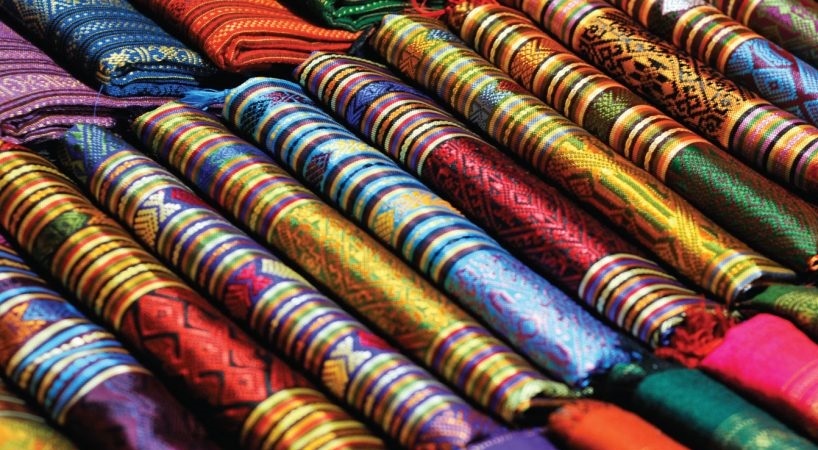
The ancient art of Thai silk, originating in Thailand and boasting a history of over a thousand years, stands apart from the vibrant Chinese and Indian silks and the elegant Italian silks with its natural textures and harmonious colors.
The Unique Artistry of Thai Silk
Although Chinese silk was historically renowned, Thai silk has gained prominence in modern times within the textile and fashion industries. Distinguished by its vivid colors and contemporary artistic elements, Thai silk offers a completely unique tactile and aesthetic experience.
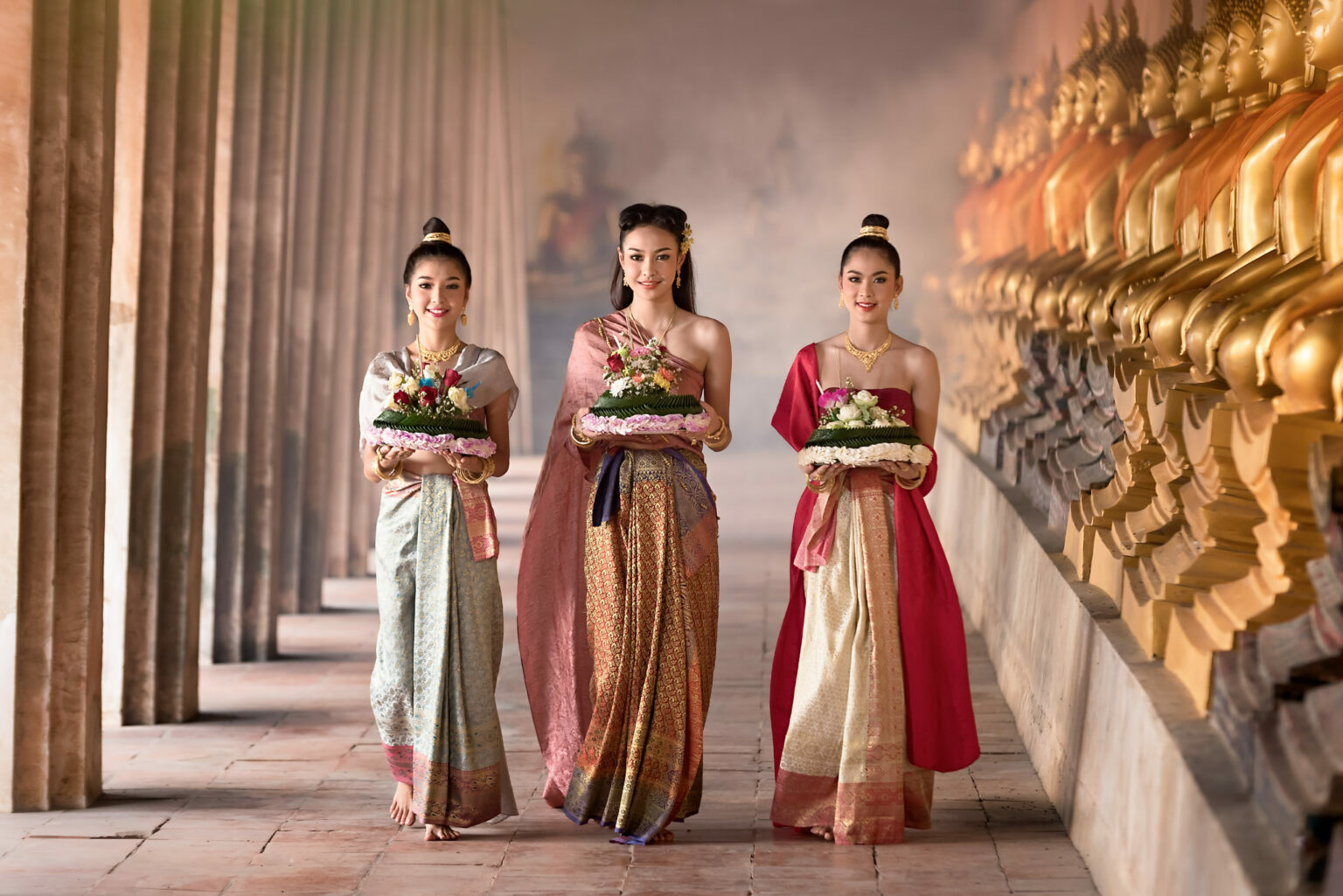
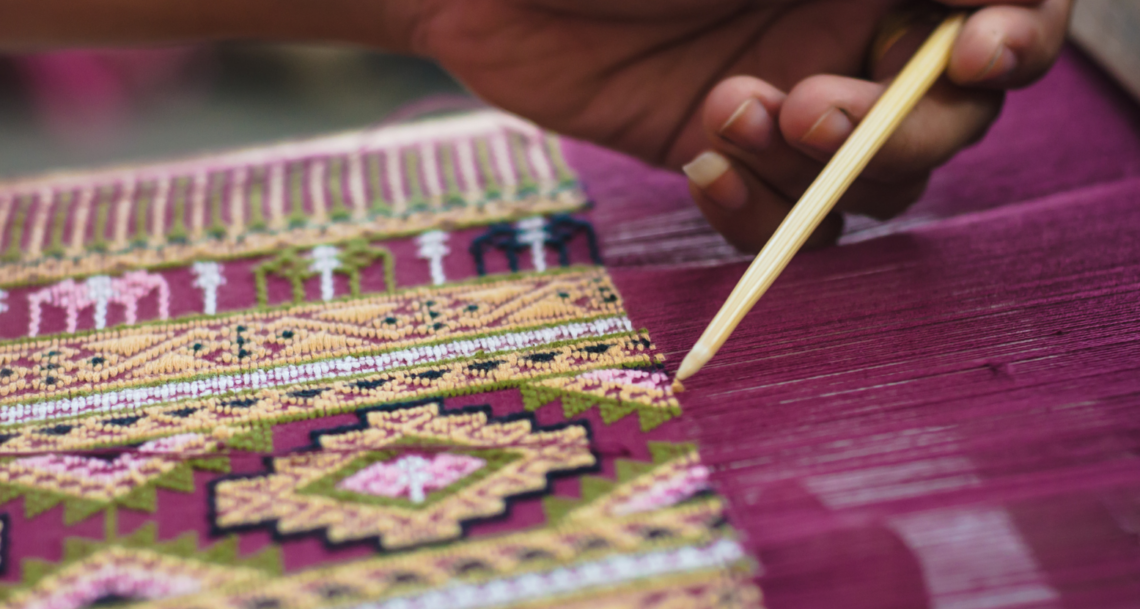
Image/ Many traditional Thai garments, such as the Panung wrap skirt, are made of Thai silk.
Source/ EXO Travel
Thai silk is derived from silkworm cocoons. Thai silk farmers primarily rear two species of silkworms, Samia ricini and Bombyx mori, producing three main types of silk: mulberry silk, wild silk, and tussah silk. The most common is mulberry silk, made from the cocoons of Bombyx mori, known for its unique sheen and soft texture. Wild silk, due to its rarity, is highly expensive, while tussah silk is celebrated for its rustic texture and natural hues.
Thai silk is processed through reeling, dyeing, and weaving to create not only traditional clothing like the Panung wrap skirt and Chong Kraben trousers but also tapestries, decorative hangings, and cushions, which are highly popular among international buyers.
From Royal Exclusivity to Export Commodity
Silk originated over two millennia ago in China and India and spread across Asia through trade and cultural exchange. Thai silk's history dates back to the 13th-century Kingdom of Sukhothai. The chronicles of Ayutthaya highlight its use by the royal court for clothing and ceremonial purposes.
Sukhothai silk earned its reputation for its softness and durability. As the kingdom grew, silk production and trade flourished. In the 16th century, the Ayutthaya Kingdom annexed Sukhothai and became a major trade hub. Artisans used natural dyes from plants, insects, and minerals to create vibrant hues, making Thai silk a significant export to Europe and Asia.
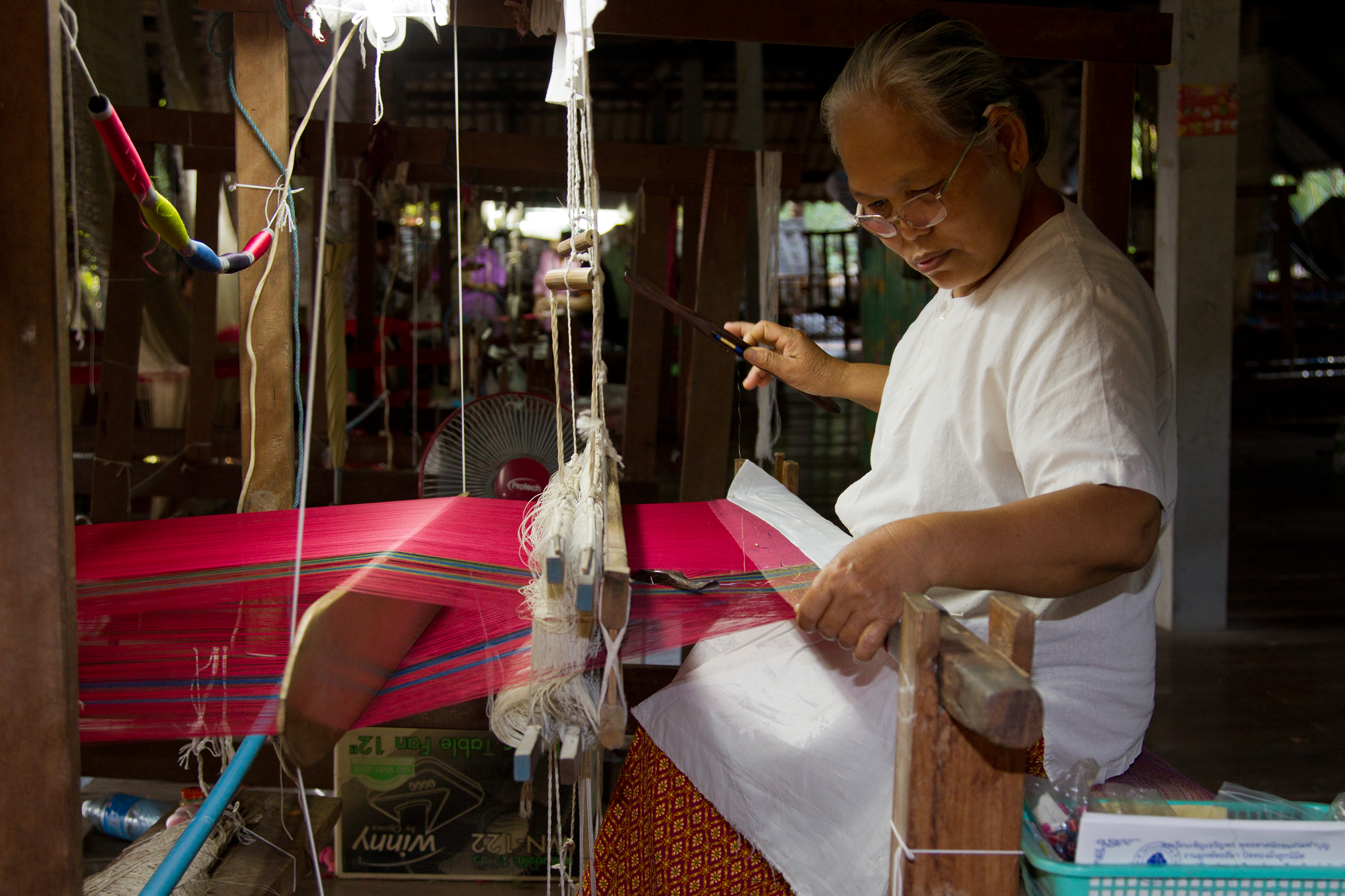
Image/ Traditional looms interweave warp and weft threads to create Thai silk fabrics.
Source/ EXO Travel
The Thai Silk Production Process
Step 1: Reeling
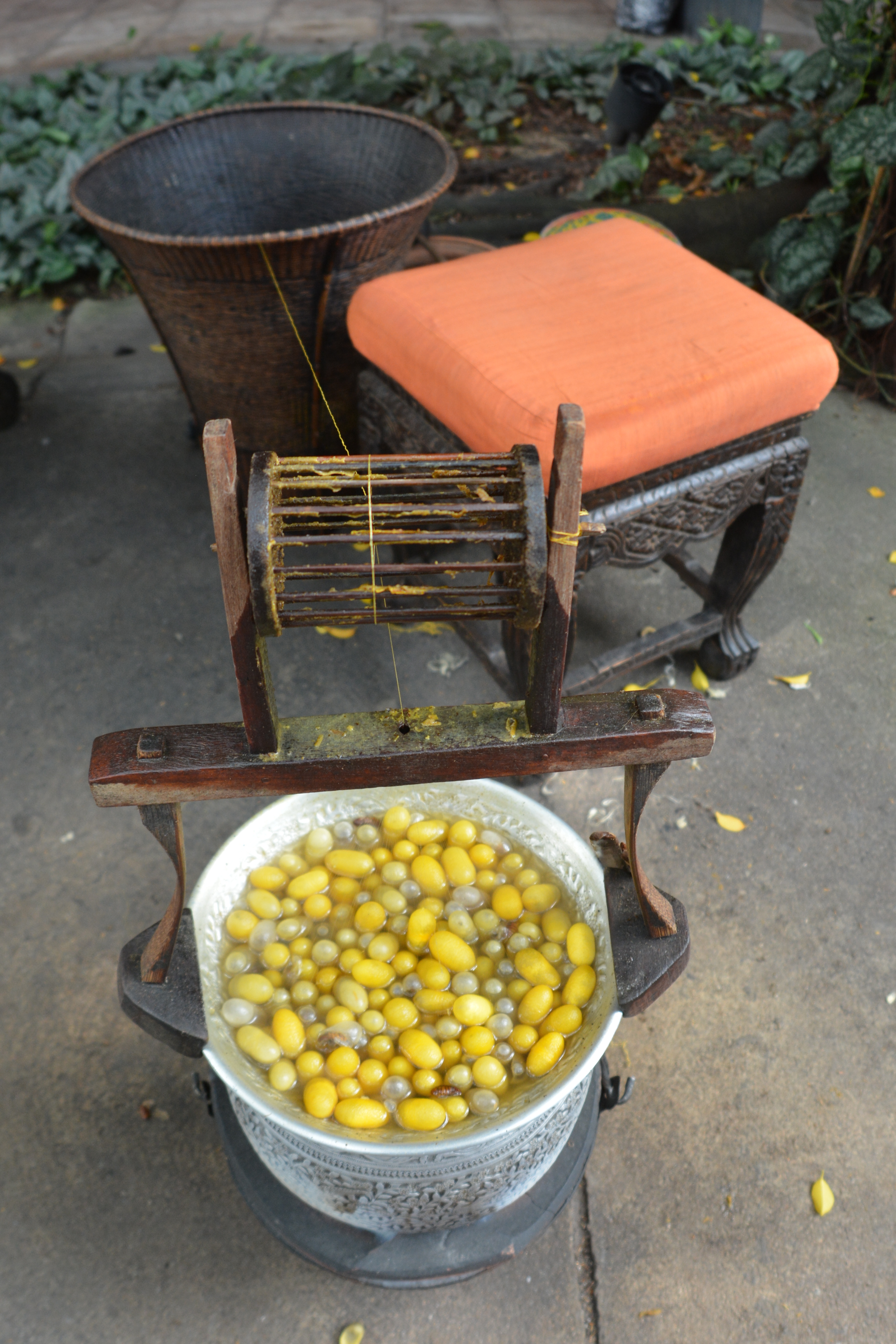
Silkworm cocoons are boiled to ease the extraction of silk threads. A single cocoon can yield 1,000–1,500 meters of raw silk. Since raw silk is too fine for weaving, 10–20 strands are combined. While some factories use machines, most silk is still reeled by hand, with 40 hours producing just half a kilogram of silk thread.
Step 2: Dyeing
Silk threads, naturally light green or yellow, are bleached in boiling alkaline water made from local plant charcoal, such as banana leaves, cotton pods, and coconut shells. After bleaching, the threads are dyed.
Step 3: Weaving
Silk is woven on looms, with two primary techniques: tie-dye and brocade weaving. Tie-dye involves binding parts of the thread to resist dye, creating intricate patterns, while brocade weaving uses pre-dyed threads for elaborate designs.
Image/ Silkworm cocoons and spools of thread—40 hours of labor produce just half a kilogram of silk.
Source/ Wiki
Image/ The process of weaving Thai silk.
Source/ Wiki
"The Silk King" Who Brought Thai Silk to the Global Stage
In the late 19th and early 20th centuries, Thai silk faced challenges due to the introduction of machine-made fabrics, chemical dyes, and a preference for imported Chinese silk among the Thai elite. After World War II, American architect Jim Thompson revived the art of Thai silk, earning him the title of "The Silk King."
Born in 1906, Jim Thompson grew up in the United States as the son of a textile factory owner. After the war, Thompson was stationed in Bangkok as a U.S. intelligence officer. Captivated by the simplicity of rural life and handwoven silk, he saw its potential on the global stage.
Image/ Jim Thompson, the "Silk King," revitalized the Thai silk industry.
Source/ Business Destinations
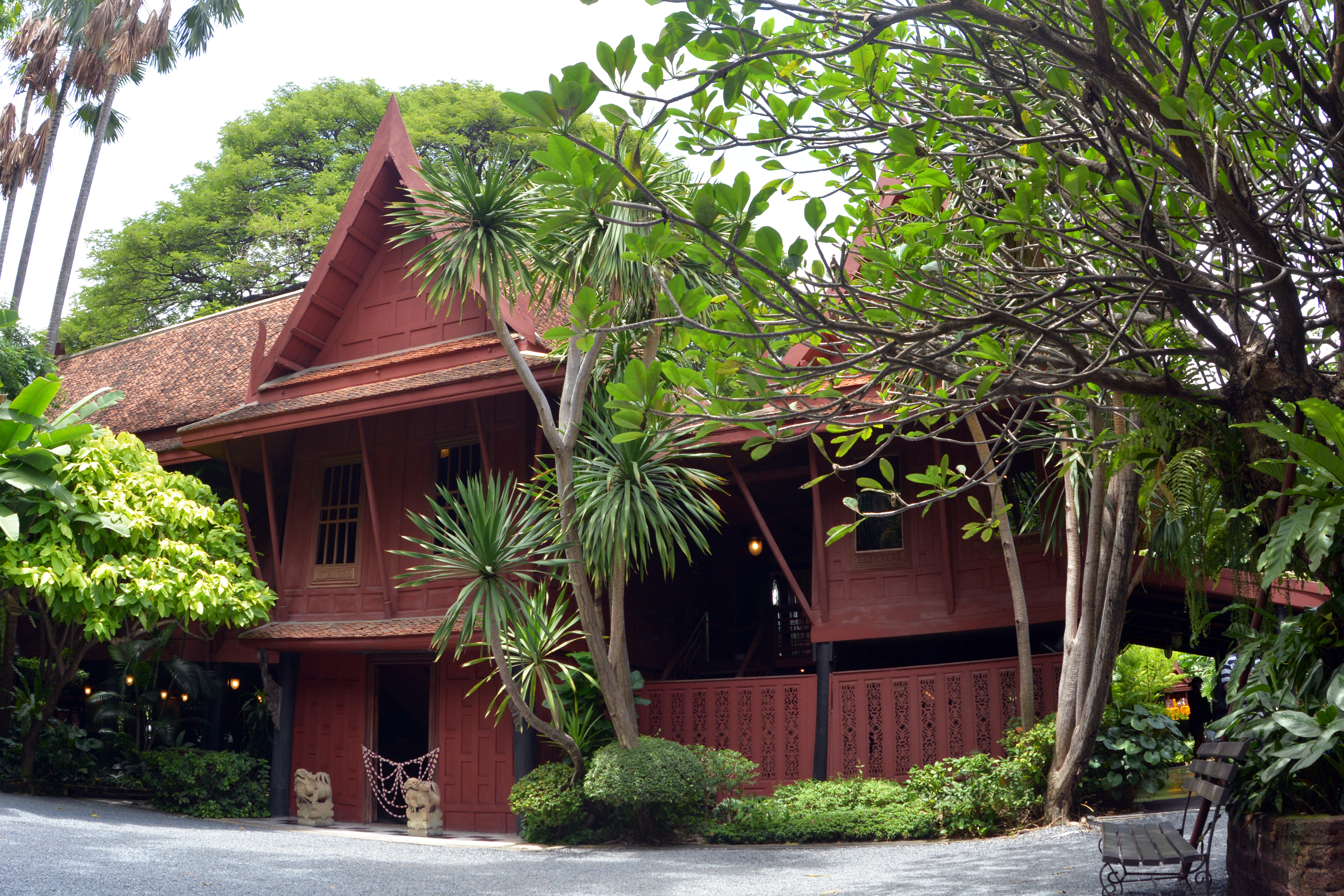
Image/ Jim Thompson’s former residence.
Source/ Wiki
With the silk industry near collapse, Thompson sought out weaving families in Bangkrua who preserved traditional techniques. He purchased their existing stock at high prices, took it to New York, and personally introduced Thai silk to Vogue editor Edna Woolman Chase, capturing the attention of the American fashion industry.
In 1950, Thompson opened his first store in Bangkok, adopting modern techniques to enhance silk quality and bold colors. Under his promotion, Thai silk became a luxury international product.
The Mysterious Disappearance of Jim Thompson
In 1967, while traveling in Malaysia, Jim Thompson vanished without a trace. Despite a massive search, his disappearance remains unsolved, adding to the mystique of his legacy and the enduring appeal of Thai silk.
Today, visitors to Thailand can purchase Jim Thompson-branded silk or tour his former residence near Bangkok’s Saen Saep Canal. The six teakwood houses showcase his collection of antiques and artwork, blending Thai and Western design.
Jim Thompson’s mysterious disappearance heightened interest in Thai silk, which has since evolved with numerous brands and workshops creating a wide range of silk garments and home décor. Thai silk continues to symbolize the artistry and cultural heritage of Thailand.
Southern Craft|Thai Silk